
The recent catastrophes must not be viewed as mere unfortunate incidents but as stark teaching provides evidence that the current trajectory is unsustainable
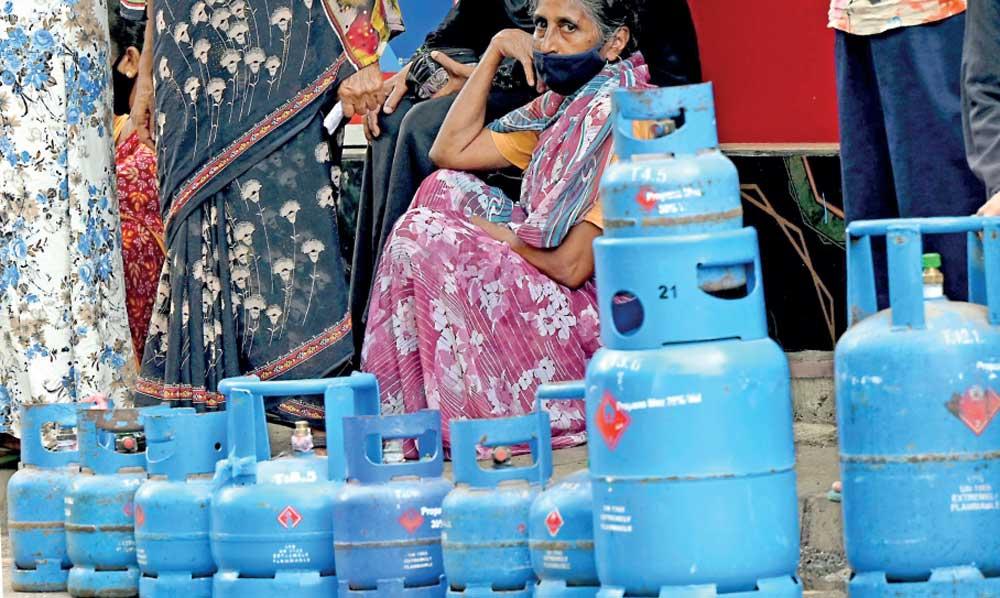
pix by Kushan Pathiraja
The 2022 economic recession, the worst since independence, serves as a stark example. The crisis was not solely a function of global shocks, but a direct consequence of ill-conceived and politically motivated policies
- The recent severe climatic disasters, leading to hundreds of casualties and an estimated economic cost of $6-7 billion
- Clear, early warnings of adverse weather were reportedly received, yet preemptive action and timely evacuation were largely absent
- Negligence of authorities to act on available data highlights a deficit in the intersection of National Security and Political Capability
- Studies show alarming migration rates among science-based graduates, turning a national strength into a foreign subsidy
Sri Lanka, the Pearl of the Indian Ocean, boasts of a history stretching back over 2,500 years, rich with cultural heritage and resilience forged through centuries, including foreign rule from 1505 to 1948. Yet, as the nation moves further from independence, a disquieting question looms: Is the national survival of Sri Lanka fundamentally threatened?
The premise that national survival rests on seven crucial pillars National Economy, National Security, National Culture, National Diplomacy, National Science & Technology, National Intelligence, Data & Innovation, and National Political Capability offers a robust framework for assessment. A careful analysis of recent decades, particularly since 1977, overwhelmingly suggests a systemic decline across these pillars, largely driven by chronic political mismanagement and a destructive prioritization of personal and party interests over the national good.
The deterioration of the seven pillars: Examples of Political Mismanagement
The erosion of the nation’s foundation is evident in a recurring cycle of preventable disasters and crises, all pointing back to failures in governance:
1. National Economy and Political Incompetence
The 2022 economic recession, the worst since independence, serves as a stark example. The crisis was not solely a function of global shocks, but a direct consequence of ill-conceived and politically motivated policies.
Ill-Timed Tax Cuts: The drastic tax reductions in 2019, aimed at political favour, severely depleted government revenue, worsening the structural budget deficit. This contributed directly to the unsustainable debt burden.
The Organic Fertiliser Ban: The sudden, poorly planned shift to a nationwide ban on chemical fertilisers in 2021, despite warnings from experts, devastated the agricultural sector. Rice production plummeted by over 39%, turning the country from self-sufficiency to a need for costly imports, severely impacting National Economy and National Security (food security).
“White Elephant” Projects and Corruption: Decades of dependency on high-interest debt for non-essential or unprofitable infrastructure projects often alleged to benefit political cronies exacerbated the foreign exchange crisis. Allegations of massive corruption surrounding International Sovereign Bond payments and tax revenue manipulation further highlight a breakdown in economic governance.
2. National Security &
Intelligence Failure
The notion that National Security encompasses more than just military defence extending to education, health, and disaster management is tragically validated by recent events.
The Easter Sunday Disaster (2019): This catastrophic event, which claimed over 250 lives, was a monumental failure of National Intelligence and National Security. Multiple foreign intelligence warnings were received, but were allegedly ignored or not disseminated due to political rivalry and a breakdown of communication channels between the President and Prime Minister. This political polarisation and negligence directly enabled a terrorist attack.
The Human Cost of Climate Catastrophe: The recent severe climatic disasters, leading to hundreds of casualties and an estimated economic cost of $6-7 billion, tragically parallel the Easter Sunday failure. Clear, early warnings were reportedly received, yet preemptive action and timely evacuation were largely absent. The negligence of authorities to act on available data highlights a severe deficit in the intersection of National Security (disaster management) and National Political Capability.
3. Brain Drain and the Death
of Meritocracy
The most insidious threat to long-term national survival is the systematic degradation of the public service. Since 1977, a culture of political patronage has meant that critical public sector appointments from heads of state-owned enterprises to key regulatory bodies have been consistently awarded to incompetent political party supporters, relatives, and friends, often bypassing honest, qualified, and experienced officers.
The Impact of Incompetence: This policy of political clientelism cripples the National Science and Technology and National Intelligence, Data and Innovation pillars. When unqualified individuals head technical institutions or manage disaster response, the inevitable result is incompetence that manifests as a national crisis.
The Brain Drain Catastrophe: As a direct consequence, the brain drain, the mass exodus of highly educated and skilled professionals (doctors, engineers, finance experts, university lecturers) has reached historic levels. This loss of human capital is, as suggested, a disaster worse than any natural catastrophe, draining the intellectual engine required for innovation, recovery, and effective governance. Studies show alarming migration rates among science-based graduates, turning a national strength (free, high-quality education) into a foreign subsidy.
A Crisis of National Political Capability
The core of Sri Lanka’s struggle lies in the near total failure of its National Political Capability. The pervasive issue is that the government’s priority has consistently been the protection and consolidation of its political party and cadre, rather than the sincere safeguarding of the country. This can be seen in:
1. Protecting Cadres over Competence: The continued appointment of party loyalists to high positions, even in the face of proven incompetence and corruption allegations, demonstrates a profound failure of accountability.
2. Lack of Sincere Correction: The refusal to correct these fundamental errors sincerely to root out corruption, establish true meritocracy, and enforce the rule of law without political interference ensures that the nation is destined to repeat the cycle of human and resource disasters.
The very survival of the nation is indeed endangered when the political establishment views the state apparatus as a tool for personal and party enrichment, rather than a sacred trust to be managed with expertise and integrity.
Recommendations for the Correct Path: A Teaching Point from Catastrophe
The recent catastrophes must not be viewed as mere unfortunate incidents but as stark teaching provides evidence that the current trajectory is unsustainable. The path to correct this course requires radical, sincere, and systemic reforms across all seven pillars.
Reforming National Political Capability and Governance (The Foundation)
1. Enforce Strict Meritocracy in Public Appointments: Legislate and enforce a robust, non-political, and transparent mechanism for all senior public sector appointments (e.g., via an independent, professional Public Services Commission with mandated criteria). Political influence must be legally criminalised in the appointment process.
2. Strengthen Accountability and Anti-Corruption: Fully implement new anti-corruption laws with independence for investigative bodies. Introduce robust Campaign Finance regulations to enhance transparency and reduce the influence of ‘selected businessmen’ on political decision-making.
3. Restore the Rule of Law and Judicial Independence: Ensure the swift and non-discriminatory prosecution of public officials involved in corruption and negligence, regardless of political affiliation.
Revitalising National Economy and Science & Technology (The Engine)
1. Prioritise Export-Oriented Growth: Shift the focus from import substitution to a productive, outward-looking economy. This requires streamlining the trade and investment environment, reducing unnecessary tariffs, and attracting high-quality Foreign Direct Investment (FDI).
2. Invest in Science, Data, and Innovation: Create a compelling ecosystem to reverse the brain drain. This involves offering competitive remuneration for technical professionals in the public sector, providing R&D grants, and fostering collaborations between universities and industry. The focus must be on leveraging national data and innovation to solve structural problems, not just on generating reports.
3. Implement Responsible Fiscal Management: Establish an independent Parliamentary Budget Office and enact comprehensive Public Financial Management and Debt Management Laws to ensure non-partisan oversight of national finances, preventing a recurrence of the 2022 crisis.
Strengthening National Security (Beyond the Military)
1. Institutionalise Disaster Preparedness and Climate Resilience: Move beyond reactive disaster management. Establish a fully empowered, data-driven, and expert-led national agency responsible for climate change adaptation and disaster mitigation. This agency must have the authority and resources to mandate pre-emptive evacuations and resource allocation based on scientific warnings.
2. Ensure Intelligence and Security Coordination: De-politicise the national intelligence apparatus. Implement structural reforms that mandate clear, non-negotiable protocols for sharing critical security information across all levels of government, ensuring no future security failure is due to political infighting or negligence.
Environmental Protection and Stern Enforcement
The link between political negligence and human cost disasters is clearly visible in the area of environmental management. The increasing severity of floods, landslides, and droughts is often exacerbated by unchecked environmental degradation.
The catastrophic human and economic costs of recent natural disasters make it imperative to treat environmental crimes as a serious threat to National Security. This requires a fundamental shift in the legal and enforcement framework.
Strengthening Laws and imposing severe penalties
While Sri Lanka possesses a legal framework (e.g., the National Environmental Act (NEA), Forest Ordinance, Fauna and Flora Protection Ordinance), the enforcement is widely considered weak and often undermined by political interference.
The Principle of deterrence: Current penalties (often nominal fines) are simply viewed as a small cost of doing business by large-scale offenders. The recommended strict laws must introduce financial investigations into environmental crimes to trace the proceeds and target the financial beneficiaries, ensuring that environmental crimes are treated with the same severity as other high-level economic crimes.
By sincerely implementing genuine meritocracy, enforcing the new anti-corruption laws without fear or favour, and prosecuting environmental offenders with zero tolerance, Sri Lanka can begin to correct the fundamental flaws that continue to endanger its national survival.
Duty over self- interest
Unless the current political class makes a sincere and radical departure from the path of self-interest and party-first politics, no external power, divine or otherwise, will be able to prevent the repetition of disasters that threaten the 2,500 year legacy and, indeed, the very survival of the Sri Lankan nation. The time for genuine, national-interest-driven leadership is not tomorrow, but now.
(The writer is a battle hardened Infantry Officer who served the Sri Lanka Army for over 36 years, dedicating 20 of those to active combat. In addition to his military service, Dr Perera is a respected International Researcher and Writer, having authored more than 200 research articles and 16 books. He holds a PhD in economics and is an entrepreneur and International Analyst specialising in National Security, economics and politics. He can be reached at [email protected],
