
By:Staff Writer
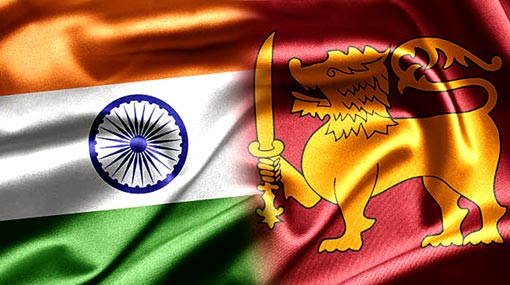
December 22, Colombo (LNW): India’s External Affairs Minister S. Jaishankar’s upcoming visit to Sri Lanka comes at a moment of profound humanitarian need and heightened regional sensitivity. The visit follows New Delhi’s rapid and extensive response to Cyclone Ditwah, one of the deadliest natural disasters Sri Lanka has faced in decades, raising both appreciation and questions about the broader implications of India’s unprecedented assistance.
Cyclone Ditwah, which struck on 27 November 2025, unleashed catastrophic floods and landslides across large parts of the island, claiming more than 500 lives and displacing millions. India responded within hours, launching Operation Sagar Bandhu and becoming the first country to deploy specialised disaster-response teams. Naval vessels already present in Colombo, including the aircraft carrier INS Vikrant, were immediately repurposed for relief operations, enabling rapid delivery of essential supplies.
Over subsequent days, India airlifted large quantities of relief material—tents, medicines, hygiene kits, trauma-care modules and food supplies while deploying elite National Disaster Response Force teams to the worst-affected districts. Indian helicopters and naval assets conducted continuous rescue missions, while an army field hospital treated thousands. Infrastructure support, including temporary bridges, helped restore access to cut-off regions.
For Sri Lanka, grappling with economic fragility and limited disaster-response capacity, the scale and speed of India’s intervention were crucial. Sri Lankan leaders publicly acknowledged the assistance, describing the cyclone as the most severe disaster in recent memory. Against this backdrop, Jaishankar’s visit is expected to focus on reconstruction support, disaster resilience and maritime cooperation.
However, the sheer magnitude of India’s response has prompted debate over whether humanitarian assistance is also serving longer-term strategic interests. Sri Lanka occupies a central position in the Indian Ocean, a region of growing geopolitical competition. India’s “Neighbourhood First” policy and its emphasis on being the first responder in South Asia align closely with its desire to maintain influence and stability in its immediate periphery.
This does not necessarily diminish the humanitarian value of India’s actions. Disaster diplomacy has become an accepted instrument of foreign policy globally, and rapid assistance can both save lives and strengthen bilateral trust. For Sri Lanka, diversified partnerships and reliable regional support remain essential, particularly during crises when speed matters more than pledges.
The key question is not whether India’s assistance carries strategic intent—it almost certainly doe but whether that intent undermines Sri Lanka’s sovereignty or recovery priorities. So far, the aid has been delivered without overt conditionality, focusing on urgent needs rather than long-term leverage.
In this sense, India’s actions reflect a convergence of compassion and strategy. For Sri Lanka, the challenge lies in leveraging such support to rebuild resilience while maintaining balanced regional relations