
By: Staff Writer
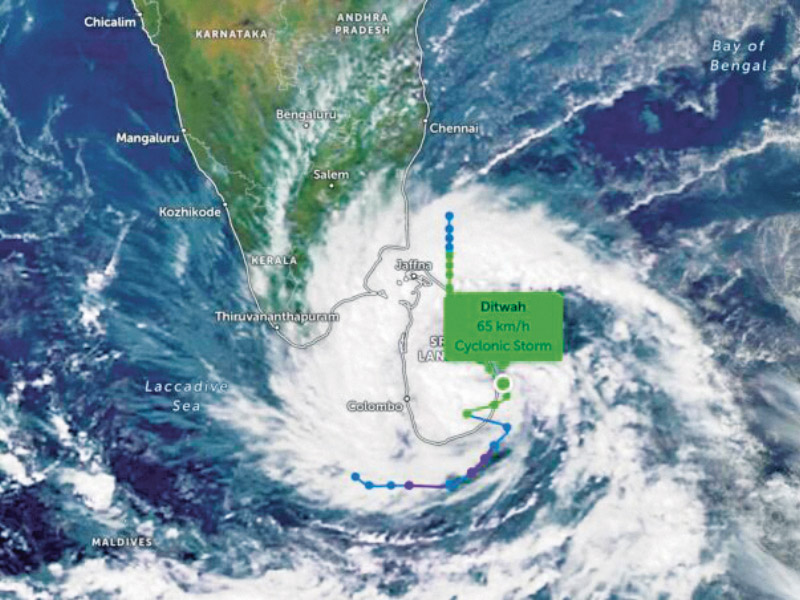
January 12, Colombo (LNW): More than a month after Cyclone Ditwah tore through Sri Lanka’s northern and eastern provinces, the gap between rebuilding needs and available resources is becoming increasingly visible. While the government moved swiftly to establish the Rebuilding Sri Lanka Fund, the overall financial response so far remains modest compared to the scale of devastation.
According to official disclosures, the Rebuilding Sri Lanka Fund has collected just over Rs. 4.2 billion, roughly USD 11–12 million, mainly from domestic private-sector donors and state-linked institutions. Large corporate entities such as John Keells Holdings (Rs. 400 million), Seylan Bank (Rs. 50 million), and several mid-sized companies form the backbone of these contributions. While this reflects strong local participation, it represents only a fraction of estimated reconstruction needs, which government sources place between USD 6–7 billion.
Foreign assistance, meanwhile, has arrived largely outside the Fund’s framework. The IMF approved USD 206 million in emergency financing, while India pledged assistance valued at approximately USD 350 million, including grants and concessional support aimed at housing, infrastructure, agriculture, and health. Other countries including China, the United States, Australia, Canada, Norway, and EU members have contributed smaller but meaningful sums, mostly channelled through humanitarian agencies rather than the Sri Lankan government directly.
Despite these pledges, much of the aid remains sector-specific or humanitarian, not yet converted into long-term reconstruction financing. This distinction matters. Emergency relief stabilises lives, but rebuilding livelihoods, homes, roads, and irrigation systems requires sustained, coordinated investment.
The government initially announced an international donor conference scheduled for January, intended to consolidate global support and convert goodwill into firm financial commitments. However, as of now, no such conference has taken place, and there is no confirmed date. Local media reports suggest the idea has been quietly shelved, raising questions about strategic planning and donor engagement.
In place of the conference, the President’s Office has indicated plans to launch an online public portal detailing cyclone damage and listing reconstruction projects open for sponsorship by local and foreign donors. If implemented effectively, this could improve transparency and allow targeted funding but it cannot substitute for large-scale multilateral financing.
The current picture is therefore mixed: early institutional responses, meaningful but limited funding inflows, and ambitious rebuilding needs still waiting for structured financial backing. The coming weeks will determine whether Sri Lanka can convert sympathy into sustained international commitment or whether post-cyclone recovery risks slowing under financial constraints.