
By: Staff Writer
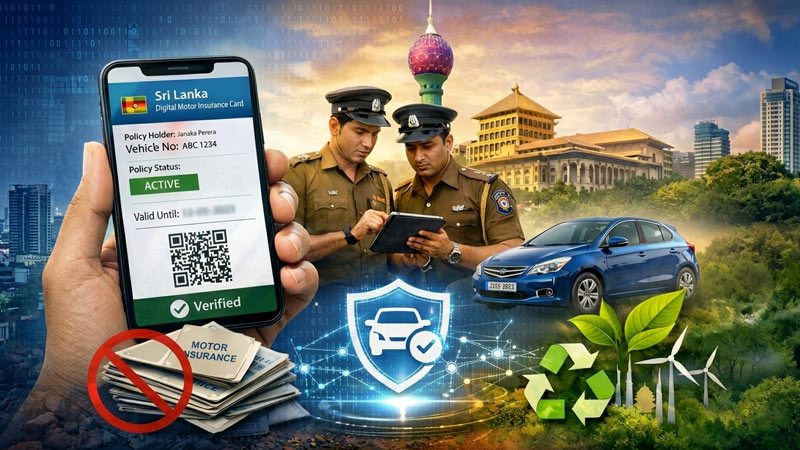
January 13, Colombo (LNW): Sri Lanka’s motor insurance ecosystem is undergoing a significant transformation with the launch of the E-Motor Insurance Digital Card, an initiative led by the Insurance Association of Sri Lanka (IASL) in partnership with regulators and law enforcement. Touted as a leap toward digital governance, the initiative aims to modernise insurance verification, reduce fraud, and strengthen accident management nationwide.
The E-Motor Card replaces the traditional paper-based motor insurance certificate with a digital, mobile-accessible card that can be instantly verified by authorities. For motorists, the change promises relief from a system long plagued by lost, damaged, or forged physical cards. For insurers and regulators, it offers a centralised, tamper-resistant mechanism to confirm insurance validity in real time.
To support the rollout, 500 tablets were donated to the Police Department by IASL and its 13 general insurance member companies. These devices will be used by police officers to digitally record accident data and verify insurance coverage on the spot, feeding into a broader Accident Management System aimed at improving data accuracy and response times.
IASL President Lasitha Wimalarathna said the initiative strengthens coordination between insurers, regulators, and law enforcement, a long-standing weakness in motor insurance enforcement. Police reliance on manual documentation has often delayed claims processing and allowed fraudulent practices to go undetected. Digital reporting is expected to reduce errors, speed up investigations, and improve accountability.
The Insurance Regulatory Commission of Sri Lanka (IRCSL) has endorsed the move, calling digital motor insurance a “major step forward” in consumer protection and regulatory oversight. A National Insurance Verification System, scheduled to go live in March 2026, will allow the public to verify insurance status using a single short code 2252 via USSD, SMS, or IVR, widening access even for non-smartphone users.
Despite the promise, challenges remain. Digital adoption varies widely among motorists, particularly in rural areas and among older drivers. While the system is designed to complement—not immediately replace existing processes, critics warn that uneven implementation could create confusion during roadside checks.
There are also questions around data security and operational readiness. The success of the E-Motor Card depends heavily on system uptime, police training, and interoperability between insurers’ databases. Any breakdown could undermine trust at critical moments, such as accident verification.
Still, stakeholders argue that the initiative sets a foundation for broader digital public services. If effectively managed, the E-Motor Card could reduce insurance fraud, streamline claims, and reinforce road safety enforcement offering a rare example of private-sector collaboration strengthening public infrastructure in Sri Lanka’s digital transition.