
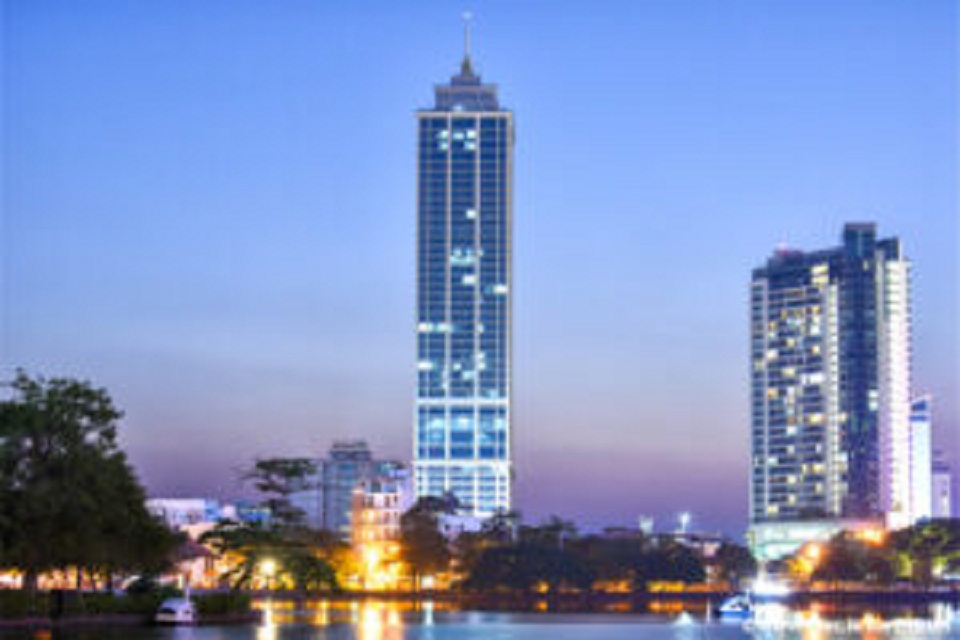
Sri Lanka’s renewed attempt to divest its stake in Canwill Holdings Ltd. has once again brought the long-delayed Grand Hyatt Colombo project into sharp public focus. The Finance Ministry’s decision to convene a pre-Expression of Interest (EOI) meeting this month marks another chapter in a project that has come to symbolize governance lapses, legal entanglements, and the risks of State-led commercial ventures linked to controversial private-sector partnerships.
Canwill Holdings, incorporated in 2011 as a fully State-Owned Enterprise, was established to invest in high-end tourism ventures through its subsidiaries Sinolanka Hotels & Spa Ltd. and Helanco Hotels & Spa Ltd. The flagship initiative was the 47-storey Grand Hyatt Colombo in Colombo 3, designed to include 458 luxury hotel rooms and 100 serviced apartments. Although the structure and façade were largely completed, the project stalled amid escalating costs, funding shortages, and mounting legal disputes.
The project’s origins are intertwined with a broader period of aggressive expansion in Sri Lanka’s hospitality sector, during which several ventures associated with major conglomerates—including those linked to the Ceylinco group later became mired in court cases, arbitration claims, and forensic investigations. While Canwill itself is a State entity, its association with that era of high-risk investment continues to cast a long shadow over investor sentiment.
A forensic audit in 2015 exposed serious irregularities, including procurement violations, unauthorized payments, and cost overruns that saw initial estimates more than double. These findings triggered contract renegotiations, project suspensions, and referrals to law enforcement authorities. Despite the turbulence, the management agreement with Hyatt was found to be contractually sound, even as the overall project remained frozen.
Today, the Grand Hyatt Colombo remains structurally near-complete but commercially dormant—an asset with sunk costs running into billions of rupees and no clear operational timeline. Helanco’s parallel Hambantota resort project, planned on 9.42 acres of beachfront land, never progressed beyond the planning stage, and its Hyatt Regency management agreement has since lapsed.
The Government’s latest divestiture effort, conducted under a two-stage competitive process, reflects a broader push to reduce fiscal exposure and exit non-core commercial investments. With Rs. 18.5 billion in public funds already invested sourced from Sri Lanka Insurance, Litro Gas, and the EPF the stakes remain high.
As EOIs are invited once more, the central question persists: whether divestment can finally unlock value from a project burdened by legal disputes and legacy missteps or whether the Hyatt saga will remain a cautionary tale of failed public-sector entrepreneurship.