
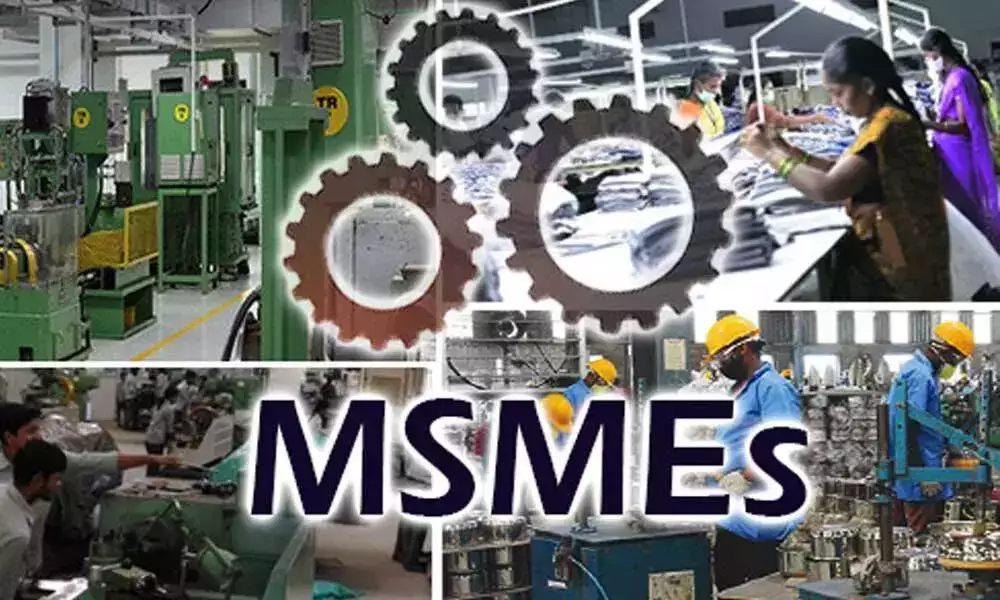
In the aftermath of Cyclone Ditwah, the Government has placed micro, small and medium enterprises (MSMEs) at the centre of its economic recovery agenda, rolling out an unprecedented expansion of concessional credit, guarantees, and disaster relief lending. However behind the impressive numbers lies a critical question: are these mechanisms effectively translating into real recovery for cyclone-hit businesses?
The Finance, Planning and Economic Development Ministry has consolidated all MSME-targeted financial facilities into a single framework valued at Rs. 95 billion. This centralised structure, administered through an online, rules-based platform, is intended to curb discretion, reduce political interference, and improve transparency—longstanding weaknesses in state-backed lending.
A key component of the post-cyclone response is the Comprehensive Disaster Relief Loan Scheme, launched with a Rs. 10 billion allocation. Under this facility, micro enterprises affected by Cyclone Ditwah can borrow up to Rs. 250,000, small businesses up to Rs. 1 million, and medium or large firms up to Rs. 25 million. The loans carry a concessional 3% interest rate, a six-month grace period, and a three-year repayment horizon—terms designed to ease immediate liquidity pressures across agriculture, fisheries, tourism, manufacturing, and services.
Access, however, is tightly structured. Disaster-affected borrowers must secure certification from Grama Niladharis and Divisional Secretaries, while other MSME schemes require multiple layers of business assessments and field inspections by officials attached to development agencies. Although the digital approval pipeline aims to accelerate processing, entrepreneurs in remote cyclone-impacted areas report delays linked to administrative bottlenecks and documentation gaps.
To widen reach, the Government has enlisted 16 public and private banks to deliver these loans, spanning state-owned giants such as Bank of Ceylon and People’s Bank, alongside major private lenders. While this has broadened geographical coverage, lending decisions remain largely bank-driven, raising concerns that risk-averse behaviour could still sideline smaller, informal enterprises hardest hit by the cyclone.
The credit guarantee mechanism is intended to counter this. Through the National Credit Guarantee Institution (NCGI), established in 2025, banks are shielded from a portion of default risk. By end-2025, guarantees worth over Rs. 5 billion had enabled more than 1,200 entrepreneurs without acceptable collateral to access formal credit. In 2026, guarantees are expected to expand further, potentially unlocking Rs. 10 billion in new MSME lending.
Yet questions persist over whether disaster-hit micro enterprises often undocumented and operating outside formal value chains—can realistically navigate these systems. While policy architecture appears robust, its effectiveness hinges on last-mile execution, coordination between local officials and banks, and the capacity of enterprises to restart operations amid damaged infrastructure and disrupted markets.As Cyclone Ditwah exposed the vulnerability of MSMEs to climate shocks, the Government’s response signals a shift toward embedding disaster resilience within economic policy. Whether this translates into sustained recovery or merely short-term relief will determine if the cyclone becomes a turning point or another setback in the MSME sector’s long struggle for stability