
By: Staff Writer
January 26, World (LNW): In the long and often bitter history between India and Pakistan, there were two remarkable moments when diplomats from Pakistan were honoured as chief guests at India’s Republic Day parade – and both came at times when relations were tense and distrust ran high. These gestures were not ordinary state visits.
They were deliberate diplomatic acts aimed at easing hostility and even steering relations toward peace, even as deeper differences persisted.
The Republic Day celebrations in India on January 26 mark the day in 1950 when the nation’s Constitution came into force. It is the country’s most important annual ceremony, with a grand military and cultural parade down what is now Kartavya Path in New Delhi. Since 1950, India has regularly invited a leader or dignitary from another country to be the chief guest, symbolising friendly relations and diplomatic goodwill.
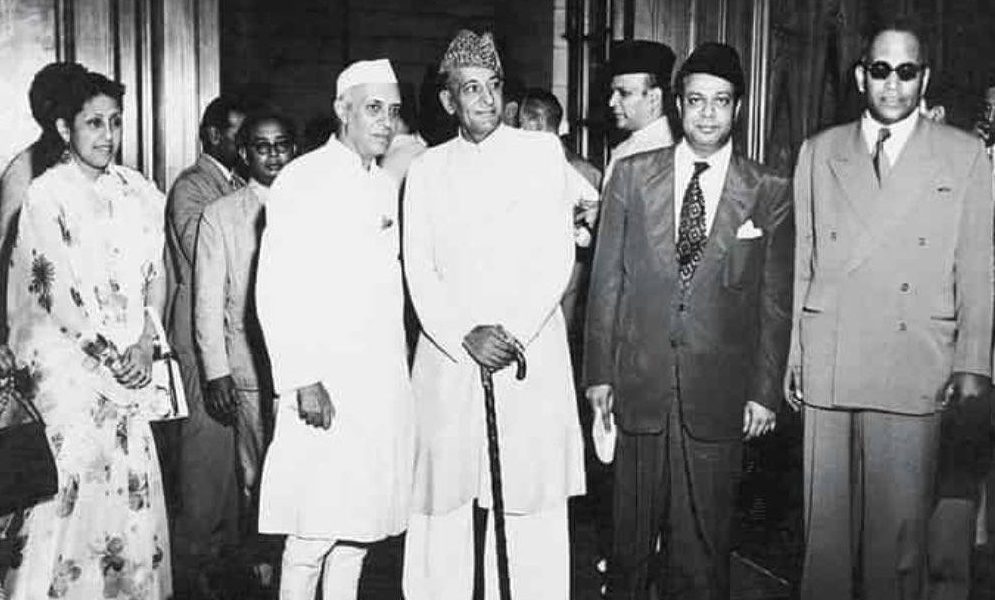
Yet Pakistan, India’s neighbour and long-standing rival, was accorded this honour only twice. The first occasion was in January 1955, when Sir Malik Ghulam Muhammad, the then Governor-General of Pakistan, was invited as the chief guest. This was a bold choice. India and Pakistan were still scarred by the traumatic partition of British India in 1947 and the first war over Kashmir in 1947-48.
Borders were tense and mutual mistrust was deeply entrenched. Inviting Malik, an influential figure in Pakistan’s early political history, was a calculated gesture by India’s then prime minister, Jawaharlal Nehru, who hoped that opening a space for ceremony and symbolism could help thaw relations.
Malik had once served in the Indian Civil Service before partition and held senior financial and administrative roles in Pakistan. But his time as Governor-General was controversial: he dismissed Pakistan’s prime minister in 1953 and dissolved its constituent assembly, moves later criticised for weakening democratic governance in Pakistan and empowering the military. The decision to host him in New Delhi was therefore significant, both politically and symbolically.
A decade later, in January 1965, another Pakistani leader was chief guest at the parade: Rana Abdul Hamid, then Pakistan’s Minister for Food and Agriculture. He came from a well-connected Punjabi landowning family with roots spanning Sindh and Rajasthan, and his visit occurred during the short tenure of Indian prime minister Lal Bahadur Shastri. Once again, India extended an olive branch in public view, hoping that visible engagement might encourage dialogue and confidence-building between two countries quietly sizing each other up militarily.
Yet just months later, the attempt at rapprochement unraveled. In April 1965, Pakistan launched Operation Desert Hawk, a military incursion in the Rann of Kutch, followed by a broader conflict with the Indian Army. A ceasefire in June offered only a brief respite. Pakistan then initiated Operation Gibraltar in August, an unsuccessful attempt to infiltrate Jammu and Kashmir and spark a rebellion, which ultimately helped trigger the full-scale India–Pakistan war of 1965.
At the time, opinions in India varied over the wisdom of inviting Pakistani figures to such a high-profile national event. Some Indian politicians and commentators saw these invitations as worthwhile gestures – “soft bridges” that could foster conversation and reduce hostility. Others warned that ceremonial warmth might be misread as political concession or fail to translate into meaningful diplomatic progress, especially without concrete policy engagement.
Despite these early efforts, the broader trajectory of India–Pakistan relations remained fraught. Deep disagreements over Kashmir, repeated military clashes and, over the decades, cycles of hostility and uneasy ceasefires largely defined the bilateral relationship. Symbolic gestures, both large and small, have often struggled to bridge the deep strategic and ideological divides between the two nuclear-armed neighbours.
These two Republic Day invitations – unique in the long list of chief guests that India has extended to foreign dignitaries from around the world – stand out not just for their rarity but for what they represented: attempts to use diplomatic courtesy and ceremonial recognition as tools for peace, even when political and security realities were hardening. In hindsight, they remind us how fragile and challenging peacemaking can be between states with overlapping histories of conflict and mistrust.
Today’s Republic Day celebrations continue that tradition of foreign engagement, showcasing India’s place on the world stage with leaders from many nations attending as guests. Yet the memories of 1955 and 1965 linger as rare examples of India publicly honouring a neighbour with whom it has shared one of the most complex and contested relationships in modern history.
*With inputs from The Wire