
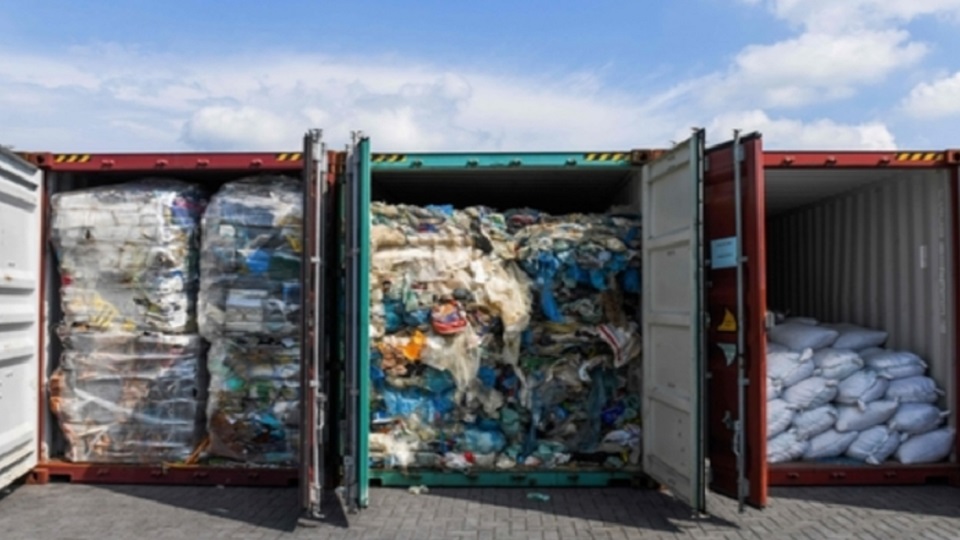
Sri Lanka’s municipal waste management crisis has quietly grown into a major economic and environmental liability. With more than 10,000 metric tons of municipal solid waste generated daily, the country collects barely half of it, while only a fraction is scientifically treated. The remainder is dumped in open sites or burned, imposing heavy costs on public health, tourism, land values, and climate resilience.
Against this backdrop, the USD 4.7 million Korean-funded waste management initiative, implemented through UNDP Sri Lanka, marks a targeted attempt to address long-standing structural weaknesses. While modest in financial size, the project arrives at a critical juncture, as climate-driven disasters and fiscal constraints have exposed the fragility of local government services.
Waste mismanagement already imposes measurable economic costs. Flooding linked to blocked drains increases infrastructure repair bills, while health impacts from open dumping raise public healthcare expenditure. The World Bank has previously estimated that poor solid waste management can cost developing economies up to 1–2% of GDP annually through environmental degradation and lost productivity. For Sri Lanka, struggling to stabilise post-crisis growth, these hidden losses matter.
The Korean-supported programme focuses on decentralised, low-carbon waste systems, targeting selected local authorities in the Central and Sabaragamuwa provinces. Demonstration projects in Gampola and Balangoda will introduce anaerobic digestion, vermicomposting and pyrolysis technologies, with a combined estimated reduction of nearly 270,000 metric tons of CO₂ equivalent over ten years. Beyond emissions, these systems aim to convert waste into energy and usable by-products, reducing landfill dependence.
From an economic perspective, the project’s emphasis on localised treatment is significant. Transporting waste across districts has historically proven costly, socially contentious and politically unstable. Strengthening municipal-level systems lowers logistics costs, improves service reliability and creates opportunities for green jobs in waste sorting, processing and maintenance.
Korea’s technical assistance also addresses a recurring failure in Sri Lanka’s waste sector: technology mismatch. Earlier projects collapsed due to unsuitable imports, weak institutional capacity and limited community buy-in. This initiative integrates behavioural change, digital monitoring, and capacity-building critical elements often overlooked.
Still, while the programme supports climate commitments under the Paris Agreement and advances Sustainable Development Goals, its real economic value lies in proof of concept. If scaled nationally, such systems could reduce disaster-related losses, improve urban livability, and support investment confidence—turning waste from a fiscal burden into a managed resource.