
By: Staff Writer
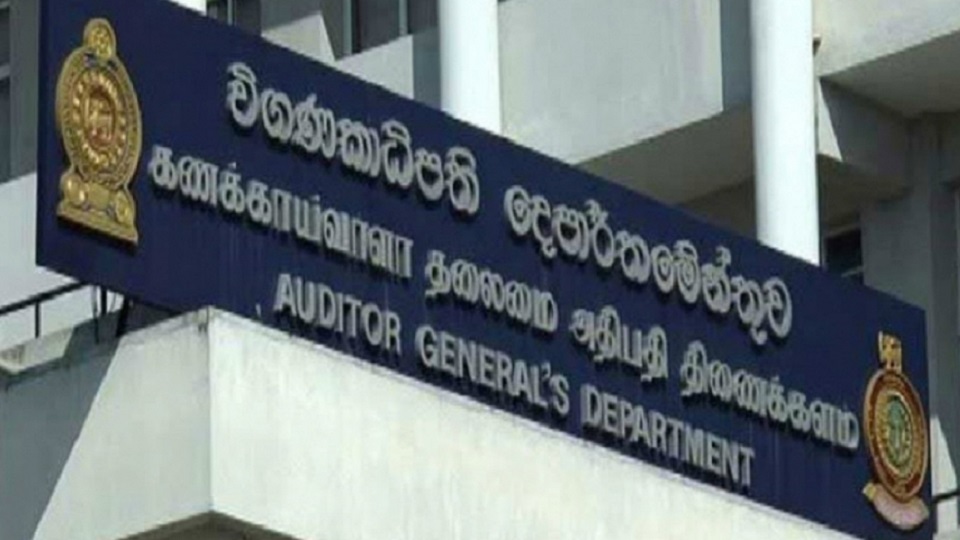
February 02, Colombo (LNW): Sri Lanka’s failure to appoint a permanent Auditor General since April 2025 has triggered a cascading institutional crisis that now threatens the credibility of public financial oversight, parliamentary accountability, and foreign-funded governance reforms. Nearly a year after the retirement of Auditor General Chulantha Wickramaratne on April 8, 2025, the country’s supreme audit institution remains leaderless, operating under a fragile acting arrangement that has steadily eroded its authority.
Despite repeated assurances from the Government, the appointment process has been mired in political deadlock. Health and Mass Media Minister and Cabinet spokesperson Dr. Nalinda Jayatissa recently told the Sunday Observer that the long-vacant post would be filled “within three days,” following deliberations by the newly constituted Constitutional Council. Yet, this promise follows months of deferrals. The Council’s first sitting on January 29, 2026, which included newly appointed civil society representatives, failed to reach a decision, with sources confirming that the matter was postponed to its next meeting.
At the heart of the impasse is a prolonged standoff between the Executive President and the Constitutional Council. At least four presidential nominees have reportedly been rejected for failing to secure the constitutionally required five-member majority. More controversially, the Council has not moved to appoint the most senior officer currently serving as Acting Auditor General, deepening perceptions of arbitrariness and institutional drift.
The consequences have been severe. The National Audit Office (NAO), stripped of a permanent head for over nine months, has seen routine audit operations grind to a near halt. Supervision, coordination with line ministries, and engagement with parliamentary oversight mechanisms have been critically disrupted. Without a fully empowered Auditor General, audit reports have stalled, creating a ripple effect across governance structures.
Parliamentary oversight bodies, including the Committee on Public Accounts (COPA) and the Committee on Public Enterprises (COPE), have been rendered virtually inactive. These committees depend on timely audit reports to scrutinize public expenditure and state-owned enterprises. Their suspension has effectively removed a key layer of democratic accountability at a time when fiscal discipline is essential.
Perhaps most alarming is the impact on foreign-funded governance reforms. The delay has directly affected oversight of World Bank and European Union–supported initiatives, particularly the Public Financial Management Strengthening Project (PFMSP), funded through a EUR 9.8 million grant (approximately US$11.74 million). The project is designed to modernize Sri Lanka’s public financial management systems, enhance transparency, and strengthen audit capacity within the NAO itself.
Any suspension or derailment of the PFMSP carries grave implications. The project underpins reforms in budget execution, procurement modernization, internal controls, and digital financial management systems. Without these reforms, procurement remains vulnerable to inefficiency and corruption, fiscal reporting weakens, and institutional transparency deteriorates. The project also supports capacity building for public officials training that is now at risk of being abandoned.
With a strict completion deadline at the end of 2026, delays could render the project unsustainable, wasting already committed funds and undermining donor confidence. More broadly, Sri Lanka risks jeopardizing its credibility with international partners at a time when the country is navigating an IMF-supported economic recovery.
Legal and civil society organizations have raised red flags. The Bar Association of Sri Lanka and Transparency International Sri Lanka warn that the prolonged vacuum undermines the constitutional independence of the supreme audit institution, creating a dangerous concentration of financial control. Reports that certain approval functions have been temporarily transferred to the Finance Ministry only deepen concerns over blurred institutional boundaries.
As of early 2026, the crisis remains unresolved. What began as a delayed appointment has evolved into a systemic governance failureone that continues to weaken public trust, stall reform, and expose Sri Lanka’s financial system to unacceptable risk.