
By: Staff Writer
February 03, Colombo (LNW): A Government move to overhaul the administrative framework of Sri Lanka’s major economic centres has ignited strong resistance from traders, exposing deeper tensions over governance, transparency and control within a sector that plays a pivotal role in food distribution and price stability.
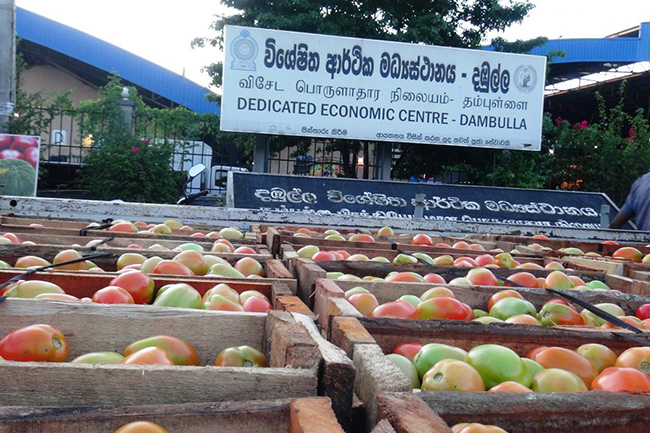
The controversy surfaced during a meeting held on 31 January at the Dambulla Dedicated Economic Centre, where traders formally objected to a proposal to remove five key centres Dambulla, Nuwara Eliya, Thambuttegama, Keppetipola and Narahenpita from their existing management trust and place them under a newly formed State-owned company. The discussion, chaired by Trade, Commerce, Food Security and Cooperative Development Minister Wasantha Samarasinghe, quickly escalated into a heated exchange.
According to traders, the centres have been built, expanded and sustained over more than three decades through trader-led investment, without financial support from the State. They argue that the existing management trust model has delivered operational efficiency, infrastructure development and farmer support, while insulating the centres from political interference. The trust, traders claim, currently holds savings of nearly Rs. 2.5 billion, accumulated through self-financed operations over 29 years.
The Government’s proposal includes appointing a seven-member board of directors to the new company and redirecting monthly rental and tax income from the centres to the entity starting next month. Traders warned that transferring control without prior consultation, feasibility studies or clear Cabinet approval would be unacceptable and could disrupt daily trade flows that supply vegetables and fruits across the country.
The timing of the proposal has raised further concerns. In 2025, Sri Lanka’s agricultural trade and wholesale distribution sector showed modest recovery following the contraction seen in 2024, supported by easing inflation, lower transport costs and improved harvest volumes. Economic centres played a stabilising role by maintaining supply chains and moderating price volatility. Traders fear that administrative uncertainty could reverse these gains, affecting farmer incomes and urban food prices.
Minister Samarasinghe defended the plan, stating that a new corporate structure would strengthen governance, improve accountability and ensure fairer market access for consumers. He insisted that farmers’ and traders’ rights would be protected. However, journalists’ present questioned discrepancies between the company name approved earlier by Cabinet and the name of the newly proposed entity. The Minister acknowledged the change, stating that Cabinet approval for the revised name would be sought later.
Traders countered that trade unions have already filed legal action against a previously approved company, alleging that the new proposal amounts to a rebranding exercise to bypass earlier objections. They also highlighted unfulfilled political promises, including a pledge made during the election campaign to grant traders 30-year lease agreements an issue the Minister did not address.
Amid mounting opposition, the Minister ultimately agreed to reconsider the proposal and promised further discussions, underscoring the growing policy challenge of reforming economic institutions without undermining stakeholder trust during a fragile economic recovery.