
LISTEN TO STORY
WATCH STORY
By: Isuru Parakrama
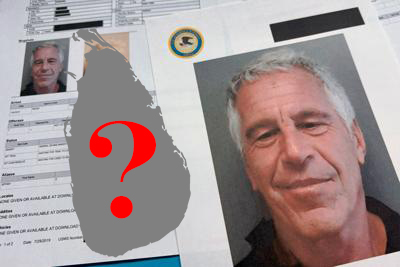
February 08, Colombo (LNW): The name Jeffrey Epstein continues to cast a long and troubling shadow over international politics, finance, and elite social networks. Years after the death of this convicted paedophile in a New York jail cell in 2019, fresh document releases and renewed media scrutiny have kept his case firmly in the public eye.
As millions of pages of records have been unsealed between 2024 and 2026, questions have emerged across many countries: was there any connection to Epstein’s network, and could local figures be implicated? In Sri Lanka, similar concerns have surfaced, fuelled by social media rumours and fragmented online claims.
A closer examination, however, suggests that the island nation has remained largely untouched by the scandal.
Recent analysis of the publicly released archive of Epstein-related documents indicates that Sri Lanka is mentioned 188 times across emails, travel notes, and correspondence, but these references are overwhelmingly incidental and carry no indication of criminal links or operational involvement in Epstein’s activities.
These mentions largely appear in passing contexts, such as individuals noting that they were “in Sri Lanka”, planning visits, or referring to time zones, residences, or professional backgrounds. Legal experts and media analysts have repeatedly stressed that such raw database “hits” are meaningless without proper context.
Importantly, none of the documents link Sri Lanka to Epstein’s trafficking network, abuse operations, or financial dealings. Nor do they suggest that any Sri Lankan individuals were involved in facilitating or concealing his crimes.
The references are scattered across thousands of files and do not form any coherent pattern. In practical terms, they reflect the global nature of elite travel and communication rather than any substantive connection.
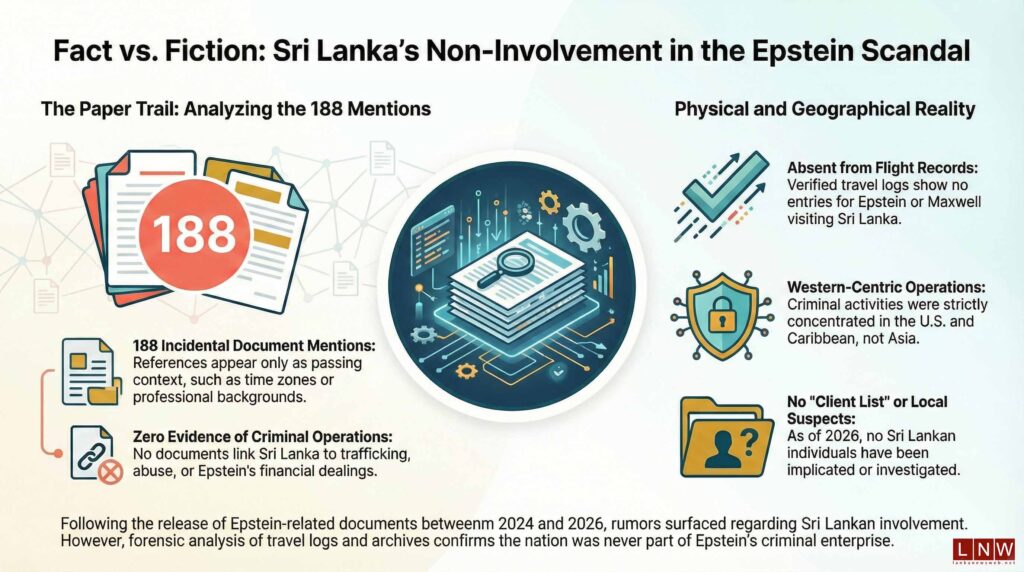
Flight records and travel logs further reinforce this conclusion. Epstein’s documented movements between the 1990s and early 2000s, including those disclosed during the prosecution of Ghislaine Maxwell, show extensive travel across the United States, Europe, the Caribbean, and parts of the Middle East. Notably absent are any entries involving Sri Lanka or major regional hubs such as Colombo. There is no verified evidence that Epstein or Maxwell ever visited the country.
This geographical reality aligns with what is known about Epstein’s operations. His core activities were concentrated in specific locations: his Manhattan townhouse, Palm Beach estate, New Mexico ranch, and Little St. James island in the US Virgin Islands. These sites formed the physical backbone of his trafficking network. Asia, including South Asia, does not feature in serious investigative accounts of his criminal enterprise.
Despite this, fringe theories occasionally circulate online, suggesting hidden connections between Epstein and various countries, including Sri Lanka. These claims often rely on misinterpreted documents, anonymous blog posts, or recycled conspiracy narratives.
Similar to allegations about cannibalism or secret “client lists”, such stories thrive in the absence of context and in an environment of mistrust towards institutions. However, no credible investigative body, court, or journalistic outlet has produced evidence supporting such assertions in relation to Sri Lanka.
Sri Lankan media organisations and independent fact-checkers have also examined the released files. Their conclusions mirror international assessments: references to Sri Lanka are casual and background-related, and no Sri Lankan names or entities are flagged for further investigation. In many cases, personal identifiers remain redacted for privacy reasons, meaning that country-level searches yield mentions without revealing any meaningful personal or legal significance.
The absence of Sri Lankan involvement does not, however, diminish the global relevance of the Epstein scandal. On the contrary, the case has highlighted systemic failures in law enforcement, judicial accountability, and elite oversight that resonate far beyond the United States. For countries like Sri Lanka, it serves as a cautionary example of how wealth and influence can distort justice, and how victims’ voices can be marginalised for years.
It also raises broader questions about transparency in international financial and social networks. Epstein’s ability to cultivate relationships across borders illustrates how globalised elite circles operate, often with minimal scrutiny. While Sri Lanka does not appear to have been part of this network, the case underscores the importance of regulatory vigilance, journalistic independence, and institutional integrity everywhere.
As of early 2026, no investigations have implicated Sri Lankan individuals in Epstein-related offences, and the US Department of Justice has stated that no verifiable “client list” exists. Ghislaine Maxwell remains imprisoned, and most inquiries have been formally closed due to a lack of prosecutable evidence. Victims’ advocates continue to demand full transparency, but nothing released so far suggests any connection to Sri Lanka.
In a closing remark, it should be noted that while Sri Lanka’s name appears sporadically in the vast Epstein document archive, these references are incidental and legally insignificant. There is no credible evidence linking the country, its citizens, or its institutions to Epstein’s crimes. The controversy remains a predominantly Western and Atlantic-centred scandal. For Sri Lanka, the story is not one of involvement, but of observation—a reminder of how global power, secrecy, and abuse can intersect, and why accountability must remain a universal priority.
*Photos: Internet