
LISTEN TO STORY
WATCH STORY
By: Pramod Chinthaka Peiris
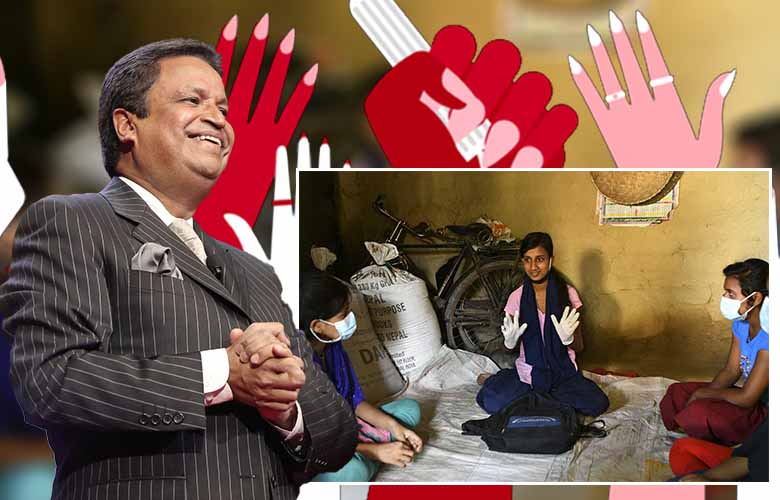
February 09, World (LNW): As Nepal prepares for another crucial electoral cycle, attention is increasingly turning to candidates who choose to contest in rural and economically marginalised constituencies. In the midst of this, Dr. Binod Chaudhary, a billionaire entrepreneur, business magnet and philanthropist turned political figure in Nepal, has reportedly expressed his keenness in such constituencies.
Should Dr. Chaudhary decide to seek office in such an area, he will be stepping into a landscape shaped not only by poverty and underdevelopment, but also by deeply rooted social crises that continue to affect the most vulnerable. Among these, period poverty stands out as one of the most urgent and least adequately addressed challenges facing rural girls and young women.
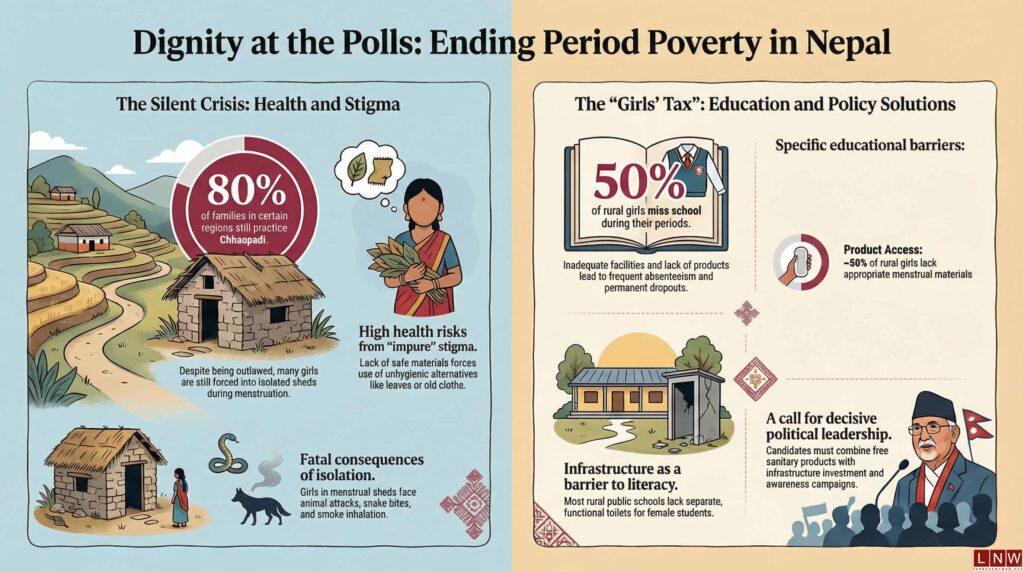
Period poverty in Nepal refers to the lack of access to affordable menstrual products, proper sanitation facilities, and accurate health education. In many rural districts, poverty levels remain high and female literacy remains low, leaving adolescent girls with little support or information when they reach puberty. Nearly half of rural girls lack access to appropriate menstrual materials and are forced to rely on unhygienic alternatives such as old cloths or leaves, increasing the risk of infection and long-term health complications.
The problem is compounded by persistent cultural practices, most notably chhaupadi, which continues in parts of western Nepal despite being outlawed nearly two decades ago. Under this tradition, menstruating girls and women are considered “impure” and are often forced to stay in isolated sheds or cattle shelters. In some regions, as many as 80 per cent of families still impose such restrictions.
These conditions expose girls to cold, smoke inhalation, animal attacks, and even death from snake bites. Beyond physical danger, the practice inflicts deep psychological harm and reinforces stigma around natural biological processes.
Health consequences remain severe. Many girls change makeshift menstrual materials infrequently, increasing the likelihood of urinary tract infections, reproductive health problems, and chronic discomfort. Nearly half receive no formal education about menstruation and are taught from an early age that menstrual blood is “dirty” or shameful.
This lack of knowledge, combined with isolation during periods, worsens both physical and mental health outcomes.
Education is another major casualty of period poverty. Only a small proportion of public schools in rural Nepal have separate, functional toilets for girls. As a result, many students miss classes during their menstrual cycles. Studies suggest that nearly half of rural girls are absent from school at least once a year because of menstruation, while some miss up to a week each month. Over time, this leads to falling behind academically and, in many cases, permanent dropout. This silent “girls’ tax” continues to widen gender gaps in education.
The long-term social and economic consequences are profound. Limited education, combined with early marriage and restricted mobility, traps many rural girls in cycles of dependency and poverty. Child marriage remains one of the leading causes of school dropout after primary level, and married adolescents are far more likely to abandon their studies. These patterns are often repeated across generations, reinforcing inequality and limiting national development.
Nepal is not alone in facing such challenges. Several South Asian countries, including Sri Lanka, have grappled with period poverty in rural and estate communities. While the situation in Sri Lanka has generally been less severe, it demonstrates that cultural stigma, inadequate facilities, and limited awareness can persist even in relatively better-resourced settings. The Nepali experience, however, remains more acute and demands stronger political leadership and sustained intervention.
There have been encouraging initiatives. Non-governmental organisations have introduced reusable pads, menstrual cups, and school-based awareness programmes. Some schools now produce reusable products locally, improving attendance and confidence among students. The government has pledged to provide free sanitary products, and activists continue to push for better distribution systems.
Yet implementation remains inconsistent, funding is limited, and monitoring at community level is weak. Many girls still depend on irregular donations or self-made alternatives.
This is where political leadership becomes decisive. For any candidate seeking the trust of a rural constituency, addressing period poverty is not a peripheral welfare issue; it is central to human dignity, gender equality, and long-term development. Dr. Binod Chaudhary, with his experience in business and public life, is well placed to champion practical, scalable solutions if he chooses to make this issue a priority.
Such leadership would require more than symbolic gestures. The provision of sanitary products must be combined with sustained awareness campaigns, school infrastructure investment, community dialogue, and strict enforcement against harmful practices like chhaupadi. Partnerships with local governments, health workers, and civil society groups are essential to ensure that policies translate into real change on the ground.
Ultimately, elections are not only about winning seats; they are about defining priorities. In rural Nepal, where young girls continue to risk their health, education, and even their lives because of menstruation-related stigma, period poverty represents a moral and developmental test for political leaders. If Dr. Binod Chaudhary chooses to contest such a constituency, his response to this crisis will be closely watched — not only by voters, but by a generation of girls hoping for a safer, fairer future.