
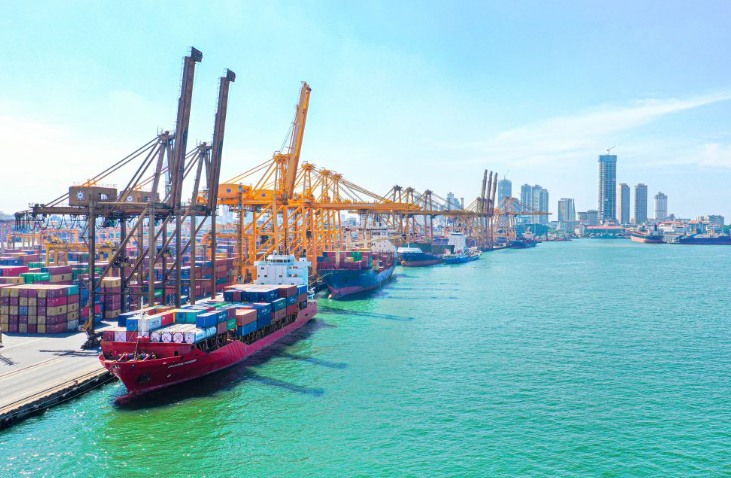
As Sri Lanka struggles to sustain its fragile economic recovery, the Port of Colombo has re-emerged as a critical national asset one that policymakers believe can deliver growth, foreign exchange, and regional relevance. The Government’s renewed emphasis on port expansion, technology upgrades, and global partnerships signals a strategic bet: that maritime trade can once again anchor the island’s economy.
Speaking at the Terminal Technology and Trade Engagement 2026 in Colombo, Ports and Civil Aviation Minister Anura Karunathilaka reaffirmed the State’s commitment to strengthening the ports sector, describing it as a national priority rather than a standalone infrastructure project. His message was clear: Colombo’s status as South Asia’s leading transshipment hub must be defended and enhanced through timely policy decisions and operational reform.
The Port of Colombo has already embarked on a major expansion programme, including new terminals and upgraded facilities aimed at handling larger vessels and higher cargo volumes. These developments are designed to keep Colombo competitive against fast-growing regional rivals such as Indian and Middle Eastern ports. Government officials argue that efficient transshipment services not only generate revenue for the Ports Authority but also lower logistics costs for exporters and importers across the economy.
However, expansion alone is no longer enough. With fiscal constraints limiting large-scale public spending, attention has shifted toward improving productivity within existing infrastructure. Karunathilaka acknowledged that efficiency gaps remain a pressing concern, especially as global shipping lines demand faster turnaround times and predictable service standards.
This reality has pushed the Government to court foreign investment more aggressively, particularly through public-private partnerships. Officials say a more consistent and investor-friendly policy framework is essential to attract global terminal operators and logistics firms. Without such partnerships, Sri Lanka risks falling behind in a region where port modernisation is accelerating rapidly.
International cooperation is also playing a growing role. Technical assistance delivered through the Colombo Plan’s Maritime Advisory Program has supported training, port security enhancements, and operational upgrades at the Sri Lanka Ports Authority. Engagements with US and other international technology providers are helping local operators understand global best practices in terminal automation and digital systems.
Despite global trade volatility and lingering economic pressures at home, the Government remains confident that port-led growth can continue. Colombo’s ambition is not merely to retain its regional ranking but to emerge as a major Asian transshipment hub. Whether that vision materialises will depend on how effectively expansion, efficiency, and investment are aligned—at a time when the margin for error is narrow.