
By:Staff Writer
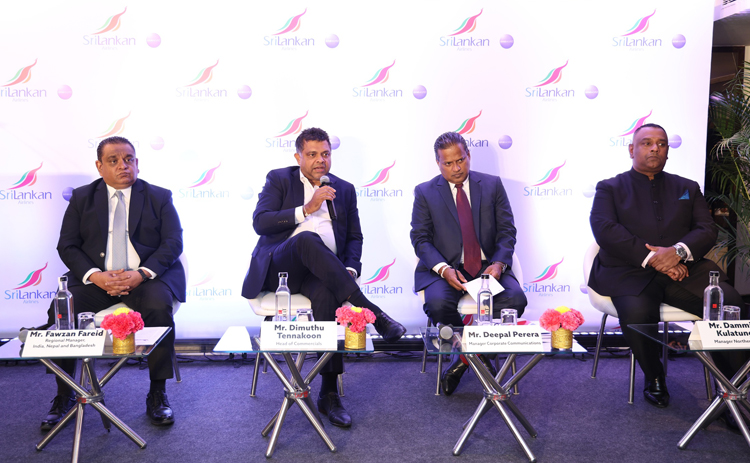
March 03, Colombo (LNW): SriLankan Airlines has unveiled an ambitious push to deepen air connectivity with India, positioning the neighbouring giant at the centre of its 2026 growth strategy. Announced in New Delhi alongside SATTE, the airline’s plan aims to reinforce commercial, cultural and tourism ties while expanding its footprint across one of the world’s fastest-growing aviation markets.
India already represents SriLankan’s largest single market, contributing nearly 30% of total passenger traffic and 23% of visitor arrivals to Sri Lanka. With almost 90 weekly flights between the two countries and more planned — the airline is intensifying services to key Indian cities including Chennai, Mumbai, Delhi, Hyderabad, Bengaluru, Kochi, Trivandrum, Madurai and Tiruchirappalli. Ahmedabad is set to become the tenth Indian destination, allowing SriLankan to serve six of India’s eight largest metropolitan hubs.
From a commercial standpoint, the move appears logical. Year-round demand, strong diaspora connections and cultural affinity provide stable traffic flows. Around 30% of Indian travellers use Colombo as a transit hub to connect onward to the Middle East, Maldives, Far East, Europe and Australia via SriLankan’s network and codeshare partnerships. Expanding Indian routes could therefore strengthen Colombo’s status as a regional gateway.
The airline projects that Indian passenger numbers across its network may rise by up to 12% this year. Increased frequency improves aircraft utilisation and potentially enhances route economics. Furthermore, tapping underserved secondary cities diversifies revenue streams beyond traditional metro markets.
However, the strategy carries risks. Overexposure to a single market could amplify vulnerability to regulatory shifts, currency fluctuations or geopolitical tensions. India’s aviation sector is intensely competitive, dominated by powerful domestic carriers with expanding international ambitions. Competing for price-sensitive passengers may compress yields.
There is also the question of capacity absorption. If demand projections fall short particularly after the post-pandemic travel rebound stabilizes load factors could weaken. A 12% projected increase assumes sustained economic momentum in India and stable bilateral relations.
Moreover, reliance on transit traffic hinges on Colombo’s competitiveness against larger Gulf hubs. Indian travellers connecting to Europe or Australia often have multiple routing options, frequently at lower fares. To maintain relevance, SriLankan must offer pricing, punctuality and service standards that rival regional giants.
However the airline’s broader objective extends beyond ticket sales. By aligning closely with Sri Lanka’s tourism authorities, it aims to position the island as a culturally resonant destination. Campaigns such as the Ramayana-themed tourism drive seek to emotionally connect with Indian travellers, converting air connectivity into tourism inflows.
Ultimately, SriLankan’s India-focused expansion is both an opportunity and a calculated risk. If managed prudently, it could cement India as the airline’s growth engine. If misjudged, concentration risk and competitive pressure may strain financial performance. The success of this strategy will depend not merely on adding routes, but on sustaining profitability in a fiercely contested aviation corridor.