
By:Staff Writer
March 03, Colombo (LNW):Sri Lanka’s ambitious “Rebuilding Sri Lanka” Fund, created in the wake of Cyclone Ditwah, is now at the centre of a growing governance debate with lawmakers and civil society warning that concentrated private sector influence could expose the country to serious financial risk.
The fund, operating under the Presidential Secretariat, is managed by a seven-member committee combining senior state officials with leading corporate executives. While Parliament has approved the mechanism, critics argue that approval alone does not guarantee meaningful oversight.
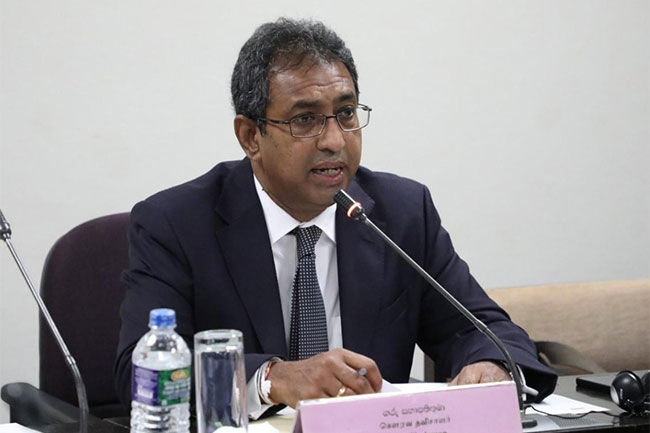
Public Committee on Finance Chairman MP Harsha de Silva has raised concerns regarding the legal architecture of the fund. He has stressed the need for clarity on whether the structure complies fully with Sri Lanka’s public finance laws and whether Parliament retains effective supervisory authority over disbursements, procurement decisions, and auditing processes. According to parliamentary sources, he has cautioned that any ambiguity could weaken accountability at a time when billions are being mobilised.
Finance Ministry figures show the fund has secured over Rs. 8.5 billion locally and more than US$ 9.49 million in foreign contributions. Major pledges include Rs. 420 million from Dialog Axiata and Rs. 500 million from Bank of Ceylon. International support includes contributions from the United States, Australia, China, and the United Kingdom. A digital transparency platform was developed free of charge by Massachusetts Institute of Technology with technical backing from Microsoft.
The Management Committee itself includes powerful business leaders from Hayleys Group, John Keells Holdings, Aitken Spence, Brandix Group and LOLC, alongside senior government representatives.
However, the Law & Society Trust has warned that placing corporate leaders in positions overseeing reconstruction contracts creates structural conflict-of-interest risks. In a recent expert assessment, the organisation reportedly called for mandatory public disclosure of procurement decisions, independent audits beyond internal mechanisms, and strict recusal requirements for committee members linked to bidding entities.
The committee has already disbursed approximately Rs. 24.4 billion in relief and launched Treasury-backed 3 percent interest loans for micro, small, and medium enterprises. It is also preparing for large-scale housing construction projected at 50,000 homes by 2026. President Anura Kumara Dissanayake has urged faster implementation of compensation programmes, particularly in hard-hit districts.
Hitherto observers warn that speed must not override safeguards. Sri Lanka’s past experience with the Helping Hambantota Fund under former President Mahinda Rajapaksa continues to serve as a cautionary tale about off-budget financial mechanisms and weak institutional checks.
With billions committed and reconstruction accelerating, analysts argue that the government now faces a defining test: whether it can combine private sector efficiency with uncompromising public accountability. Without iron-clad parliamentary scrutiny and transparent procurement rules, the very structure designed to rebuild the nation could expose it to financial mismanagement and reputational damage once again.