
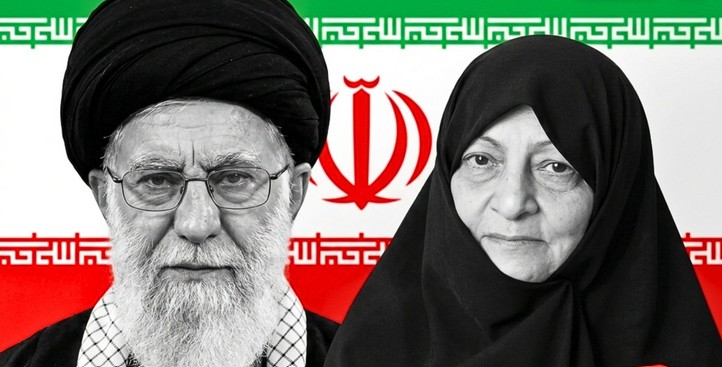
March 03, World (LNW): Mansoureh Khojasteh Bagherzadeh, widow of Iran’s Supreme Leader Ali Khamenei, has died at the age of 79 after reportedly succumbing to injuries sustained during the recent joint United States–Israeli air raids on Tehran, according to Iranian news outlets.
Reports indicate that she had remained in a coma since the strikes carried out in the early hours of Saturday, which also claimed the life of her husband. The couple, who married in 1964, shared more than six decades together and raised six children.
Despite her proximity to one of the most powerful figures in the Islamic Republic, Bagherzadeh largely avoided public attention, maintaining a private domestic role throughout her husband’s long tenure.
The 86-year-old cleric, who had led Iran since 1989 following the death of revolutionary founder Ruhollah Khomeini, was killed when his residential compound was struck in what has been described as a coordinated assault. Iranian state media confirmed his death a day later, alongside reports that several close family members, including a daughter and a grandchild, were among those killed.
Other senior figures are also said to have died in the bombardment, including prominent adviser Ali Shamkhani and Revolutionary Guards commander Mohammad Pakpour. The scale of the operation has marked one of the most significant escalations in the long-running shadow conflict between Iran and its adversaries.
Among the political figures to survive was Ali Larijani, who publicly vowed resistance, signalling that Tehran would not retreat in the face of external pressure.
State broadcasters have portrayed Khamenei’s death as a martyrdom, casting him as a guardian of national sovereignty who stood resolutely against Western influence for more than three decades. His leadership was defined by a staunchly anti-Western posture and firm consolidation of clerical authority within Iran’s political system.
In addition to targeting senior leadership, the strikes reportedly hit ballistic missile installations, naval facilities and warships. Iranian officials have also claimed that the nuclear enrichment site at Natanz was struck, although Washington and Tel Aviv have not confirmed that specific claim, stating only that operations were aimed at leadership and strategic infrastructure.
With no formally designated successor in place, Iran has moved swiftly to establish a temporary three-member leadership council. Foreign Minister Abbas Araghchi has indicated that a new Supreme Leader could be selected within days, a decision likely to shape the country’s political trajectory at a moment of acute instability.
Within Iran, reactions appear mixed. While official mourning ceremonies are being organised, there have been scattered reports of subdued celebrations in some areas. Widespread internet restrictions have made it difficult to verify the full scale of public response as the nation confronts a sudden and historic transition of power.