
By Adolf
March 17, LNW (Colombo): Politics can be unforgiving. Words spoken in opposition often return to haunt leaders once they assume office. That appears increasingly to be the case for Anura Kumara Dissanayake, who built much of his political persona on ridiculing the political establishment, including former President Ranil Wickremesinghe.
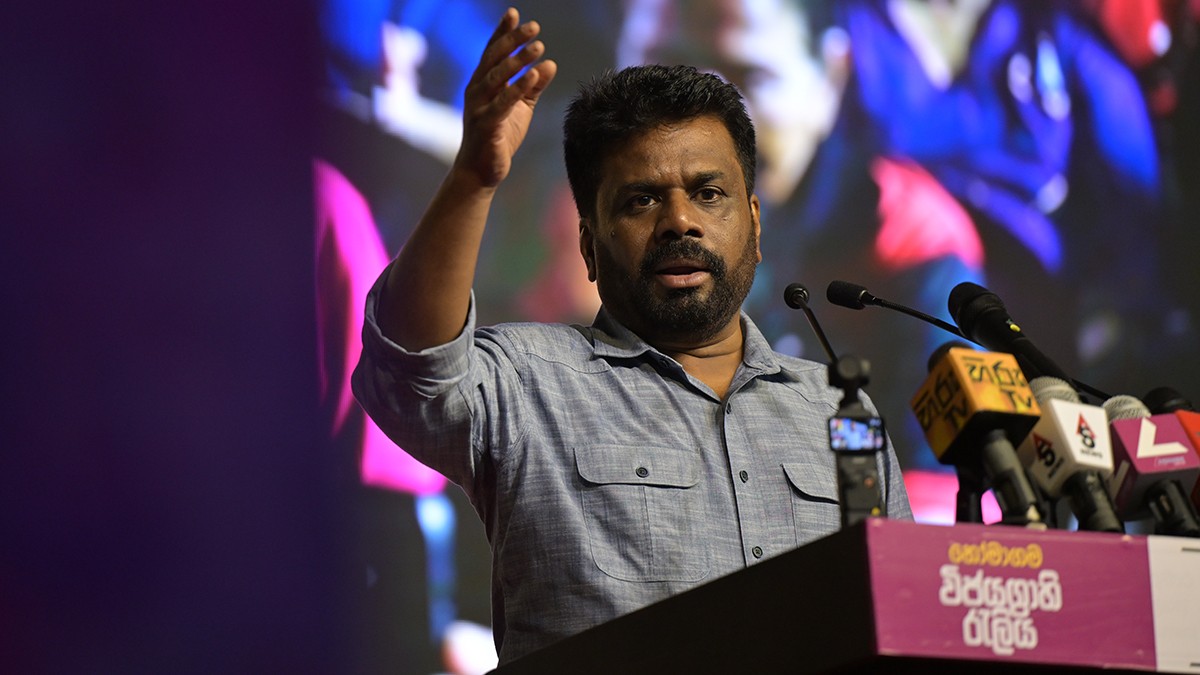
For years, Dissanayake was among the most vocal critics of Sri Lanka’s traditional political class. His speeches were sharp, theatrical, and often laced with sarcasm and ridicule. Few public figures escaped his criticism. Presidents, ministers, bureaucrats, business leaders, and institutions were frequent targets of his scathing commentary.
Such rhetoric resonated strongly with voters frustrated by corruption, economic hardship, and decades of political mismanagement. In opposition, this style of politics often wins applause. It energises crowds, simplifies complex issues, and presents the speaker as a fearless challenger to entrenched power.
However, criticism can sometimes cross the line from political debate into mockery. In one widely circulated instance following a speech by Wickremesinghe, Dissanayake appeared to make light of the way the former president pronounced a word in English laugh Gas. AKD spoke as though he had done elocution. The moment was shared widely online, with supporters using it as a political jab.
Ridiculing
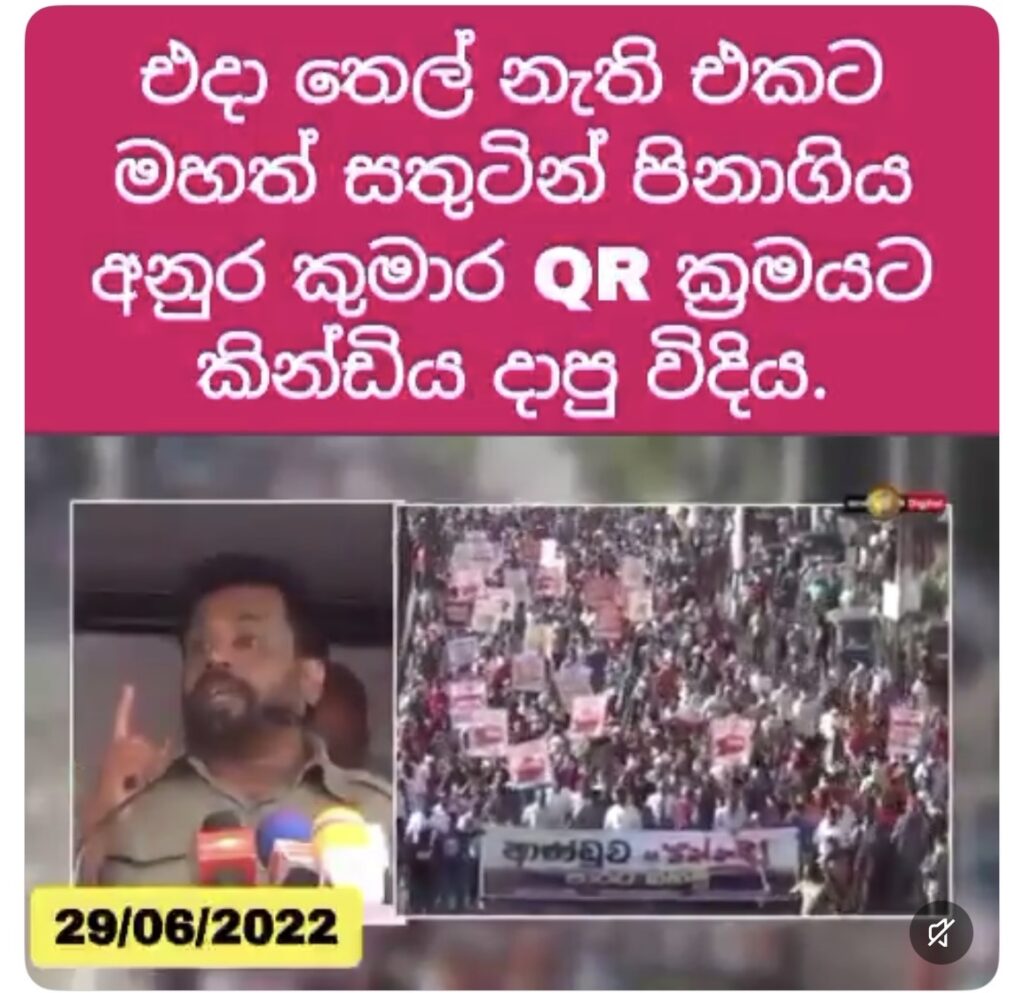
Yet such ridicule overlooked an obvious reality. Wickremesinghe was educated at Royal College Colombo, one of Sri Lanka’s most prestigious schools, and has spent decades operating on the global political and economic stage. Regardless of political disagreements, his international exposure and long experience in governance are widely recognised. Dissanayake, by contrast, emerged from a very different background. Rising through grassroots activism and the ranks of the Janatha Vimukthi Peramuna, he built his reputation as an anti-establishment campaigner who spoke the language of ordinary people. That authenticity helped him connect with citizens frustrated with traditional political elites and yearning for change. As for his English competency. People are yet to hear him speak in English. But political rhetoric that thrives in opposition can quickly become a liability in government. Today, many of Dissanayake’s own speeches and pronouncements are being scrutinised with the same intensity he once directed at others. Statements that once drew applause at political rallies are now being revisited in the context of governing responsibilities. Critics are increasingly highlighting inconsistencies between past rhetoric and present realities. Recent controversies surrounding fuel supply queues and the reintroduction or discussion of mechanisms such as the QR-based fuel distribution system have reignited debates over earlier criticisms made by opposition politicians. What once appeared to be simple solutions from the sidelines now confront the complex realities of governance.
This is not unusual in politics. Leaders everywhere discover that governing is far more complicated than criticising from the opposition benches. Policies that sound straightforward during campaign speeches often prove far more difficult to implement in practice.
In Sri Lanka’s case, the challenges are particularly daunting. The country continues to navigate the aftermath of its worst economic crisis since independence following the Sri Lankan economic crisis (2019–2023). Stabilising public finances, rebuilding investor confidence, restoring growth, and maintaining social stability require pragmatic and sometimes unpopular decisions. As a result, the political stage that once rewarded dramatic criticism now demands measured leadership. Every speech, every promise, and every policy is judged not by rhetoric but by outcomes.
Bitter Truth
In that sense, Dissanayake may be experiencing what many politicians before him have faced: the difficult transition from opposition rhetoric to governing responsibility. The scrutiny he once directed at others is now directed at him. If there is a lesson here, it is that politics requires humility. Public life inevitably exposes every leader’s words and actions to intense examination. Mockery may earn applause in the short term, but it rarely ages well. Sri Lanka’s voters today are less interested in political theatre than in results. The real test of leadership is not how effectively one criticises opponents, but how effectively one governs when entrusted with power. In politics, as in life, the medicine once prescribed for others sometimes returns to one’s own doorstep. As the old saying goes, what goes around comes around — and AKD may now be learning that lesson the hard way.
The content of this article is the viewpoint of its author and does not reflect the opinion of LNW in any way.