
By: Staff Writer
March 22, Colombo (LNW): For decades, Sri Lanka’s Trincomalee Oil Tank Farm has stood as a symbol of unrealised economic potential. Built during World War II and comprising 99 tanks with a combined storage capacity nearing one million metric tonnes, the facility could have transformed the island into a regional energy hub. Instead, repeated political resistance particularly from parties now in power has contributed to years of delay, underutilisation, and lost opportunity.
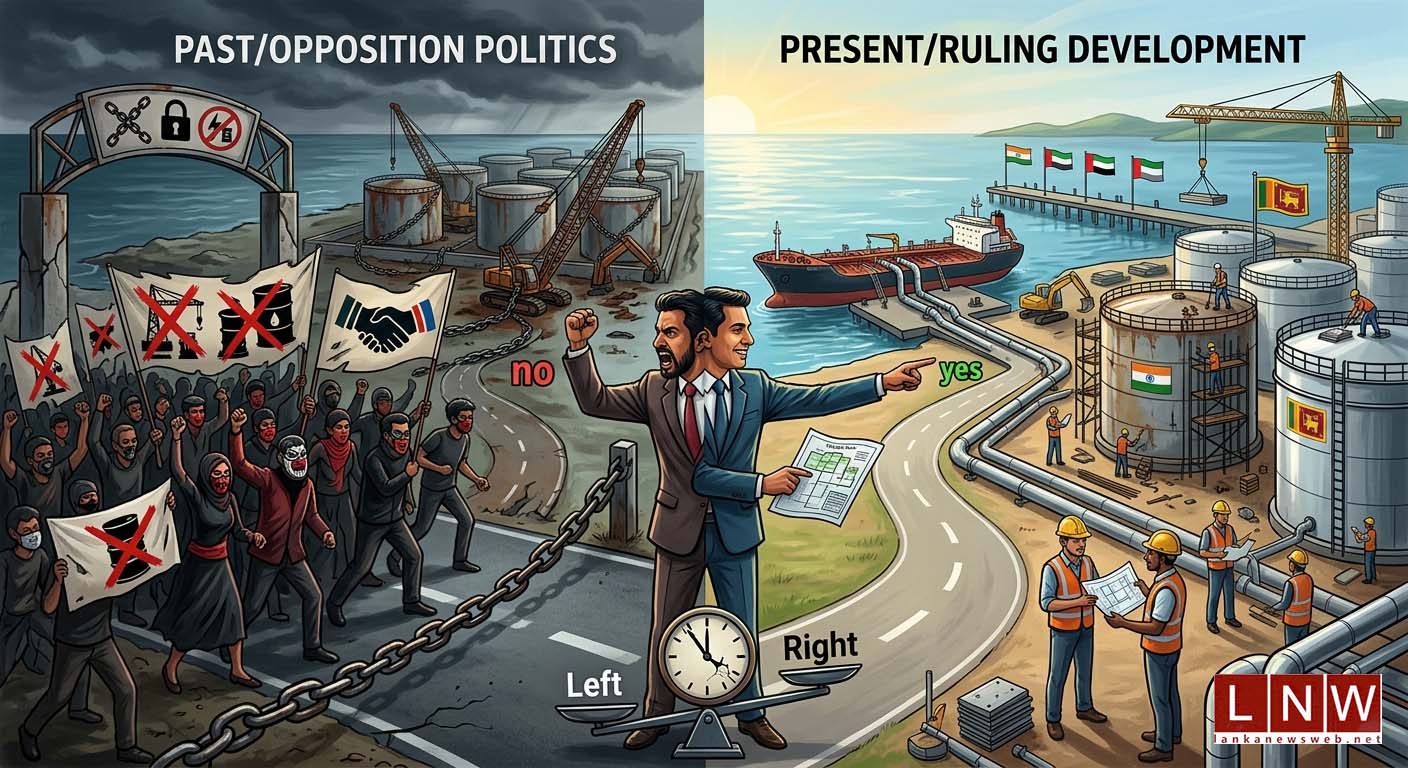
The current administration, led by the Marxist Janatha Vimukthi Peramuna (JVP)-aligned National People’s Power (NPP), now promotes the very foreign-backed development frameworks it once opposed. While in opposition, the JVP was among the most vocal critics of agreements involving international collaboration, especially those linked to India. This included resistance to earlier efforts tied to the Lanka IOC partnership and broader Indo-Lanka energy cooperation.
Historically, progress on the Trincomalee tank farm has been hindered by a combination of trade union activism, nationalist rhetoric, and legal challenges. However, political agitation played a decisive role. Protests against foreign involvement framed such agreements as threats to sovereignty, effectively stalling negotiations and discouraging investors. These disruptions contributed to a cycle of stagnation that prevented timely upgrades to critical infrastructure.
The irony is stark. Today, the same political bloc supports a trilateral agreement involving India, the United Arab Emirates, and Sri Lanka to renovate and expand the facility. The project includes refurbishing 61 tanks, developing bunkering services, and potentially constructing a new refinery. A joint venture structure where the Ceylon Petroleum Corporation holds a majority stake alongside Lanka IOC remains central to implementation, echoing earlier frameworks once rejected.
Sri Lanka’s current fuel storage capacity allows reserves for only about a month. Officials now argue that expanding storage to 60 days is essential for energy security. Hitherto such urgency raises questions about why similar arguments were dismissed in the past. The country’s economic crisis, exacerbated by foreign exchange shortages and fuel scarcities, underscores the cost of delayed decision-making.
Critics argue that the JVP’s past opposition to large-scale economic projects extended beyond Trincomalee. Infrastructure initiatives, foreign investment deals, and public-private partnerships frequently encountered resistance, often framed as ideological opposition to liberal economic policies. While such scrutiny is a legitimate part of democratic governance, its cumulative effect may have been to deter long-term development.
The Trincomalee project illustrates a broader pattern in Sri Lanka’s economic governance: policy inconsistency driven by political cycles. When opposition parties reject projects only to later adopt them in power, continuity suffers. Investors become wary, timelines extend, and costs escalate.
As work begins under the new agreement, the focus has shifted toward implementation. The government has allocated substantial funding and aims to position Trincomalee as a strategic energy hub. However, the legacy of past resistance remains a cautionary tale.
Sri Lanka’s challenge now is not only to complete the project but to ensure that future economic planning is insulated from short-term political shifts. Without such stability, even the most promising initiatives risk being delayed again.