
By: Staff Writer
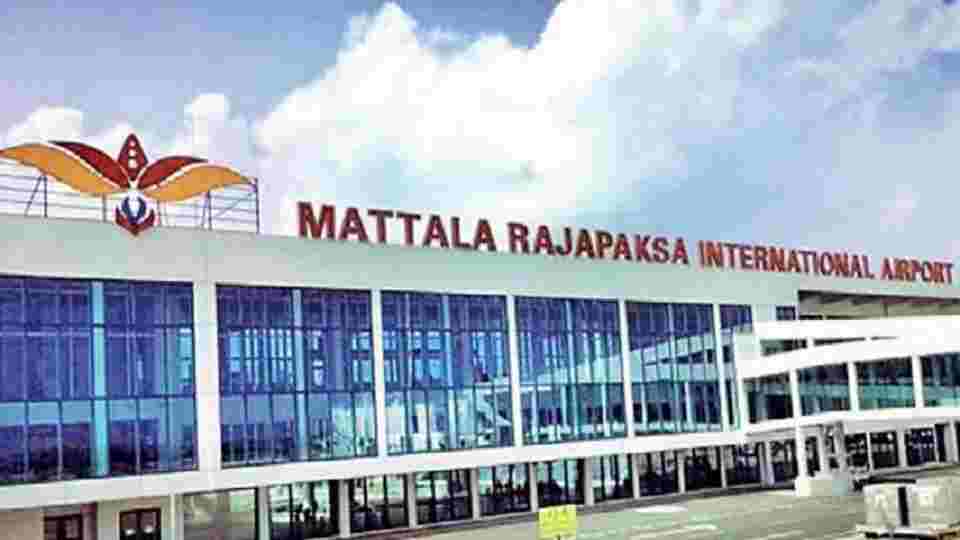
March 23, Colombo (LNW): Sri Lanka’s long-struggling Mattala Rajapaksa International Airport (MRIA) may finally be on the brink of relevance, as geopolitical tensions in the Middle East disrupt global aviation patterns and create an urgent need for alternative hubs.
Recent airspace restrictions linked to regional conflict have triggered requests from major Gulf carriers such as Qatar Airways and Emirates for increased access to Sri Lanka. However, the country’s primary gateway, Bandaranaike International Airport (BIA), is already operating near capacity, handling tens of thousands of flights annually and turning away additional frequencies due to congestion.
This bottleneck has placed MRIA once labelled the “world’s emptiest airport” back into focus.
The numbers highlight both the challenge and the opportunity. In 2025, MRIA recorded its highest-ever activity, handling 140,614 passengers and 703 international flights . While this marks a notable improvement, it remains far below its designed capacity of one million passengers annually. On average, the airport currently handles fewer than two flights per day, underscoring its underutilisation.
Financially, the picture is stark. In 2024, MRIA generated just Rs. 242 million in operating income against costs of Rs. 3.6 billion, resulting in losses exceeding Rs. 3.3 billion . Cumulative losses since 2018 have surpassed Rs. 39 billion, while total losses since its opening in 2013 are estimated at around Rs. 66 billion. In simple terms, the airport earns only a fraction of what it spends.
Nevertheless, the ongoing Gulf crisis may change this equation.
MRIA’s geographic position close to major East-West flight corridors makes it an attractive contingency hub for diverted or rerouted flights. Aviation officials confirm the airport is fully operational and compliant with international standards, capable of handling wide-body aircraft. Its 3,500-metre runway can even accommodate large jets such as long-haul airliners.
However, limitations remain. Parking capacity is restricted to around 7-10 aircraft at a time, meaning the airport cannot absorb large-scale diversions without careful coordination. Even so, a moderate increase in traffic could significantly boost revenue streams through landing fees, ground handling, refuelling, and passenger services.
Beyond immediate crisis-driven demand, authorities are exploring long-term transformation. Plans are underway to attract private investment in maintenance, repair and overhaul (MRO), cargo logistics, aviation training, and hospitality services. These sectors could generate steady income independent of passenger traffic.
The Gulf conflict, while unpredictable, has effectively accelerated discussions that might otherwise have taken years. If even a portion of diverted Gulf traffic materialises, MRIA could transition from a financial burden into a strategic asset.
For the first time in years, the airport’s future may depend less on past missteps and more on how quickly Sri Lanka can seize this unexpected geopolitical opportunity.