
By: Staff Writer
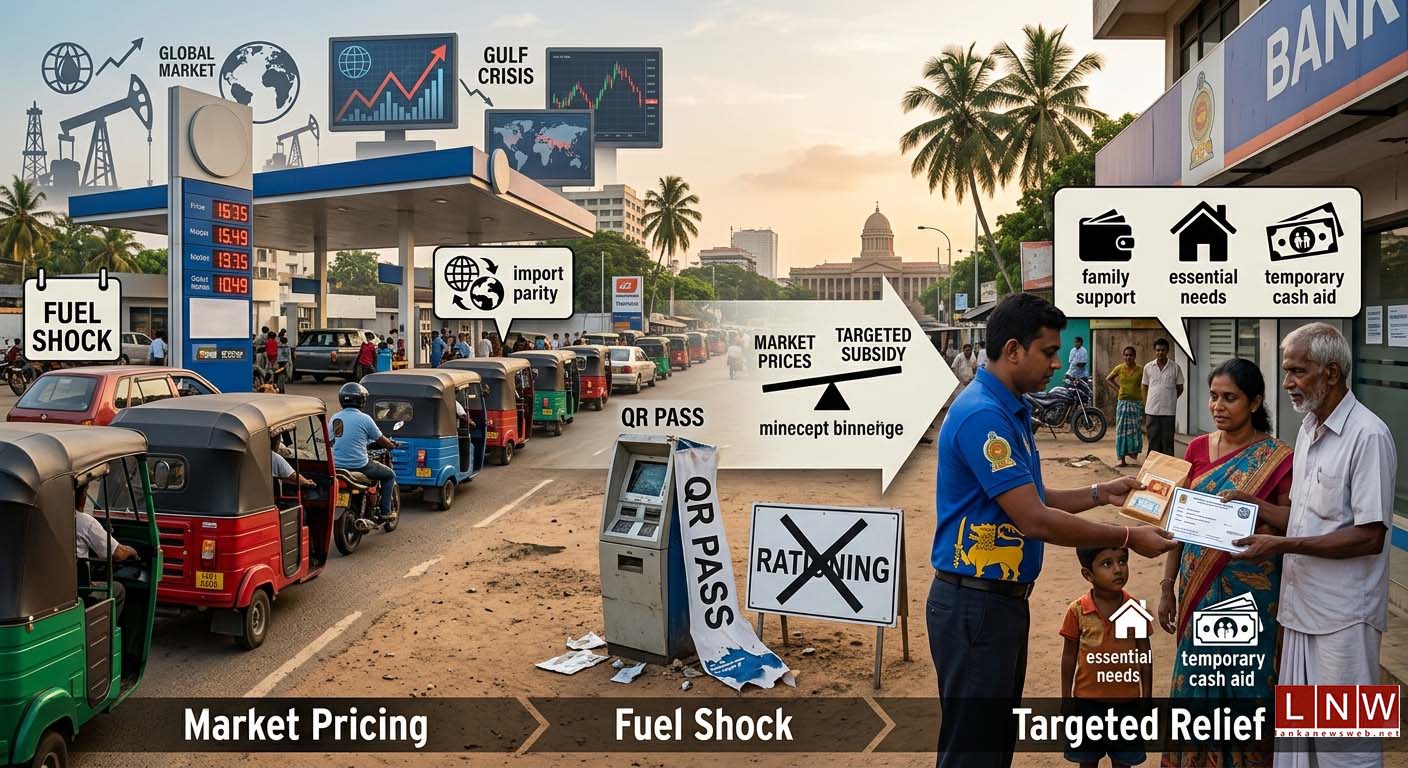
March 23, Colombo (LNW): Sri Lanka’s embattled fuel sector is on the brink of a decisive transformation, as authorities move to dismantle rationing systems and state-controlled pricing in favor of a market-driven model paired with targeted subsidies for vulnerable groups.
The proposed reform, discussed at a high-level meeting chaired by Anura Kumara Dissanayake, signals a major policy pivot aimed at stabilizing the energy market while shielding the most economically fragile citizens from the fallout of rising global oil prices driven by the ongoing Gulf crisis.
Finance Ministry sources confirmed that the government is preparing to raise fuel prices to more realistic levels while simultaneously introducing temporary cash support for low-income households. Officials have indicated that a subsidy program could be sustained for up to three months if required, a proposal already communicated to the International Monetary Fund, which has requested a formal report without opposing the plan.
The shift comes amid growing consensus that the fuel “QR pass” rationing system introduced during the height of the 2022 economic collapse has outlived its usefulness. While it initially helped manage severe shortages, it later gave rise to widespread distortions, including black-market trading and queue manipulation.
Energy economists argue that such administrative controls failed to address the underlying supply constraints. Instead, they effectively turned fuel access into a tradable commodity, creating informal markets and inefficiencies that undermined the system’s original intent.
At the same time, the government’s cost-reflective pricing formula has come under intense criticism for its inability to keep pace with volatile global oil prices. Delayed adjustments often resulted in mounting losses for the Ceylon Petroleum Corporation, further straining public finances.
Officials warn that Sri Lanka’s fragile fiscal position leaves little room for such inefficiencies. With global prices fluctuating sharply due to geopolitical tensions, maintaining universal subsidies or price controls is no longer viable.
As an interim step, authorities have introduced an odd-even fuel distribution system based on vehicle registration numbers to manage immediate demand pressures. However, this is widely viewed as a temporary measure while broader structural reforms take shape.
The new model centered on import parity pricing will allow private operators to determine fuel prices based on international market rates, with the government imposing only a protective ceiling. This approach is expected to improve supply stability while reducing the financial burden on the state.
International firms such as Sinopec, Lanka IOC, and RM Parks are already expanding their presence, using their own foreign exchange reserves to import fuel thereby easing pressure on the Central Bank.
Analysts say the success of this transition will depend on the government’s ability to balance market efficiency with social protection. For now, the message is clear: Sri Lanka is preparing to let the market leadwhile ensuring the most vulnerable are not left behind.