
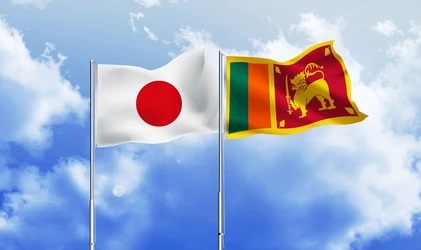
Japan’s latest financial assistance to Sri Lanka signals more than routine development aid—it reflects a strategic investment in disaster resilience and emergency communication systems.
A grant of $181,837 (approximately Rs. 55.7 million) has been extended to the Telecommunications Regulatory Commission of Sri Lanka (TRCSL) under Japan’s Grant Assistance for Grassroots Human Security Projects (GGP) scheme. The funding is aimed at strengthening communication networks in cyclone-affected regions, where breakdowns in coordination have historically hampered emergency response.
At the core of the initiative is the deployment of Japanese-manufactured high-frequency (HF) radios, portable communication units, and repeaters. These technologies are designed to ensure uninterrupted, real-time communication among rescue teams, even in remote or infrastructure-damaged areas.
This intervention comes in the aftermath of Cyclone Ditwah, which exposed vulnerabilities in Sri Lanka’s disaster-response framework particularly the lack of reliable communication during critical rescue windows. By addressing this gap, the project attempts to reduce response times and improve coordination among state agencies.
Japanese Ambassador Akio Isomata, who formalized the agreement with TRCSL Chairman Waruna Sri Dhanapala, framed the initiative as part of Japan’s long-term commitment to Sri Lanka’s recovery. However, beyond diplomatic messaging, the project underscores Japan’s broader role in exporting resilient infrastructure technologies to disaster-prone regions.
Officials from TRCSL acknowledge that the introduction of advanced communication tools could significantly enhance preparedness for future emergencies. Hitherto, questions remain about long-term maintenance, training, and integration with existing systems factors that often determine whether such interventions deliver sustained impact.
Japan’s cumulative contribution of $62 million since 1989 under the GGP program highlights a consistent pattern of grassroots-level engagement. This latest project, while modest in financial scale, could prove pivotal if it successfully strengthens the country’s emergency communication backbone.