
By: Staff Writer
March 29, Colombo (LNW): Sri Lanka’s decision to gradually dismantle its long-standing cess tax regime marks a pivotal shift in trade policy, driven largely by commitments to the International Monetary Fund (IMF) and broader economic reform goals. While authorities insist the move will enhance competitiveness and align with global norms, concerns remain about its impact on domestic industries and import dynamics.
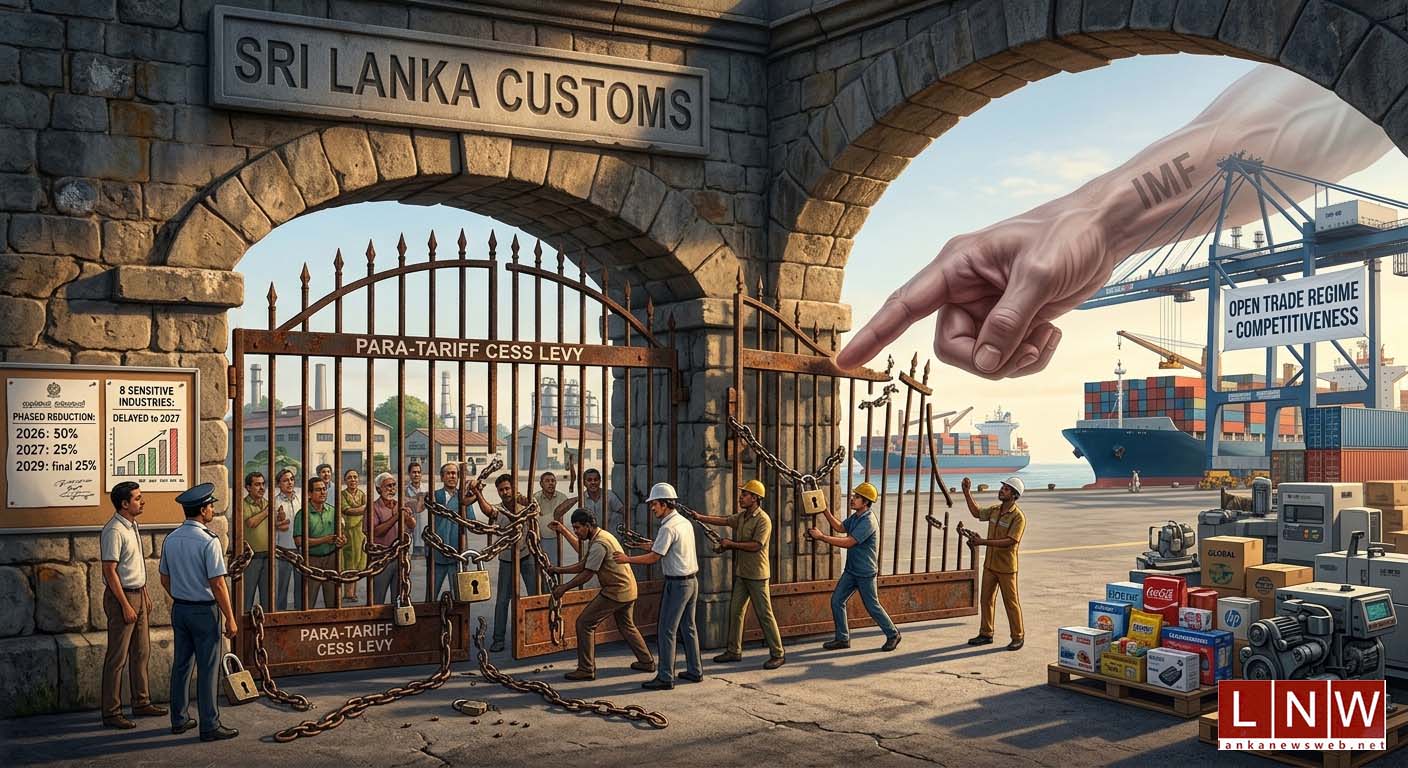
Industry Ministry Secretary Thilaka Jayasundara clarified that the cess levy traditionally used to protect local manufacturers and manage imports will not be abruptly abolished. Instead, the Government has adopted a phased reduction strategy beginning April 2026, with an initial 50% cut, followed by further reductions of 25% in 2027 and the final 25% by 2029.
However, the timeline has been deliberately slowed for vulnerable sectors. A selected group of 107 HS codes across eight industries will only begin reductions in 2027, reflecting concerns about exposing sensitive domestic producers too quickly to foreign competition.
The cess tax, imposed under the Export Development Act of 1979, has long functioned as a para-tariff, often ranging from 1% to as high as 35%. While effective in shielding local industries and discouraging non-essential imports, it has also been criticised for inflating production costs especially for export-oriented sectors dependent on imported raw materials.
The reform covers approximately 7,800 HS codes, with 2,634 already approved for phased elimination by the Cabinet. Notably, 697 intermediate goods will see cess removal between 2026 and 2028, while 265 textile-related items and low-rate goods will experience immediate or early relief. This signals a targeted approach aimed at easing input costs for exporters.
At the heart of this policy shift lies Sri Lanka’s agreement with the IMF. Following approval of a $206 million financing package in December 2025, the Government committed to maintaining an open trade regime and avoiding restrictive import measures. The Letter of Intent explicitly ruled out new trade barriers or currency restrictions inconsistent with IMF rules.
Central Bank Governor Nandalal Weerasinghe reinforced that structural reforms in trade, fiscal policy, and labour markets are essential regardless of external shocks. Ongoing discussions with the IMF regarding adjustments to the Extended Fund Facility (EFF) program further highlight the significance of these reforms amid global uncertainties.
Economically, the removal of cess is expected to lower production costs, improve product quality, and enhance export competitiveness. However, it also raises the likelihood of increased imports, potentially challenging local manufacturers unprepared for intensified competition.
To mitigate these risks, the Government plans to retain safeguards such as anti-dumping and countervailing measures to prevent market distortions from low-quality or unfairly priced imports.
Ultimately, the phased approach reflects a balancing act: fulfilling IMF obligations while attempting to cushion domestic industries. Whether this strategy successfully boosts exports without undermining local production will be a critical test of Sri Lanka’s economic transition in the years ahead.