
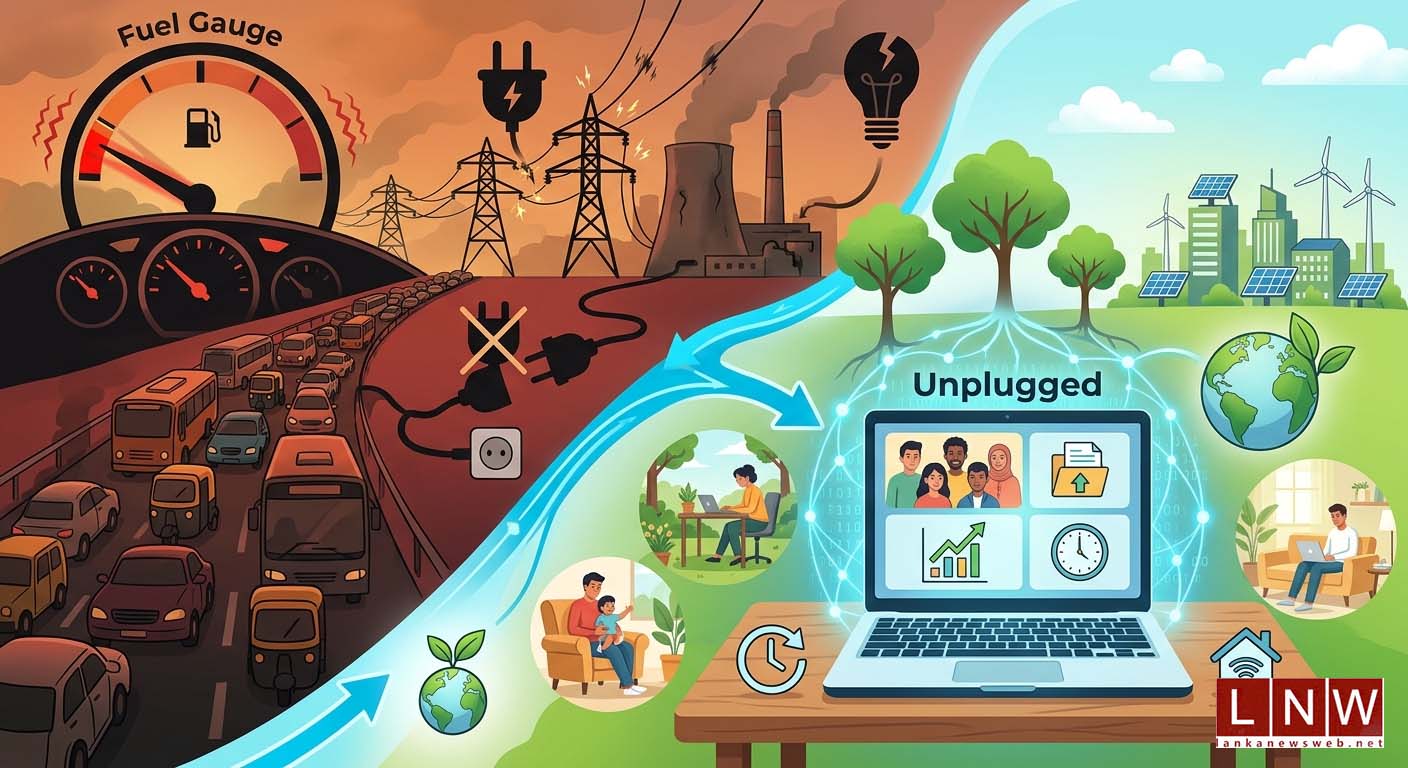
April 02, Colombo (LNW): Sri Lankan authorities are considering a temporary shift to online operations for the public sector on April 16 and 17, to maintain essential services while reducing pressure on fuel and energy resources.
The proposal was examined during a recent Cabinet-appointed committee tasked with ensuring the uninterrupted delivery of public services. The session, chaired virtually by Prime Minister Dr Harini Amarasuriya, focused on practical steps to navigate ongoing challenges linked to global energy uncertainties.
Officials reported that several ministries have already made notable progress in cutting fuel consumption. In particular, the Ministry of Health and Mass Media has achieved a significant reduction in diesel usage by the end of March, reflecting a wider push towards conservation across state institutions.
As part of these efforts, schools and universities are also being encouraged to adopt energy-conscious practices. Awareness programmes targeting students are scheduled in early April, while higher education institutions have increasingly turned to online teaching where possible.
Despite the shift towards digital solutions, authorities confirmed that key public examinations and administrative functions have continued without disruption. Essential services in sectors such as transport, justice, and digital administration are being maintained through a combination of limited on-site staffing and remote systems.
In parallel, plans are underway to launch a nationwide awareness drive promoting water conservation and the use of alternative sources. This initiative will involve collaboration between the National Water Supply and Drainage Board and the government’s Clean Sri Lanka programme.
The Ministry of Digital Economy is finalising a set of guidelines to standardise remote working practices across the public sector, with an official circular expected later this month following consultations with relevant agencies.
Authorities are also exploring the introduction of a real-time digital monitoring system to track energy consumption, fuel stocks, and workforce attendance, allowing for more responsive decision-making.
The committee is expected to reconvene soon to review progress and determine whether the proposed measures should be expanded or extended depending on the evolving situation.