
By: Staff Writer
April 05, Colombo (LNW): Sri Lanka’s ongoing partnership with the International Monetary Fund has entered a pivotal phase, as recent review discussions reveal both encouraging progress and persistent structural weaknesses. The latest engagement, led by IMF Mission Chief Evan Papageorgiou, provides a nuanced assessment of the Government’s efforts to stabilise the economy under the Extended Fund Facility (EFF).
At the centre of the discussions was the delayed Fifth Review and the upcoming Sixth Review, both of which are essential for unlocking approximately $700 million in financial support. Originally scheduled for completion in late 2025, the Fifth Review was postponed following the economic fallout from Cyclone Ditwah. The Government instead turned to the IMF’s Rapid Financing Instrument, securing $206 million in emergency funding to address immediate recovery needs.
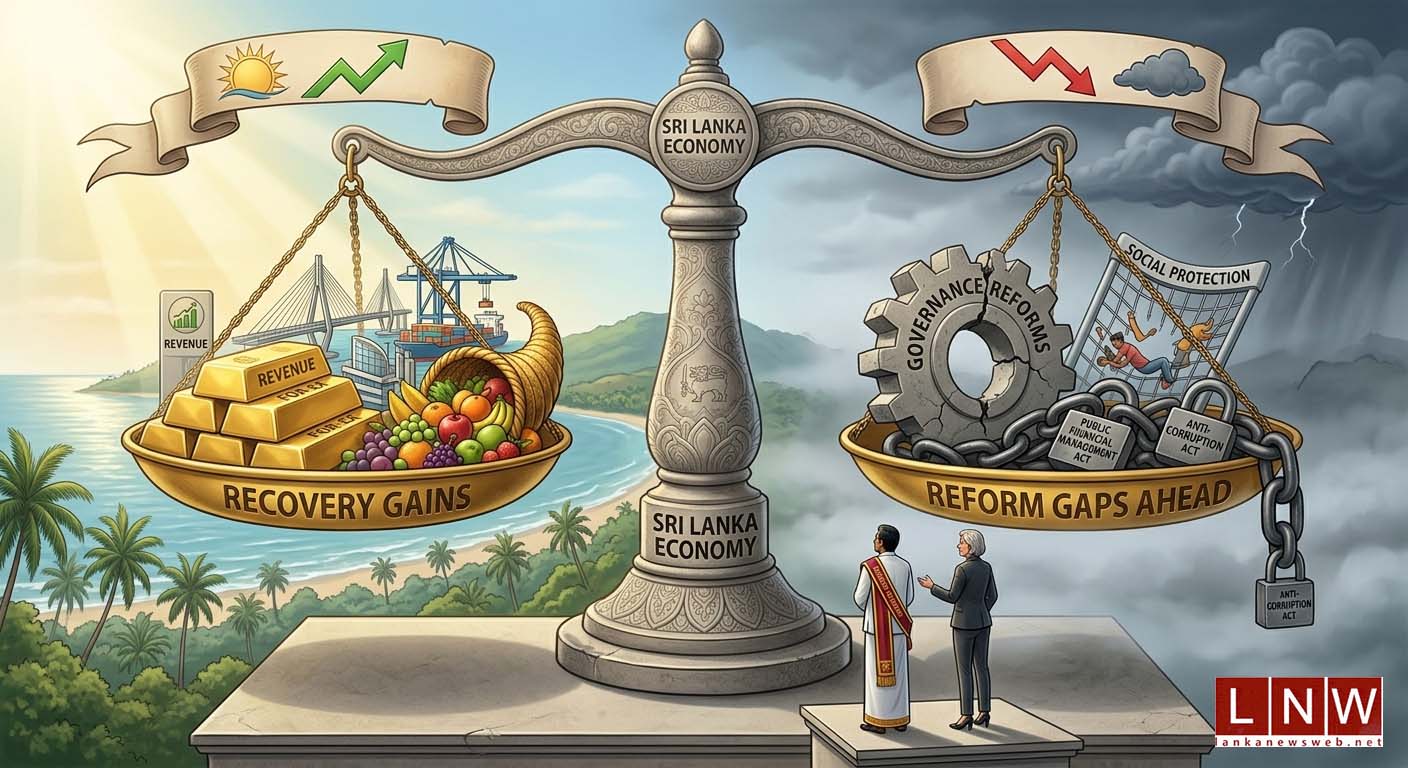
Despite these setbacks, the IMF has recognised significant progress under the administration of President Anura Kumara Dissanayake. Improvements in fiscal discipline, revenue generation, and foreign reserve management indicate a more stable macroeconomic environment compared to previous years. These gains reflect a degree of policy consistency that has been critical in restoring confidence among international stakeholders.
However, the IMF’s assessment goes beyond short-term indicators, drawing attention to deeper, unresolved challenges. Discussions with parliamentary leaders, including Speaker Jagath Wickramaratne, highlighted the importance of legislative reforms such as the Public Financial Management Act and the Anti-Corruption Act. While these measures represent progress on paper, their effectiveness will depend on implementation and institutional accountability.
A key concern raised during the review process is the likelihood that Sri Lanka may fall short of certain EFF targets, particularly in governance reforms and social protection mechanisms. These areas are crucial for ensuring that economic recovery is not only sustained but also inclusive. Without stronger safety nets, vulnerable populations may continue to bear the brunt of adjustment policies.
External risks further complicate the outlook. Global economic uncertainties, including inflationary pressures and geopolitical tensions, continue to pose challenges for Sri Lanka’s external sector. The Government’s efforts to manage tariffs, stabilise prices, and maintain currency stability will be tested in this volatile environment.
The IMF’s latest review ultimately presents a balanced verdict: Sri Lanka has made meaningful strides toward recovery, but the foundation remains incomplete. As the EFF program approaches its 2027 deadline, the focus must shift from stabilisation to transformation. Accelerating structural reforms, strengthening governance, and expanding social protections will be essential to ensuring that recent gains are not only preserved but built upon in the years ahead.