
By: Staff Writer
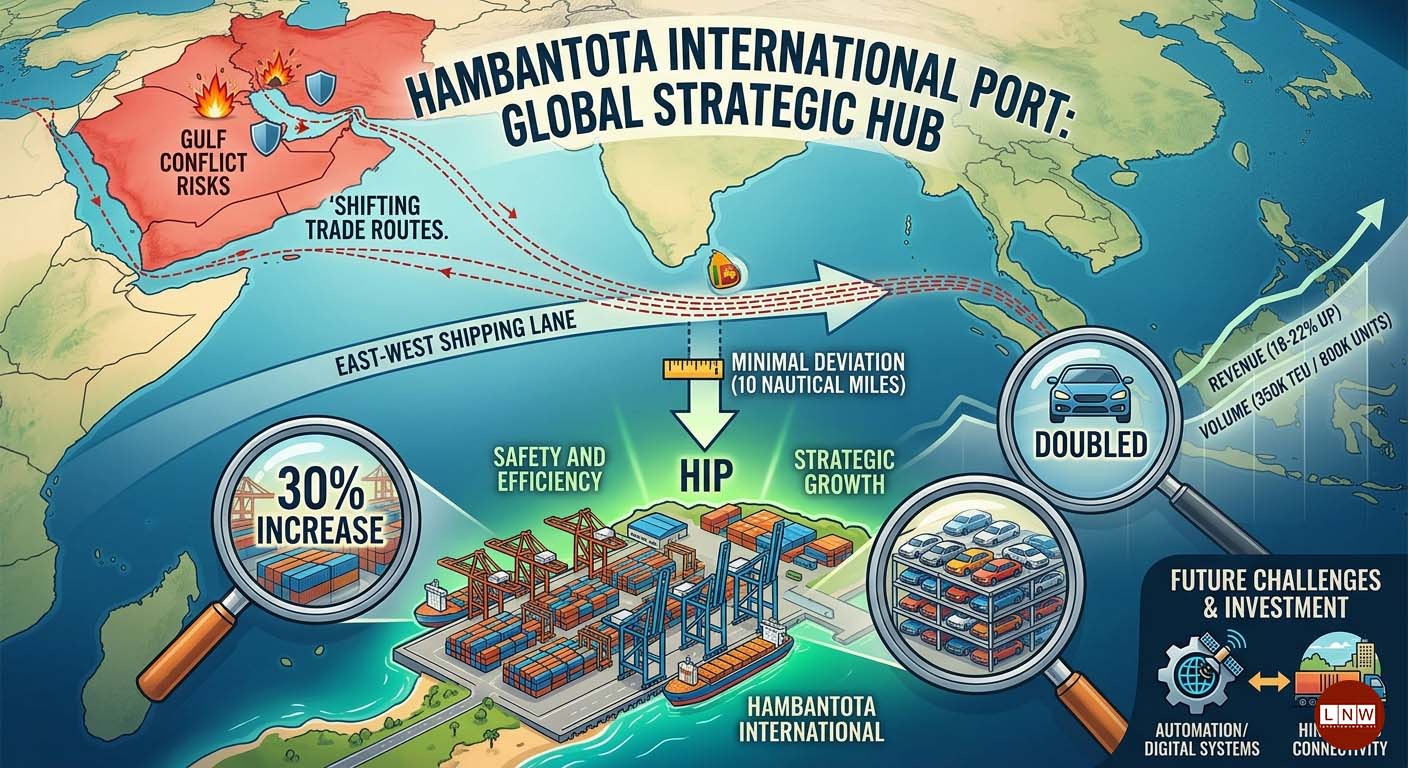
April 07, Colombo (LNW): Sri Lanka’s Hambantota International Port (HIP) is undergoing a decisive transformation as shifting geopolitical tensions reshape global maritime trade routes in 2026. The ongoing US-Israel-Iran conflict has triggered a redirection of shipping traffic away from traditionally congested and risk-prone corridors in the Gulf region. In response, HIP has rapidly scaled its operational capabilities, positioning itself as a critical transshipment and logistics hub in the Indian Ocean.
Recent data indicates that HIP has increased its container yard capacity by 30 percent, a move aimed at absorbing higher cargo volumes. Additionally, the port has doubled its Roll-On/Roll-Off (RoRo) yard capacity, reflecting a surge in vehicle transshipment activity. Yard utilisation has reached historic highs, underscoring both the urgency and opportunity presented by current global disruptions.
Financially, HIP is showing signs of steady recovery and growth. Port revenues in early 2026 have reportedly increased by an estimated 18–22 percent year-on-year, driven primarily by higher vessel calls and expanded logistics services. Container handling volumes have crossed approximately 350,000 TEUs in the first quarter alone, marking a significant rise compared to previous years. Meanwhile, vehicle transshipment is projected to exceed 800,000 units annually if current trends persist.
The port’s strategic location just 10 nautical miles from the main East-West shipping lane remains its strongest competitive advantage. This proximity allows vessels to reroute with minimal deviation, saving both time and fuel costs. As security concerns escalate in the Gulf, shipping lines are increasingly prioritising such alternative ports that offer both safety and efficiency.
However, this rapid growth also brings operational challenges. Infrastructure strain, workforce demands, and the need for enhanced digital logistics systems are becoming more apparent. To sustain momentum, HIP must invest in automation technologies, improve customs clearance efficiency, and strengthen hinterland connectivity to facilitate faster cargo movement inland.
In conclusion, Hambantota International Port stands at a pivotal moment. The Gulf conflict has inadvertently accelerated its rise as a regional maritime hub. If managed strategically, HIP could transition from a secondary port into a central player in global shipping logistics, redefining Sri Lanka’s role in international trade.