
Roger Srivasan
Colombo | April 2026
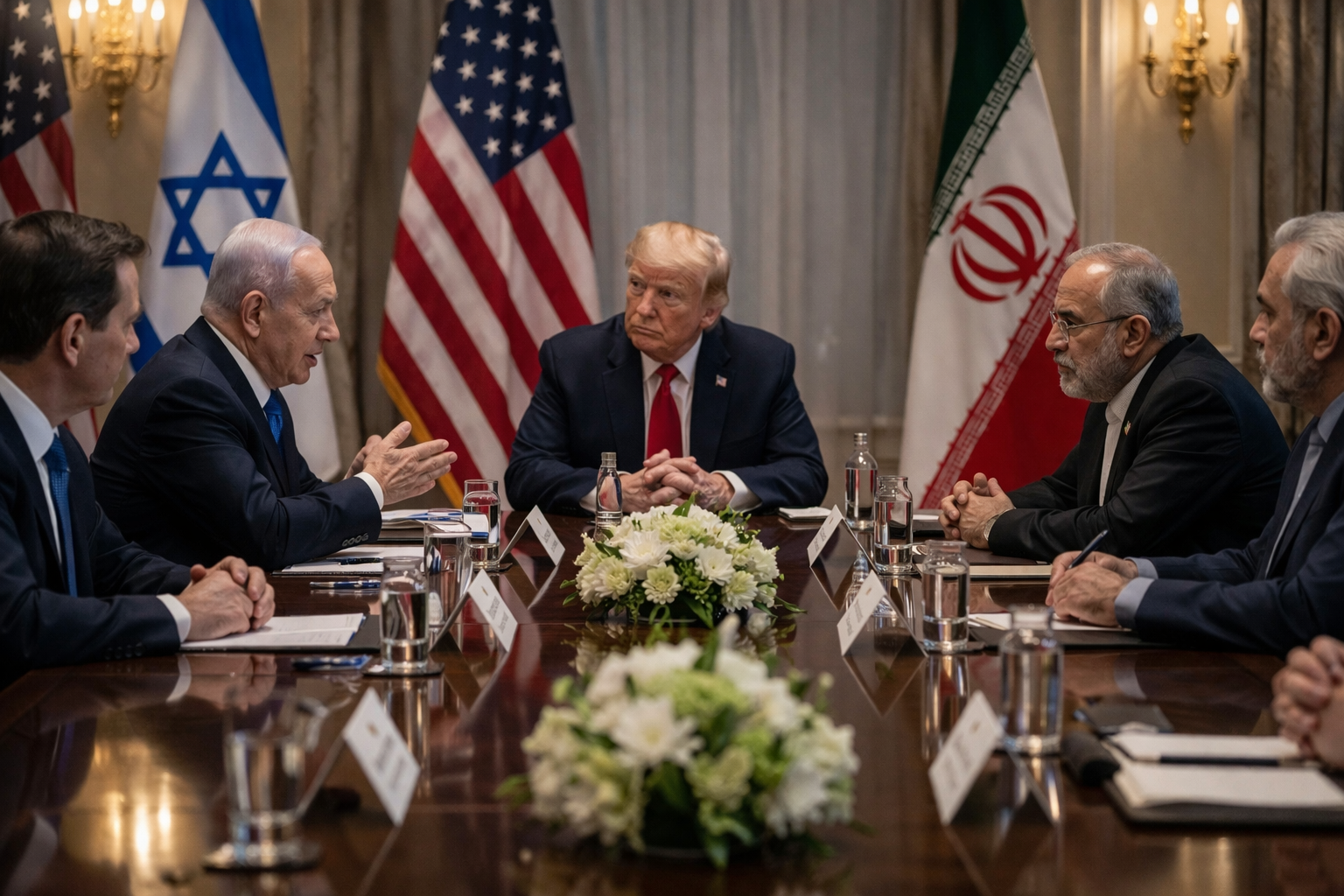
It would be tempting—seductively so—to reduce the present confrontation between the United States, Israel, and Iran to a crude binary of aggression and resistance. Yet such reduction collapses under scrutiny. Once parsed, the reality reveals a far more nuanced and stratified interplay of cohesion, coercion, and brinkmanship.
The crisis has been defined, above all, by brinkmanship—the deliberate march to the edge of catastrophe. Ultimatums have been issued, deadlines imposed, and strategic pressure exerted in ways that test not only resolve but restraint. This is not diplomacy in its classical form; it is diplomacy conducted at the precipice, where signalling is amplified through escalation.
Beneath this theatre lies coercion—the hard mechanics of power. Economic lifelines are targeted, strategic chokepoints leveraged, and military force deployed to compel compliance. The message is unmistakable: yield, or be made to yield. Yet coercion, for all its force, has limits. It can extract concessions, but it rarely secures legitimacy.
Set against this is cohesion—a quieter, more durable force. Cohesion does not announce itself with spectacle; it binds. It is found in the internal resolve of states under pressure, in the alignment of allies, and in the fragile frameworks that prevent escalation from spiralling into open conflict. The recent pause in hostilities, however tentative, reflects not resolution but restraint—an instance where cohesion, however briefly, has held.
This is the critical triad. Brinkmanship creates the crisis; coercion intensifies it; cohesion contains it. The present moment is not one of resolution, but of tense equilibrium. Each force remains in play, none fully ascendant.
To characterise events as one side calling the bluff of another is to misread the deeper structure. What we are witnessing is not capitulation, but calibration—a contest of will conducted under the shadow of consequence.
There was no bluff to call—only a contest of will. Brinkmanship pushed to the edge, coercion pressed its weight, and cohesion intervened just long enough to avert rupture. But where coercion lingers and brinkmanship remains the instrument of choice, any peace secured is, at best, a temporary reprieve.