
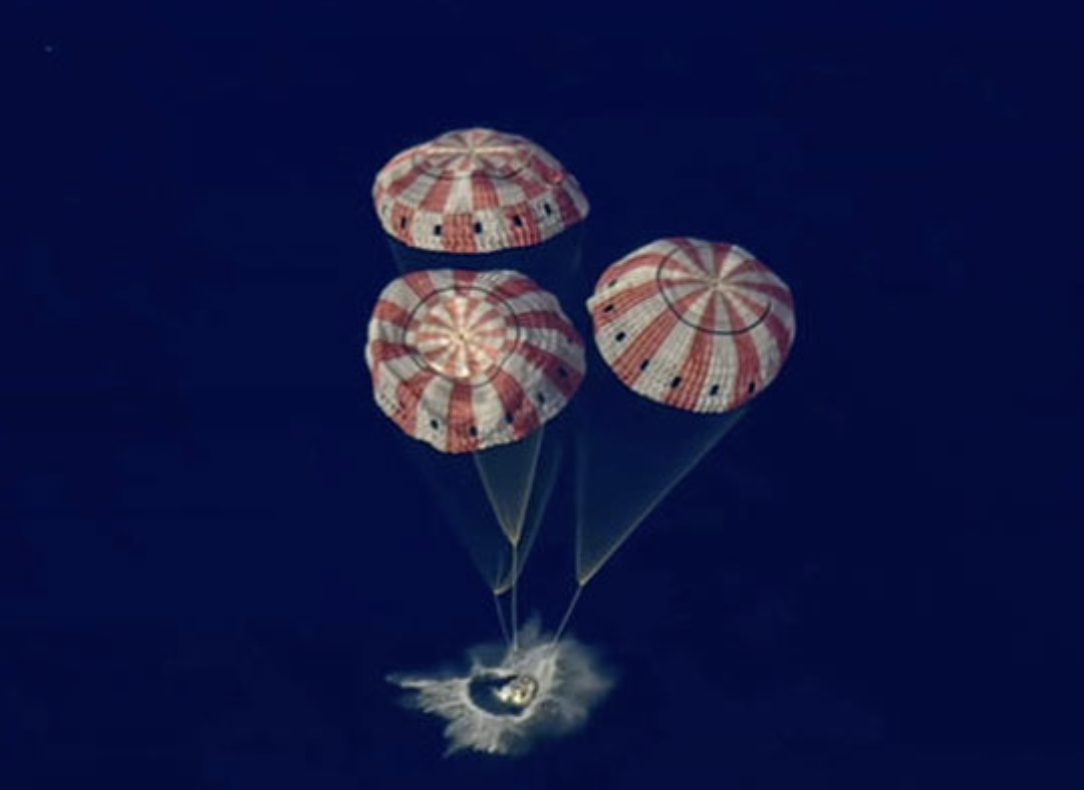
Artemis II’s four astronauts made a dramatic return to Earth on Friday, splashing down in the Pacific Ocean and marking the end of humanity’s first crewed lunar mission in more than 50 years.
Commander Reid Wiseman, pilot Victor Glover, mission specialists Christina Koch and Canada’s Jeremy Hansen reentered Earth’s atmosphere aboard the Orion capsule Integrity at speeds of up to Mach 33. The high-speed descent, reminiscent of NASA’s Apollo era, tested the spacecraft’s heat shield as temperatures soared during reentry and communications temporarily blacked out.
Mission Control closely monitored the tense six-minute blackout period before parachutes deployed successfully, slowing the capsule to a safe splashdown speed. Recovery teams aboard the USS John P. Murtha were on standby off the coast of San Diego. Officials confirmed a “perfect bull’s-eye splashdown,” signaling a successful conclusion to the mission.
Launched on April 1, Artemis II did not land on the moon but achieved several historic milestones. The crew traveled farther from Earth than any humans before, surpassing the Apollo 13 record by reaching a distance of over 252,000 miles. During the flyby, the astronauts captured unprecedented views of the moon’s far side and witnessed a total solar eclipse, describing the experience as unforgettable.
The mission also echoed iconic moments from past lunar expeditions, including imagery similar to the famous “Earthrise” photograph taken during Apollo 8. The crew’s journey drew global attention and praise from world leaders and public figures.
Despite minor technical issues involving onboard systems, the astronauts completed the nearly 10-day mission successfully. Artemis II serves as a critical test flight for NASA’s broader Artemis program, which aims to establish a sustained human presence on the moon.
Future missions are already in planning, with Artemis III expected to test docking procedures in Earth’s orbit and Artemis IV targeting a crewed lunar landing near the moon’s south pole later this decade.