
By: Staff Writer
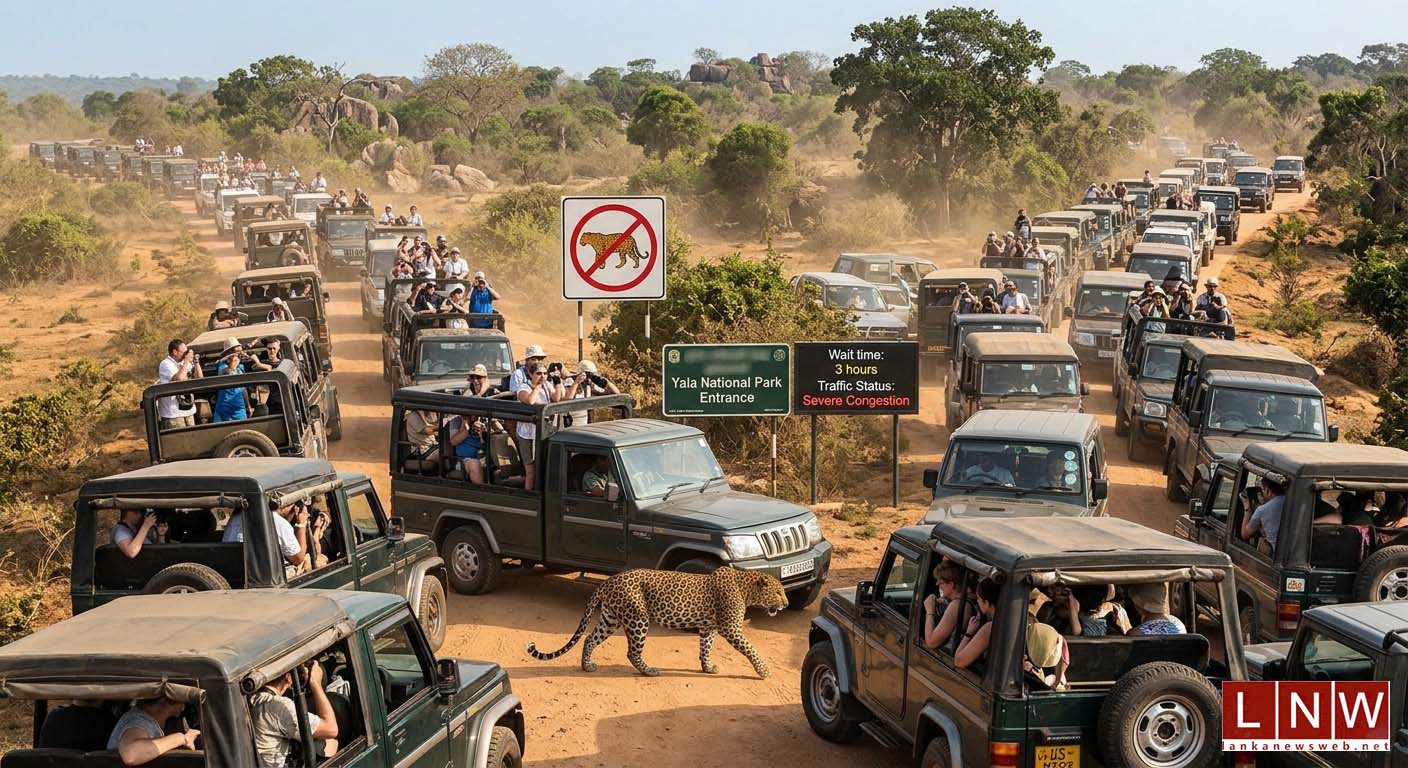
April 19, Colombo (LNW): Sri Lanka’s most famous protected areas are facing an escalating crisis as surging tourism transforms national parks into congested corridors of safari traffic. Nowhere is this more visible than Yala National Park, where visitor numbers driven by social media popularity have created what conservationists describe as “traffic jams in the jungle.” The pursuit of rare wildlife sightings and the “perfect shot” has increasingly pushed animal welfare into the background, raising serious concerns about the long-term sustainability of the park’s ecosystem.
At the heart of the problem is the overwhelming concentration of safari vehicles, particularly in Yala’s Block I. On peak days, reports indicate that as many as 900 jeeps may enter through a single access point, creating severe congestion along narrow dirt tracks. This constant pressure has begun to reshape wildlife behavior. Leopards and other key species are becoming more elusive, altering their natural movement patterns and avoiding areas heavily dominated by vehicles. Feeding, hunting, and mating routines are increasingly disrupted by the unpredictable presence of safari convoys.
The environmental stress is not limited to behavioral changes. Some animals have gradually become accustomed to the sound of engines, but others are showing signs of heightened physiological stress linked to prolonged exposure to noise and crowding. Wildlife corridors are frequently blocked by stationary or slow-moving vehicles, restricting access to water sources and fragmenting natural movement routes. In more severe cases, speeding jeeps have contributed to fatal collisions with leopards, jungle cats, and other species incidents that often go underreported.
A further issue lies in the conduct of safari operations. Drivers frequently communicate sightings through mobile phones, triggering sudden rushes of vehicles that converge at high speed on single animals. This competitive behavior turns wildlife viewing into a race, increasing the likelihood of accidents and disturbance. Although official speed limits of 20–30 km/h exist, enforcement remains weak due to limited staffing and logistical constraints within park management.
Political and economic pressures further complicate regulation. Attempts to introduce stricter controls, such as capping vehicle numbers, have often been diluted or delayed due to resistance from tourism-linked businesses and local stakeholders. In response, authorities have introduced partial reforms, including mandatory licensing for safari drivers and restricted entry for uncertified operators in certain zones. Plans are also underway to open additional park blocks to redistribute traffic away from heavily saturated areas.
Other measures include designated midday quiet periods intended to reduce disturbance during peak heat hours, as well as proposals to introduce GPS tracking systems for safari vehicles to improve compliance with speed regulations. However, conservation experts warn that without stronger enforcement and structural change, these steps may not be enough to reverse the growing ecological pressure on one of Sri Lanka’s most important wildlife habitats.