
By: Staff Writer
April 21, Colombo (LNW): Sri Lanka’s ongoing “Coalgate” scandal is not just a procurement failure it is the latest chapter in a long-running pattern of mismanagement that has cost the country billions and weakened its energy sector. At the center of both past and present controversies stands the Norochcholai Power Plant, whose operations have repeatedly been affected by flawed coal procurement decisions since 2009.
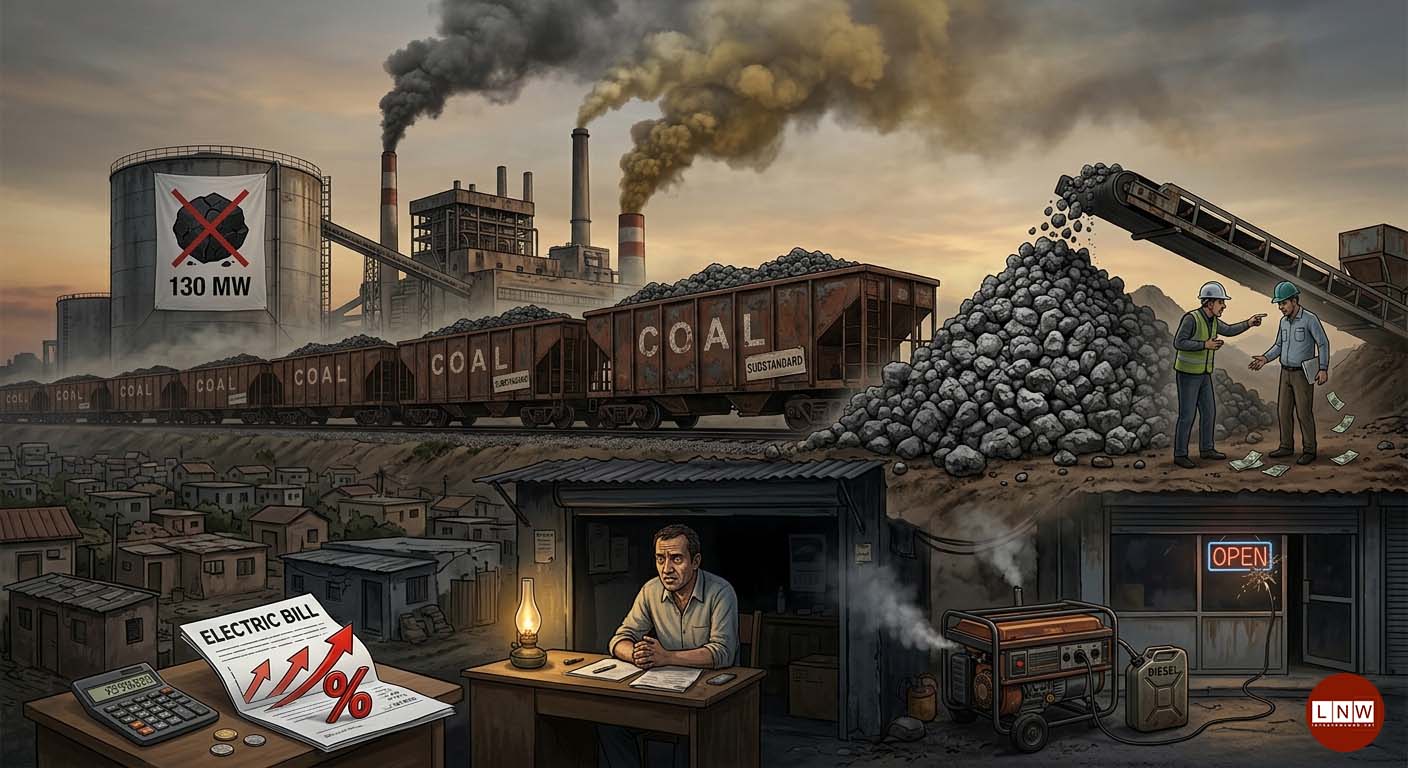
The current crisis stems from the import of substandard coal under a tender awarded to Trident Chemphar Limited. Investigations show that shipments failed to meet required quality standards, with ash content exceeding acceptable limits and calorific value falling below specifications. The result is a significant drop in efficiency and a 130MW shortfall in electricity generation.
This is not a minor technical issue it directly translates into economic damage. The National Audit Office estimates immediate losses of Rs. 2.23 billion. However, the broader financial impact is far greater.
To make up for lost coal power, Sri Lanka has relied on diesel generation, which is significantly more expensive. When fuel imports and system inefficiencies are included, total losses could approach Rs. 100 billion.
These costs eventually fall on consumers. Higher generation expenses increase pressure on electricity tariffs, adding to the cost of living. Businesses face rising operational costs, reducing competitiveness and slowing economic recovery. In an already fragile economy, energy instability becomes a serious obstacle to growth.
What makes this scandal particularly significant is how closely it mirrors past failures. Between 2009 and 2024, coal procurement was often influenced by tender cancellations, emergency purchases, and preferential treatment for certain suppliers.
For years, Noble Resources dominated the supply process, benefiting from repeated contract extensions even after tenders were cancelled. In 2016, Sri Lanka’s Supreme Court criticized these practices, pointing out how procurement rules were manipulated.
Similarly, a 2015 contract awarded to Swiss Singapore Overseas Enterprises was later cancelled by the court due to serious procedural violations. That decision alone led to a loss of Rs. 3.9 billion by selecting a higher-priced supplier.
More recently, contracts involving Black Sand Commodities were flagged by the Auditor General for not following proper procurement procedures. Across different governments, the pattern has remained the same weak oversight and decisions that have not protected public funds.
The difference today lies in how the losses occur. Earlier scandals were mainly about overpaying for coal. The current crisis is about receiving low-quality coal that reduces power generation. However, both situations lead to the same result: large financial losses and inefficiency.
The government has stated that part of the loss can be recovered through a $15 million performance bond. However, this amount is small compared to the total damage, which includes diesel costs, equipment wear, and wider economic impacts.
This comparison highlights a key issue: Sri Lanka’s coal procurement system has changed in form but not in outcome. Whether through high prices or poor quality, the country continues to suffer major losses.
Without strong reforms such as transparent bidding processes, independent oversight, and strict quality checks these problems are likely to continue. The current scandal is not an isolated case but part of a larger, ongoing failure that has affected the country for more than a decade.