
By: Staff Writer
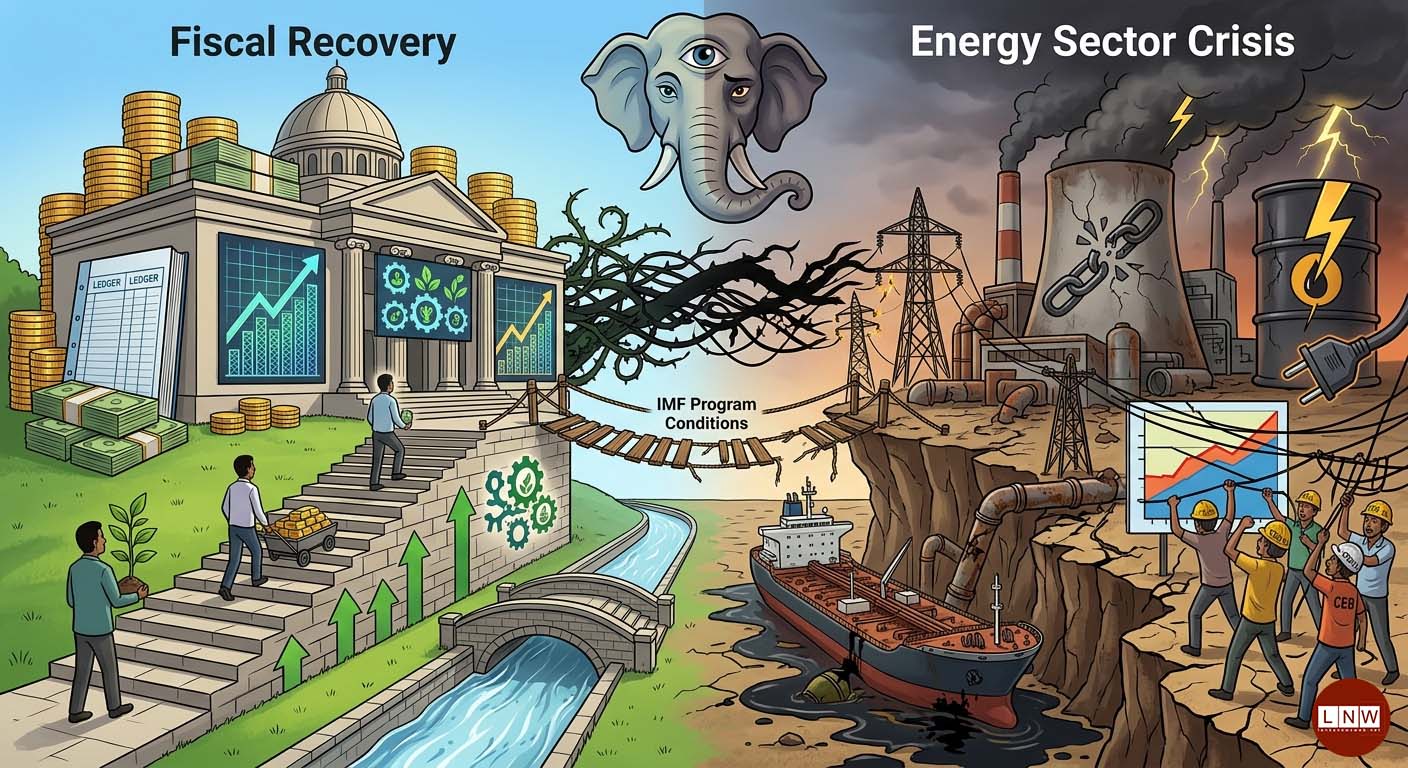
April 21, Colombo (LNW): Sri Lanka’s improving fiscal position has drawn praise from international financial institutions, but serious structural weaknesses within the energy sector threaten to derail the country’s ability to manage future shocks. Comments by IMF Asia-Pacific Director Krishna Srinivasan, while supportive, may underestimate the scale of domestic challenges currently unfolding.
At a recent press conference, Srinivasan emphasised that Sri Lanka has “rebuilt fiscal space” through stronger revenue mobilisation, noting that tax revenues as a share of GDP have increased significantly over the past three years. This, he argued, places the country in a stronger position to respond to rising energy costs. “They’re better placed to provide support,” he said, while cautioning that any intervention must be “efficiently implemented” and limited in scope.
However this cautiously optimistic outlook contrasts sharply with ongoing turmoil in the energy sector. Sri Lanka’s dependence on imported fuel continues to expose it to global market volatility, a risk the IMF itself acknowledges. Rising energy prices not only strain public finances but also place pressure on foreign reserves, which remain fragile despite recent improvements.
Compounding these external risks are internal governance issues. The so-called “coal gate” controversy has brought renewed attention to procurement practices and alleged irregularities in fuel sourcing. These concerns highlight persistent weaknesses in oversight and raise doubts about whether resources are being managed effectively.
Meanwhile, tensions within the Ceylon Electricity Board have escalated into a significant obstacle to reform. Workers have strongly opposed government plans to unbundle the utility, a move intended to restructure the sector and introduce greater efficiency. Critics argue that breaking up the institution—long the sole authority over electricity supply could lead to fragmentation, higher costs, and reduced public accountability.
The standoff between policymakers and workers has slowed progress on key reforms required under Sri Lanka’s IMF programme. Cost-reflective energy pricing, a central condition for continued financial support, remains politically sensitive and difficult to implement amid widespread resistance.
Srinivasan’s remarks acknowledge that Sri Lanka remains vulnerable due to its reliance on energy imports, but they stop short of fully addressing how internal instability may amplify these risks. Fiscal buffers alone cannot compensate for inefficiencies, policy uncertainty, and institutional conflict.
As Sri Lanka moves forward, the gap between international assessments and domestic realities is becoming increasingly apparent. While revenue gains and fiscal discipline are important milestones, they do not guarantee resilience. The true test lies in whether the country can resolve its energy sector challenges, restore trust in governance, and implement reforms without triggering further instability.
Until these issues are addressed, claims that Sri Lanka is well-positioned to cushion energy shocks remain open to question.