
By: Staff Writer
April 21, Colombo (LNW): Sri Lanka’s economic recovery is entering a more uncertain phase, with rising global energy costs expected to slow momentum despite gains made since the country’s financial crisis. According to the World Bank, growth is projected to ease to 3.6% in 2026, down from the stronger post-crisis rebound seen in previous years, as external pressures begin to weigh more heavily on domestic activity.
The latest South Asia Economic Update highlights that while Sri Lanka will regain the size of its pre-crisis economy last recorded in 2018 this milestone masks underlying vulnerabilities. Growth is expected to pick up only slightly to 3.8% in 2027, reflecting a transition from rapid recovery to a more constrained, long-term trajectory shaped by structural limitations.
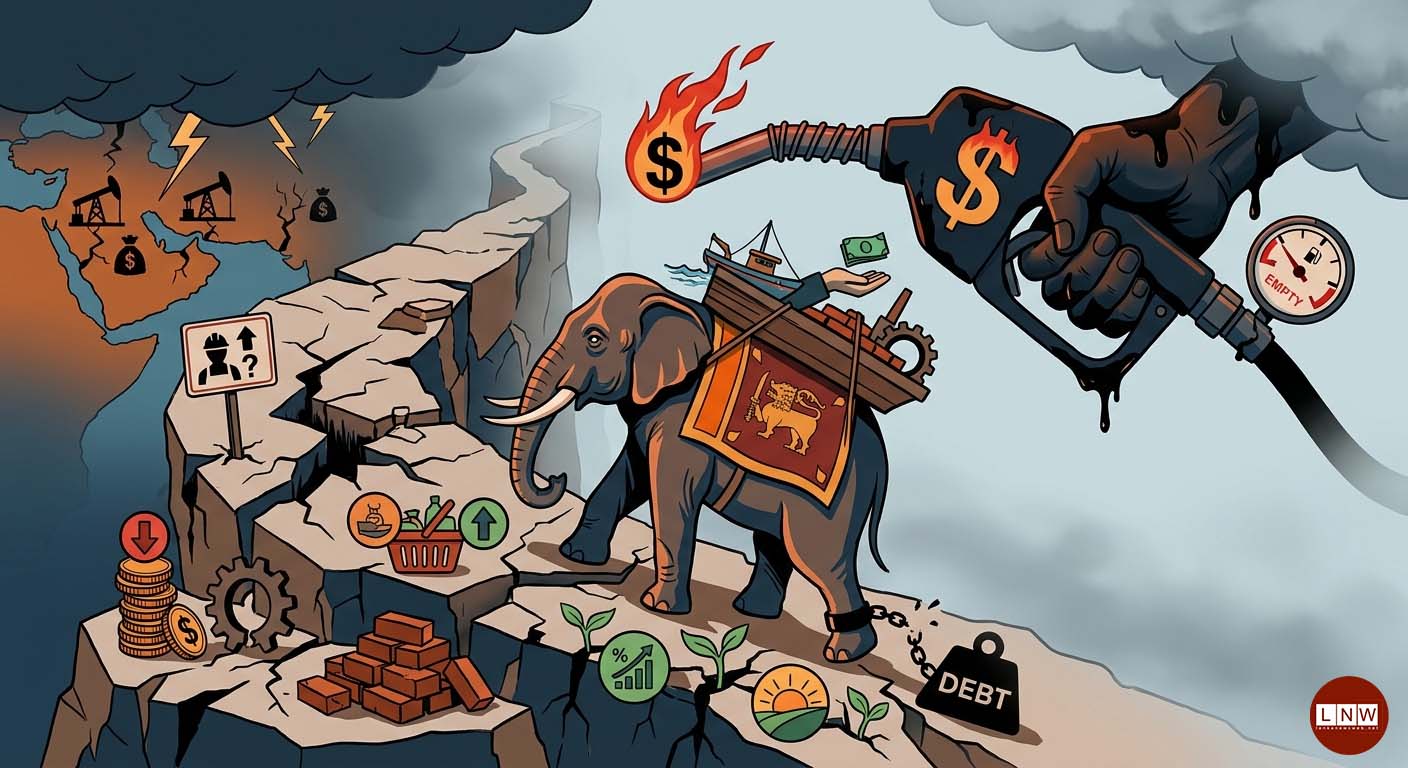
A key concern is the rising cost of energy imports. As a country heavily dependent on foreign fuel, Sri Lanka remains exposed to global price fluctuations. Higher oil prices are already increasing production costs across sectors, squeezing business margins and dampening investment. For households, the impact is equally severe, as rising energy costs feed into transport and food prices, eroding real incomes.
Although the economy expanded by 5% in 2025 driven largely by a surge in private consumption and strong remittance inflows this momentum is unlikely to hold. Inflation, which remained relatively subdued between late 2025 and early 2026, is now expected to exceed the 5% target due to increased demand and higher energy costs.
The report also points to structural weaknesses that continue to undermine growth. Labour shortages, intensified by outward migration of skilled workers, are constraining productivity. At the same time, underperformance in public investment particularly the failure to fully execute capital budget allocations has limited the country’s ability to build long-term economic capacity.
External risks further complicate the outlook. The Middle East remains a critical factor, as geopolitical instability could disrupt both fuel supplies and remittance flows. With remittances accounting for a notable share of GDP, any slowdown would directly affect household incomes and the balance of payments. Tourism, another key source of foreign exchange, is similarly tied to regional stability.
Despite improvements in fiscal indicators such as a reduction in the debt-to-GDP ratio and stronger banking sector performance Sri Lanka’s public finances remain under strain. High interest payments continue to absorb a significant portion of government revenue, limiting the ability to respond to new shocks.
The situation is further complicated by the legacy of state-owned enterprises, many of which contributed to the debt crisis through inefficiency and weak oversight. Without meaningful reform, these institutions remain a persistent fiscal risk.
Ultimately, while Sri Lanka has made measurable progress since its crisis, the path ahead is far from secure. Rising energy prices are not just an external challenge they are a stress test for an economy still grappling with deep structural flaws. Whether the country can sustain growth will depend on its ability to manage these pressures while advancing long-delayed reforms.