
By: Staff Writer
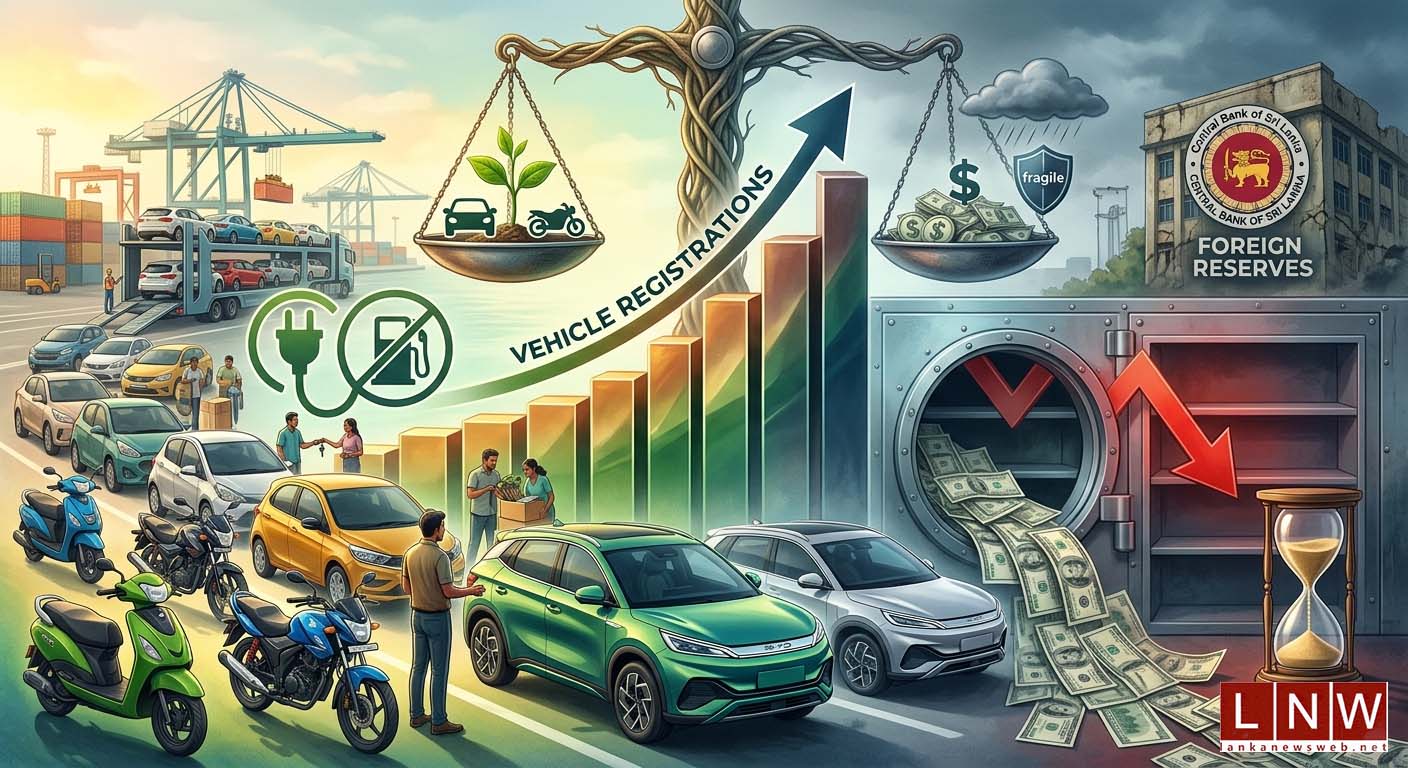
April 28, Colombo (LNW): Sri Lanka’s automotive sector is experiencing a sharp resurgence, but beneath the surface of rising vehicle registrations lies a complex economic trade-off. The latest data shows total registrations climbing to 59,734 units in March 2026, a 15.6 percent increase from the previous month—an expansion that signals renewed consumer confidence, yet simultaneously intensifies pressure on the country’s fragile external finances.
At the center of this surge is a strong shift toward electric mobility. Registrations of electric vehicles (EVs) have skyrocketed by over 165 percent within a single month, driven largely by brands such as BYD. This rapid adoption reflects a behavioral pivot among consumers seeking to shield themselves from volatile fuel prices. However, while EVs may reduce long-term fuel import costs, their upfront import burden still weighs heavily on Sri Lanka’s foreign exchange reserves.
The broader vehicle market tells a story of widespread demand across segments. Two-wheelers dominate the landscape, exceeding 41,000 units, with strong performances from manufacturers like Bajaj, Honda, and TVS. Passenger vehicles, particularly SUVs and crossovers, also posted moderate gains, led by Toyota and Honda, while compact cars saw increased traction from Suzuki alongside EV entrants.
However this growth comes at a cost. According to the Central Bank of Sri Lanka, the country spent over US$ 441 million on vehicle imports in just the first two months of 2026. Although February showed a slight dip in monthly expenditure, the surge in March registrations suggests that import demand remains robust. This creates a structural tension: rising vehicle ownership supports economic activity and mobility, but also accelerates the outflow of scarce foreign currency.
The composition of imports further complicates the picture. While EVs promise lower fuel dependency, they require significant initial capital outlays in foreign currency. Meanwhile, conventional and hybrid vehicles continue to contribute to fuel import bills, albeit at varying levels. The net effect is a dual burden short-term pressure from imports and ongoing energy costs.
Economic analysts, including Murtaza Jafferjee, argue that energy pricing is a key driver of these shifts. As fuel prices rise, consumers naturally gravitate toward electric alternatives. However, even this transition is not without challenges, as electricity tariffs are also expected to increase. Jafferjee points out that the growing adoption of rooftop solar systems could offset these costs, making EV ownership more sustainable over time.
Policy inconsistencies add another layer of complexity. The current tax regime, which ties excise duties to engine capacity for traditional vehicles and motor power for EVs, creates uneven incentives across technologies. This distortion risks skewing market behavior rather than guiding it efficiently.
Sri Lanka’s vehicle import boom thus presents a paradox. It reflects economic recovery and evolving consumer preferences, yet also exposes underlying vulnerabilities in external stability. Managing this balance will be critical. Without calibrated policy intervention, the road to modernization could come at the expense of macroeconomic resilience.