
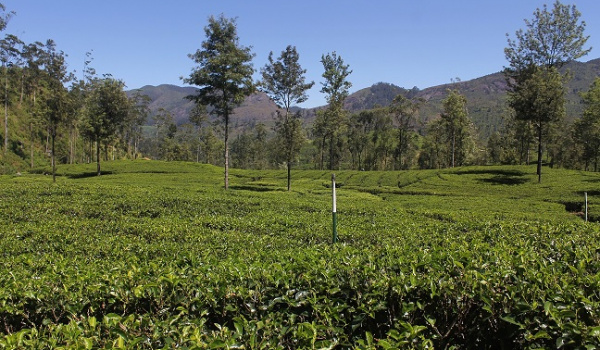
The government’s move to establish a Central Highlands Authority following the Cyclone Ditwah disaster has triggered a wider policy debate over environmental governance, economic resilience, and institutional reform. The initiative, discussed at the Presidential Secretariat under President Anura Kumara Dissanayake, aims to create a single coordinating body responsible for restoring and managing Sri Lanka’s most ecologically sensitive highland region.
The Central Highlands play a vital role in regulating the country’s climate system, supplying water to major river basins, and supporting agriculture and hydropower generation. The recent cyclone-induced landslides exposed how vulnerable these systems have become. Entire communities were displaced, while critical infrastructure including rural roads and irrigation networks suffered extensive damage. Agricultural output in surrounding districts is expected to decline due to soil erosion and disrupted planting cycles, creating knock-on effects for food supply and export earnings.
The proposed authority would consolidate environmental restoration efforts, enforce land-use regulations, and improve coordination among existing institutions. It is also expected to integrate climate adaptation strategies and disaster risk reduction into a unified framework. Government officials argue that fragmented governance has historically slowed response times and weakened enforcement in high-risk zones.
Proponents highlight several advantages. A dedicated authority could streamline decision-making, attract international climate funding, and implement long-term watershed protection strategies more effectively than existing agencies. It could also introduce natural capital accounting, allowing environmental resources to be factored into national economic planning.
However, concerns remain over feasibility and governance efficiency. Sri Lanka’s institutional landscape already includes multiple bodies responsible for environment, forestry, irrigation, and disaster management. Analysts warn that without clear legal mandates, the new authority could overlap with existing functions, leading to administrative redundancy. There are also concerns about funding sustainability and political interference in land-use decisions.
Despite these challenges, the urgency created by Cyclone Ditwah has shifted the policy momentum. The scale of damage has underscored that incremental reforms may no longer be sufficient. Instead, a more integrated governance model may be required to address interconnected risks such as climate change, deforestation, and unplanned development.
Ultimately, the success of the proposed Central Highlands Authority will depend on whether it can balance strong regulatory power with coordination efficiency. If designed effectively, it could become a model for climate-resilient governance. If poorly implemented, it risks adding another layer to an already complex institutional system without solving the underlying problems.