
By: Staff Writer
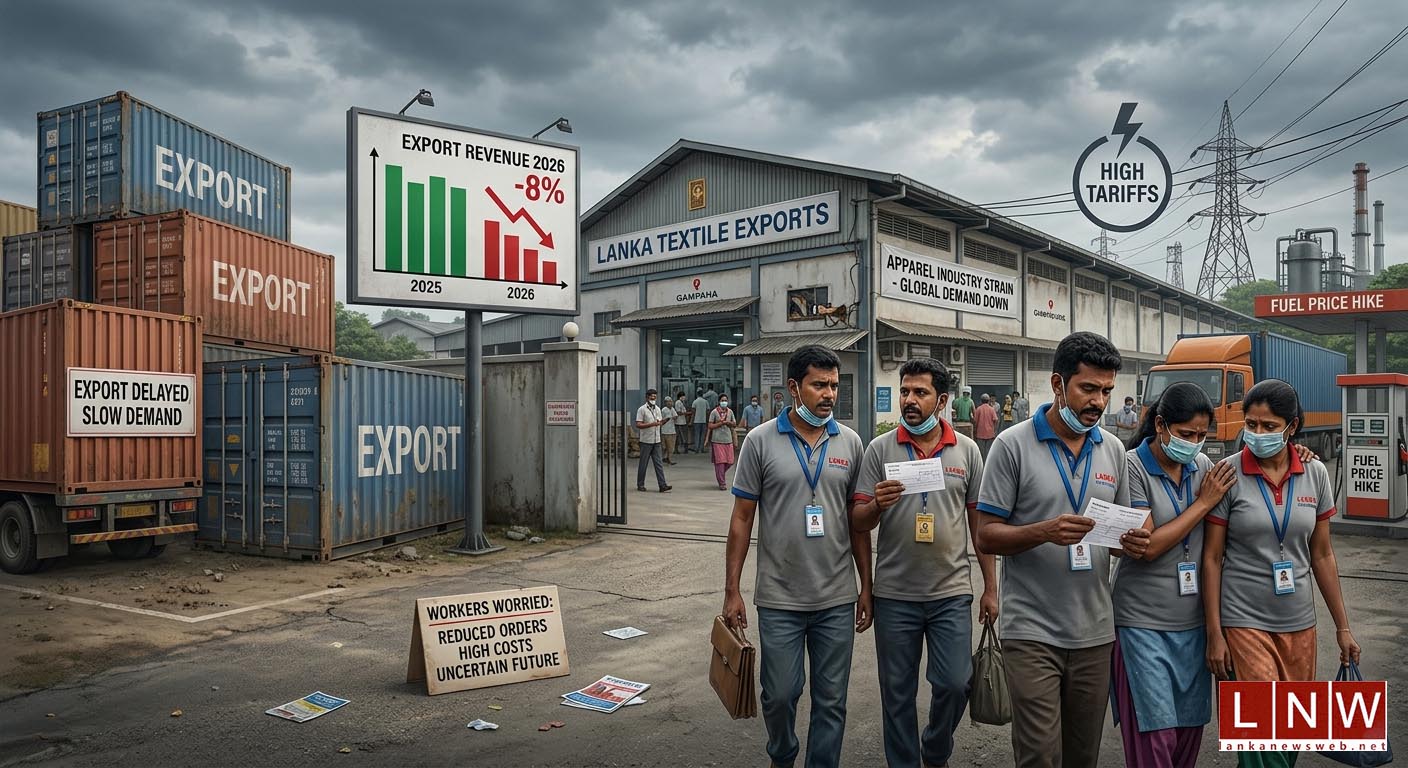
May 11, Colombo (LNW): Sri Lanka’s apparel and textile sector entered 2026 under growing economic strain, with first-quarter export earnings recording a sharp decline as weak overseas demand, rising production expenses and increasing trade uncertainties eroded momentum in one of the country’s most vital industries.
Fresh industry data shows apparel export revenue fell by more than 8 percent during the first three months of 2026 compared with the same period last year, underscoring the mounting challenges facing a sector that contributes more than 40 percent of Sri Lanka’s merchandise exports.
Between January and March, apparel and textile earnings dropped to 1.27 billion dollars from 1.38 billion dollars in 2025. February and March recorded the steepest contractions, both exceeding 11 percent year-on-year declines.
January earnings stood at 425.44 million dollars, down 2.66 percent from a year earlier. February revenue dropped to 361.2 million dollars from nearly 408 million dollars, while March earnings fell to 440.32 million dollars compared with approximately 496 million dollars in 2025.
The downturn has spread across Sri Lanka’s key export destinations. The United States market, historically the industry’s largest buyer, registered monthly declines ranging from 6.37 percent to 12.78 percent amid cautious consumer spending and retailer inventory adjustments.
European Union demand also weakened considerably, with exports to the bloc declining 7.28 percent during the quarter. February alone witnessed a dramatic 19.48 percent slump in EU orders. Meanwhile, the United Kingdom market, which initially showed marginal resilience in January, ultimately recorded an overall quarterly decline of 7.93 percent.
Industry observers warn that geopolitical tensions in the Middle East are further disrupting supply chains and creating uncertainty in shipping and logistics operations.
Manufacturers are also battling escalating operational expenses. High electricity tariffs and fuel prices are estimated to be adding nearly 3 million dollars every month to factory operating costs, squeezing profit margins and weakening competitiveness against regional rivals.
Concerns are additionally mounting over renewed competition from South Asian manufacturing hubs and the ongoing United States “Section 301 Investigation” into global trade practices, developments exporters fear could reshape future sourcing patterns.
Amid these pressures, Sri Lanka is attempting to reposition its apparel industry through sustainability and technology-driven transformation strategies.
On Friday, a 7.56 million euro initiative funded by the European Union was launched under the Accelerating Industries’ Climate Response in Sri Lanka project to formulate a national Net-Zero Roadmap for the textile and apparel sector. The programme is being implemented by the United Nations Industrial Development Organization in partnership with the ministries overseeing industry, environment and energy.
The roadmap seeks to help manufacturers reduce emissions, improve energy efficiency and comply with stricter sustainability requirements increasingly demanded by global apparel brands and European buyers.
The initiative also coincides with the introduction of the United Kingdom’s Developing Countries Trading Scheme, which took effect on January 1, 2026, offering Sri Lanka liberalised rules of origin and duty-free market access expected to improve long-term competitiveness.
Despite the weak first quarter, the Export Development Board continues to project 5.5 billion dollars in annual apparel revenue for 2026, relying on what officials describe as a major transition toward higher-value and technology-integrated apparel production capable of sustaining Sri Lanka’s reputation as an ethical sourcing destination.