
By: Staff Writer
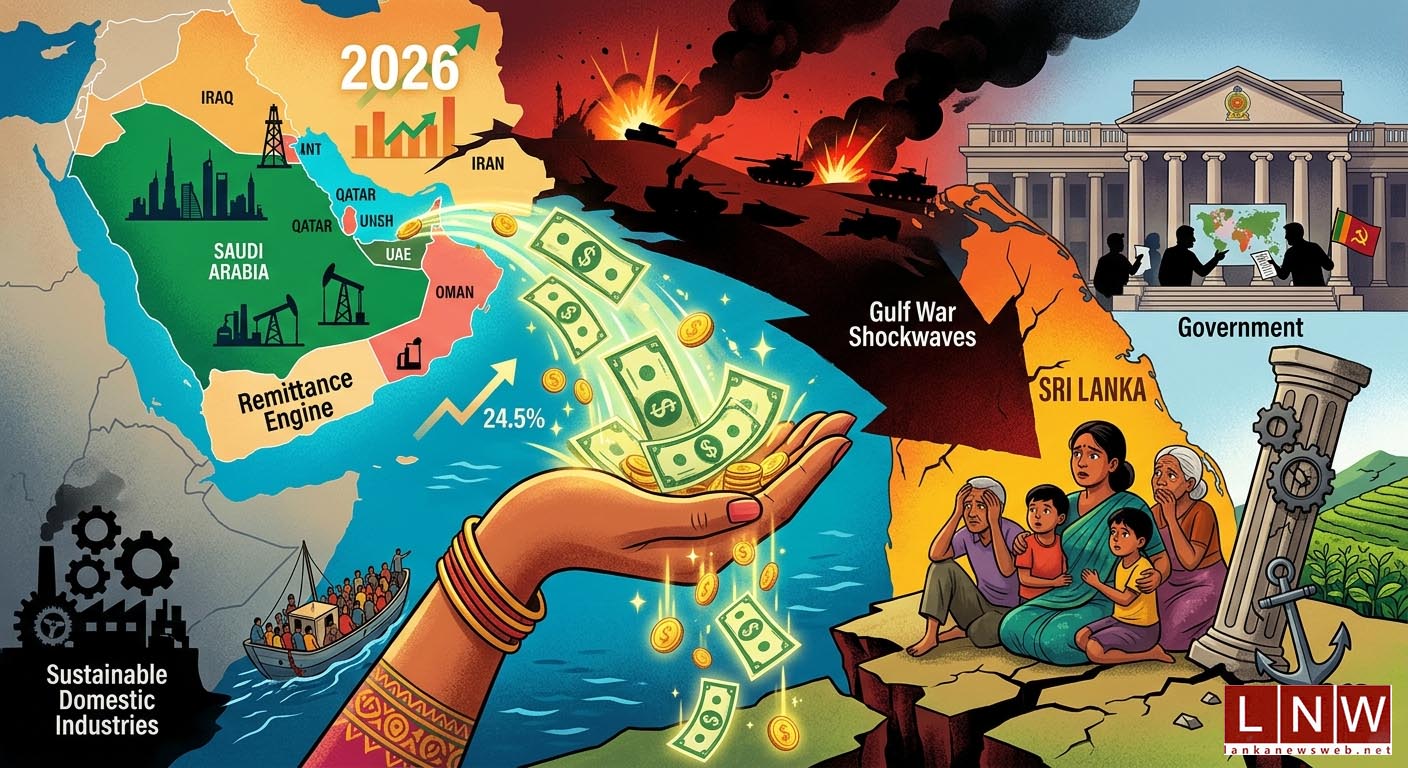
May 12, Colombo (LNW): Sri Lanka’s foreign remittance engine, long considered the country’s most dependable economic lifeline, is now standing at a dangerous geopolitical crossroads. While workers’ remittances reached historic highs during the first four months of 2026, the growing instability in the Middle East raises urgent questions about the sustainability of the nation’s largest source of foreign exchange.
According to the latest Central Bank figures, remittances surged by 24.5% year-on-year to over $3.06 billion between January and April 2026, while April alone recorded a massive $767.9 million inflow among the highest monthly earnings in Sri Lanka’s history. The remarkable rebound comes after the catastrophic collapse during the 2022 economic crisis, when remittances plunged to a 12-year low of $3.78 billion due to black-market currency channels and severe foreign exchange shortages.
Today, nearly two million Sri Lankans are estimated to be employed overseas, with more than 1.2 million believed to be working across Gulf nations including Saudi Arabia, the UAE, Qatar, Kuwait and Oman. The Middle East continues to account for almost 70% of Sri Lanka’s migrant labour force, particularly in domestic work, construction, hospitality and transport sectors. On average, expatriate workers collectively send home nearly $8 billion annually, making remittances more valuable than tourism, tea exports or apparel earnings.
But beneath the impressive numbers lies a fragile reality.
The escalating Gulf conflict and broader regional tensions threaten employment security, salary continuity and worker safety for hundreds of thousands of Sri Lankan migrants. Any prolonged disruption to oil-rich Gulf economies could trigger job losses, reduced hiring and forced repatriations a nightmare scenario for Sri Lanka’s already fragile external finances.
Economic analysts warn that Sri Lanka has become dangerously dependent on labour exports instead of developing sustainable domestic industries. The continuous outflow of skilled and semi-skilled workers may provide short-term dollar inflows, but it also weakens long-term national productivity.
Criticism is also mounting against the JVP-led National People’s Power (NPP) Government, particularly over what many describe as an inexperienced and ineffective foreign policy framework. Labour rights activists and diplomatic observers argue that Sri Lanka’s foreign missions lack the negotiation strength, communication skills and strategic engagement needed to safeguard expatriate workers during times of geopolitical uncertainty.
Unlike regional competitors such as the Philippines and India, Sri Lanka still lacks a comprehensive migrant protection strategy, emergency evacuation framework and strong bilateral labour agreements capable of protecting workers during crises.
The question now confronting Colombo is whether the NPP administration can move beyond ideological rhetoric and formulate a modern expatriate policy that prioritises worker welfare, diversified overseas markets and long-term economic resilience.
With the Gulf region increasingly vulnerable to military escalation, Sri Lanka’s dependence on remittances has become both its greatest financial strength and its most dangerous economic vulnerability.