
By: Staff Writer
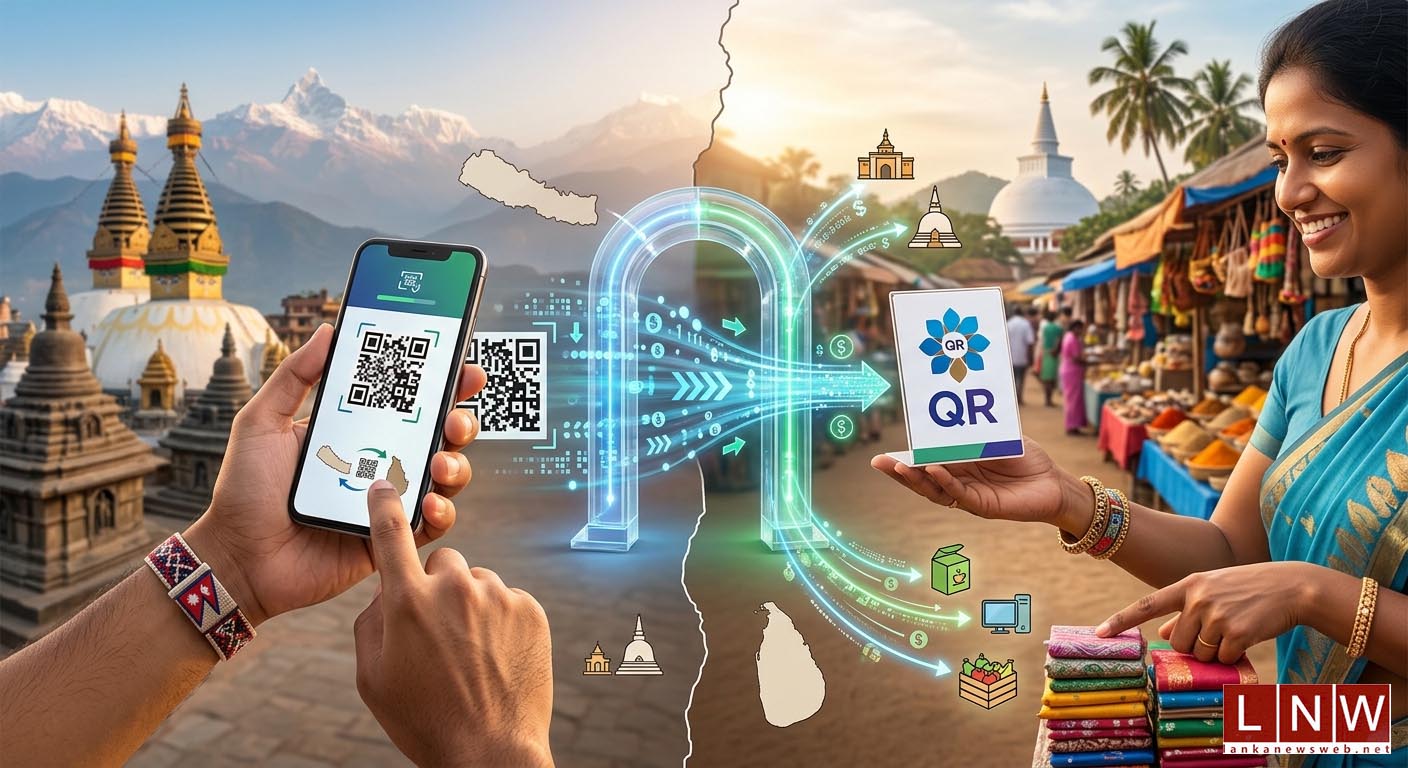
May 15, Colombo (LNW): Sri Lanka and Nepal have taken a decisive step toward regional financial integration by launching a cross-border QR payment system that allows Nepali travellers to make instant digital payments at more than 400,000 LankaQR merchants across Sri Lanka using domestic banking apps and Nepal’s connectIPS platform. The initiative, officially unveiled in Colombo on May 12, is being hailed as one of South Asia’s most ambitious attempts at interoperable digital finance.
The partnership between Nepal Clearing House Ltd. (NCHL) and LankaPay arrives at a time when both economies are attempting to deepen regional trade, tourism, and investment connectivity after years of economic instability and post-pandemic restructuring. Officials from the Nepal Rastra Bank and the Central Bank of Sri Lanka described the arrangement as a breakthrough in real-time regional payments, enabling travellers to bypass cumbersome currency exchanges and costly international card fees.
The development comes amid renewed momentum in bilateral economic relations. The newly established Sri Lanka–Nepal Business Council has intensified efforts to promote trade and investment corridors between Colombo and Kathmandu. Diplomatic engagement has also increased significantly, with both countries actively encouraging private-sector partnerships and SME collaboration.
Although bilateral trade volumes remain relatively modest, economic analysts believe digital payment integration could unlock faster growth in tourism-linked commerce. Sri Lankan exports to Nepal stood at approximately US$3.86 million in 2024, dominated by processed foods, glassware, electronics, and tea-related products. Tourism flows between the two Buddhist-majority nations have also expanded steadily, particularly through pilgrimage travel linked to Buddhist heritage sites such as Anuradhapura, Kandy, Lumbini, and Kapilavastu.
For Sri Lanka, which is aggressively pursuing tourism-led foreign exchange recovery after its 2022 financial collapse, seamless digital payments could encourage greater visitor spending. The country is targeting three million tourist arrivals in 2026 after earning roughly US$3.2 billion from tourism in 2025. The QR initiative may particularly benefit small and medium-sized businesses, street vendors, transport providers, and retail merchants that traditionally lacked access to international payment systems.
However, the development is not without risks and limitations. Financial cybersecurity experts warn that expanding cross-border digital infrastructure increases exposure to fraud, phishing attacks, and compliance vulnerabilities. Differences in banking regulations, data protection laws, and foreign exchange monitoring mechanisms between Nepal and Sri Lanka could also complicate future scaling efforts.
Critics further argue that digital connectivity alone will not resolve deeper structural weaknesses in bilateral trade. Trade volumes remain heavily imbalanced and comparatively insignificant when measured against each country’s commerce with India or China. Nepal’s economy continues to face a substantial trade deficit despite broader export growth in 2025. Meanwhile, Sri Lanka’s external sector remains under pressure from widening import bills and debt obligations despite signs of economic recovery.
There are also concerns about whether tourism growth genuinely translates into stronger economic gains. Online discussions among Sri Lankan economists and citizens increasingly question whether rising tourist arrivals are generating proportional revenue growth or sustainable local benefits.
However despite these concerns, the QR payment launch represents a symbolic and practical shift toward South Asian financial interoperability. If successfully expanded to trade settlements, remittances, and SME financing, the Sri Lanka-Nepal initiative could become a blueprint for broader regional digital commerce integration across SAARC economies.