LISTEN TO STORY
WATCH STORY
By: Staff Writer
May 15, Colombo (LNW): Sri Lanka’s small and medium enterprise sector, once hailed as the country’s economic lifeline, is demanding urgent action from the JVP-led National People’s Power (NPP) Government amid growing frustration that relief promises have produced little meaningful recovery on the ground.
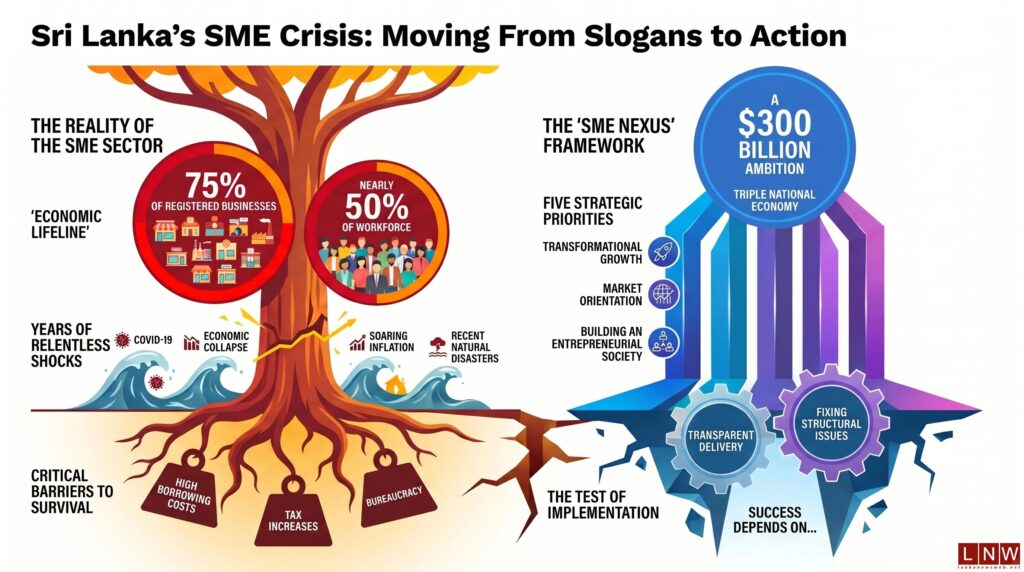
The Government this week launched its long-awaited National SME Strategy Framework, branded “SME NEXUS,” presenting it as the cornerstone of a bold plan to triple the national economy to $300 billion. But for many entrepreneurs still struggling to survive after years of economic devastation, the announcement has triggered cautious hope mixed with deep distrust.
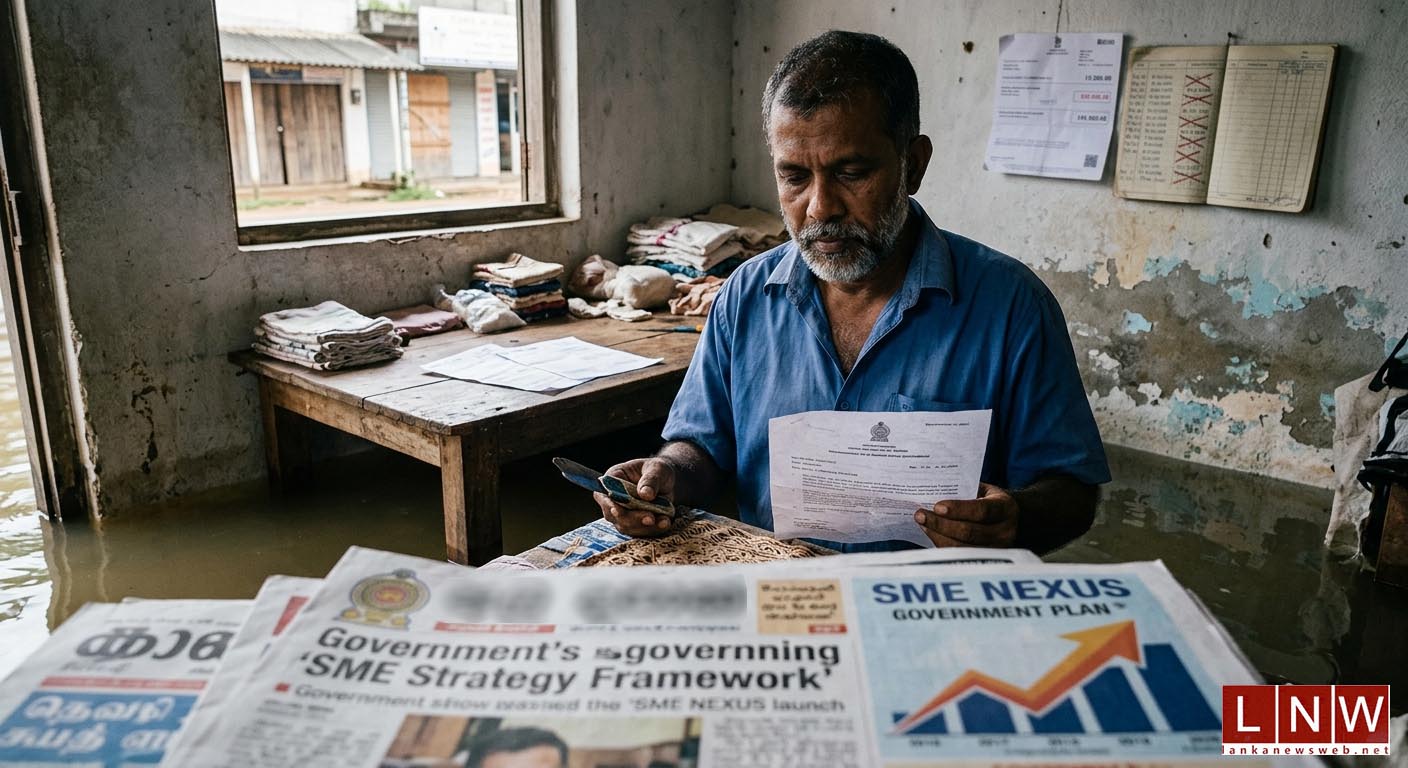
The SME sector has suffered relentless shocks since 2020. The COVID-19 pandemic devastated tourism, retail, manufacturing, and supply chains, forcing thousands of businesses to shut down permanently. Those that survived were later battered by Sri Lanka’s economic collapse, spiralling inflation, tax increases, and severe shortages of fuel and raw materials.
Now, natural disasters including floods and cyclone damage in vulnerable regions have pushed many already indebted SMEs closer to bankruptcy.
Against this backdrop, ministers insist the new strategy represents a comprehensive reset.
Industry and Entrepreneurship Development Minister Sunil Handunneththi argued that Sri Lanka has long failed to maximise SME potential because Government institutions operated in isolation with fragmented and overlapping policies. According to him, the new framework seeks to bring all stakeholders under one coordinated national platform.
The strategy outlines five broad priorities, including transformational growth, market orientation, and building an entrepreneurial society. It also promises technology upgrades, improved business incubation, stronger market access, value-chain integration, and easier financing opportunities.
Deputy Minister Chathuranga Abeysinghe called the framework a “dream come true” after nearly 15 months of consultations with industry stakeholders and policymakers.
However, many SME operators argue that consultation alone cannot solve immediate survival challenges.
Across the country, entrepreneurs continue to complain about unaffordable borrowing costs, delayed loan approvals, mounting utility bills, shrinking consumer demand, and limited disaster compensation.
Several business associations have also questioned whether smaller rural enterprises will genuinely benefit from Government-backed financing schemes or whether assistance will once again favour politically connected firms.
The Government’s own statistics highlight the stakes involved. SMEs make up roughly 75 percent of registered businesses and employ nearly half the workforce. Their collapse would carry severe social and political consequences, especially as unemployment and economic hardship continue to fuel public dissatisfaction.
A World Bank survey referenced during the launch identified taxation, bureaucracy, weak access to finance, poor infrastructure, and labour shortages as major obstacles facing SMEs. Entrepreneurs argue these structural issues cannot be solved merely through policy declarations without rapid administrative reform and transparent implementation.
International organisations including the World Bank and Asian Development Bank have expressed support for the initiative, but analysts warn that public trust will depend entirely on results.
For Sri Lanka’s struggling SMEs, the real test is no longer whether the Government can produce another strategy document but whether it can finally deliver tangible relief, rebuild confidence, and help businesses recover from years of crisis-driven devastation