
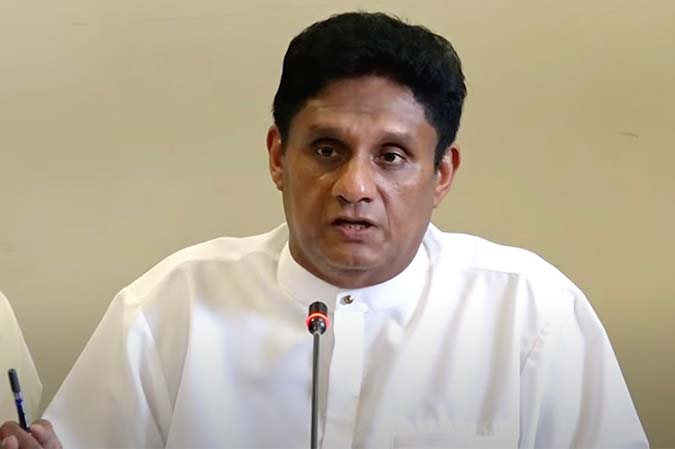
May 21, Colombo (LNW): Opposition Leader Sajith Premadasa has urged the government to begin preparatory discussions with the International Monetary Fund (IMF) on a successor support programme, cautioning that Sri Lanka may struggle to meet future external reserve targets under the existing arrangement.
Issuing a statement, Premadasa clarified that he was not calling for changes to the current IMF programme, which remains in effect, but rather for early engagement on a follow-up framework that would take over once the present agreement concludes.
He pointed out that Sri Lanka’s gross official reserves currently stand at around US$7 billion, while the IMF’s projected target for March 2027 is US$14.2 billion. To close that gap within the required timeframe, he argued, the country would need to build reserves at a rate of roughly US$600 million per month over the next year, which he described as highly unlikely under present economic conditions.
The Opposition Leader warned that several economic indicators were already showing strain. He noted that the rupee had depreciated by approximately 14 per cent against the US dollar over the past year, while fuel prices had risen sharply, with petrol now nearing levels seen during the height of the 2022 economic crisis.
He also raised concerns over Sri Lanka’s dependence on foreign remittances, which amount to over US$8 billion annually, much of which is earned by workers in the Middle East. Premadasa cautioned that ongoing geopolitical tensions in the region could pose risks to this critical inflow of foreign currency.
Sri Lanka, he said, had historically entered IMF arrangements only after severe economic deterioration, leaving limited room for negotiation. He argued that the current period, with reserves at comparatively stronger levels and reforms underway, presented a rare opportunity for forward planning rather than crisis-driven decision-making.
Premadasa further emphasised that his call for early engagement was not a rejection of fiscal discipline, but a recommendation to ensure long-term macroeconomic stability and avoid future shocks when the current programme expires.
He urged the government to present a clear contingency strategy for the post-2027 period and to communicate transparently with the public on how it intends to meet upcoming external financing challenges.