
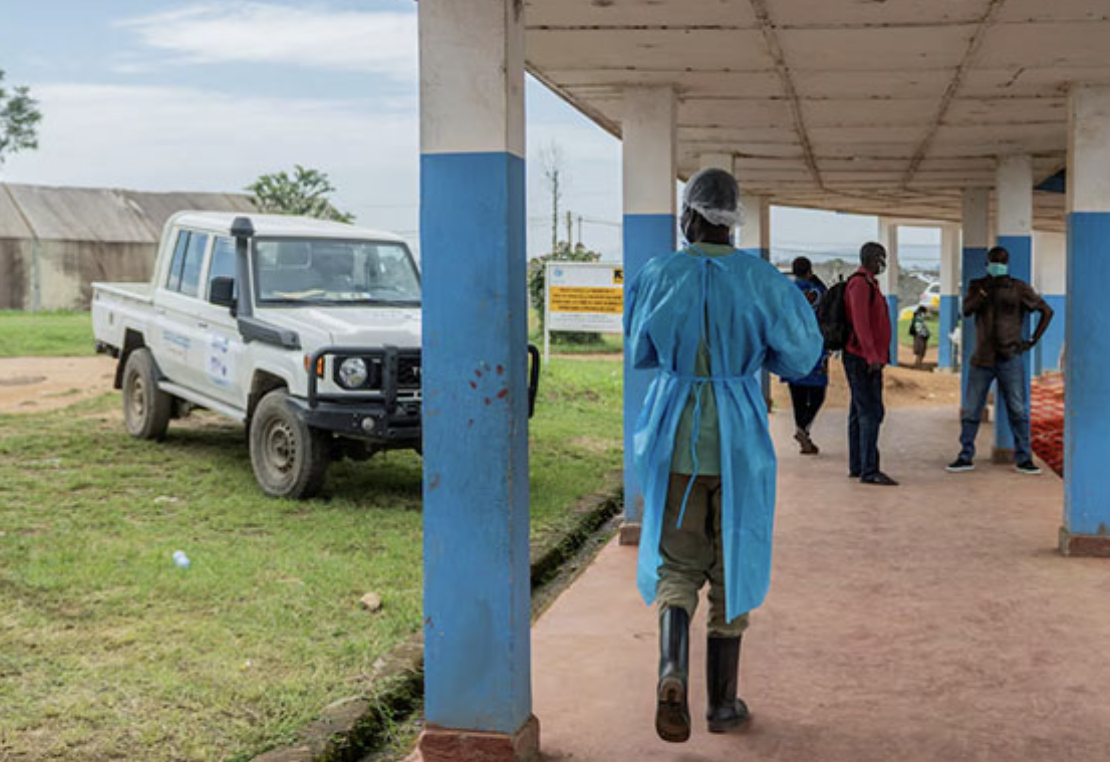
A new Ebola case has been confirmed in South Kivu province in eastern Democratic Republic of Congo (DRC), raising concerns over the spread of the outbreak beyond its original epicentre in Ituri province.
According to authorities controlling the area, the case was detected near the provincial capital Bukavu, several hundred kilometres south of the outbreak zone identified last week.
Health officials believe the outbreak may have circulated undetected for nearly two months before being formally identified.
Data released by the DRC Health Ministry on Thursday showed that the outbreak has resulted in 670 suspected cases and 160 suspected deaths, with 61 cases officially confirmed.
Two additional confirmed cases have also been reported in neighbouring Uganda, which announced that it would suspend flights to the DRC within the next 48 hours as a precautionary measure.
The World Health Organization (WHO) over the weekend declared the outbreak of the Bundibugyo strain of Ebola a Public Health Emergency of International Concern. Currently, no approved vaccine exists for this strain.
The Alliance Fleuve Congo, which includes the Rwanda-backed M23 rebel group controlling parts of eastern DRC, stated that the South Kivu patient, a 28-year-old man, had died and been safely buried. Authorities said he had travelled from the northern city of Kisangani.
Meanwhile, another suspected Ebola patient in South Kivu remains in isolation awaiting test results.
An Ebola case was also confirmed last week in Goma, the capital of neighbouring North Kivu province.
Tensions have also emerged in outbreak-affected communities. In Rwampara, one of the hotspots in Ituri province, protests erupted after relatives of an Ebola victim disputed the cause of death and demanded the release of the body.
According to Reuters witnesses, protesters attacked a hospital and set fire to tents operated by medical charity ALIMA, prompting police to disperse crowds using warning shots and tear gas.
Health authorities fear armed violence, misinformation, and mistrust of medical workers could complicate efforts to contain the outbreak, similar to the challenges faced during the 2018–2020 Ebola outbreak in eastern DRC, which killed nearly 2,300 people.
The Coalition for Epidemic Preparedness Innovations (CEPI) said current confirmed cases may represent only “the tip of the iceberg” and that efforts are underway to assess potential vaccine candidates.
Aid workers responding to the outbreak have also warned of shortages of essential medical supplies, with some attributing the situation to recent cuts in foreign aid that have weakened healthcare systems and disease surveillance capabilities.
Britain announced an allocation of up to £20 million to support the response, while the United States has committed US$ 23 million and plans to assist in opening clinics in both the DRC and Uganda.
Ugandan authorities, however, said they had not been consulted regarding the proposed clinics and insisted there was no evidence of local transmission within the country.
Meanwhile, the African Union announced that the India-Africa Forum Summit, scheduled to be held in New Delhi from May 28 to 31, would be postponed due to the evolving public health situation in Africa.