
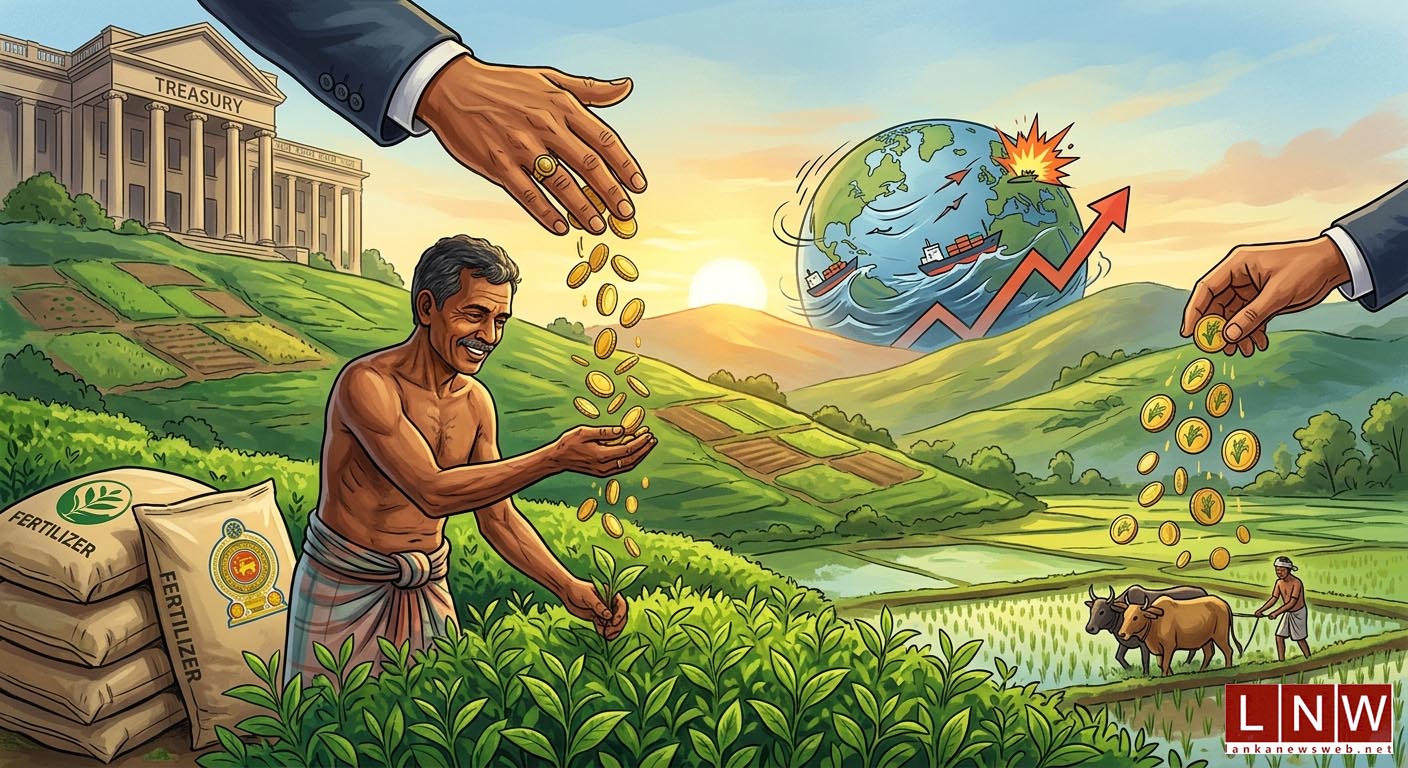
Sri Lanka’s tea export industry is confronting one of its most difficult periods in recent years as geopolitical conflict, weakening global demand and economic instability combine to undermine one of the country’s most valuable export sectors. Fresh trade statistics reveal that tea shipments have slowed considerably in 2026, raising concerns over the long-term sustainability of the industry under worsening global economic conditions.
According to Sri Lanka Customs data reviewed by Asia Siyaka Research, tea exports during April 2026 declined to 17.9 million kilograms, compared with 18.2 million kilograms exported during the same period last year. The decline reflects the mounting strain on Sri Lanka’s export economy, which remains heavily dependent on international shipping routes passing through politically volatile regions.
Between January and April this year, the country exported 78.3 million kilograms of tea, recording a 4 percent drop from the 81.3 million kilograms shipped during the corresponding period in 2025. Export revenue also weakened significantly, falling from 478 million US dollars to 451 million US dollars during the same period. The average export price per kilogram dropped as well, highlighting declining returns for producers and exporters already burdened by rising operational costs.
Industry experts point to the escalation of the US-Iran conflict as a major factor behind the downturn. Shipping routes connecting Sri Lanka with the Middle East and North Africa have experienced delays and logistical complications since tensions intensified in February. These regions represent some of Sri Lanka’s largest tea markets, making the industry highly vulnerable to disruptions in maritime trade.
The crisis has exposed structural weaknesses within Sri Lanka’s tea export sector. Heavy dependence on a limited number of overseas markets has left exporters exposed to political uncertainty and regional instability. Iraq remained the largest importer of Sri Lankan tea during the first four months of 2026, although purchases declined compared with the previous year. Russia continued to import substantial volumes despite ongoing payment and banking restrictions linked to international sanctions.
Türkiye, however, emerged as a significant growth market, nearly doubling its imports from Sri Lanka. Analysts believe traders increasingly used Turkish channels as alternative routes to bypass disruptions elsewhere in the region. Azerbaijan also expanded tea imports, signalling shifting regional trade dynamics within the global tea market.
Beyond geopolitical risks, exporters are also battling soaring freight charges, currency volatility and weakening purchasing power among consumers in several destination countries. Sri Lanka’s fragile domestic economy has added further pressure on tea producers struggling with high production costs, labour shortages and limited access to financing.
Tea remains a cornerstone of Sri Lanka’s export economy and continues to play a crucial role in generating foreign exchange earnings. In 2025 alone, tea exports exceeded 257 million kilograms and generated over 1.5 billion US dollars in revenue. Yet industry observers caution that unless Sri Lanka modernises supply chains, expands into new markets and improves trade resilience, the country’s tea industry could face continued decline amid an increasingly uncertain global economic environment.