
By: Staff Writer
May 24, Colombo (LNW): Sri Lanka’s already delicate economic recovery has come under renewed pressure as soaring global oil prices sharply increased the country’s fuel import expenditure during the first half of 2026. Government officials say the escalation of conflict in the Middle East has directly inflated petroleum costs, exposing the island nation’s continued vulnerability to external energy shocks.
Deputy Finance Minister Anil Jayantha revealed that the state-owned fuel supplier, Ceylon Petroleum Corporation (CPC), recorded an oil import bill of US$521 million in May, a dramatic rise compared to the US$152 million spent in December last year. The increase follows a sustained surge in global crude prices triggered by escalating military tensions involving the United States, Israel, and Iran.
According to finance officials, Sri Lanka lacks the large-scale strategic storage facilities required to stockpile crude oil or refined fuel during periods of lower prices. As a result, the country remains highly exposed to sudden fluctuations in international energy markets, particularly during geopolitical crises affecting major oil-producing regions.
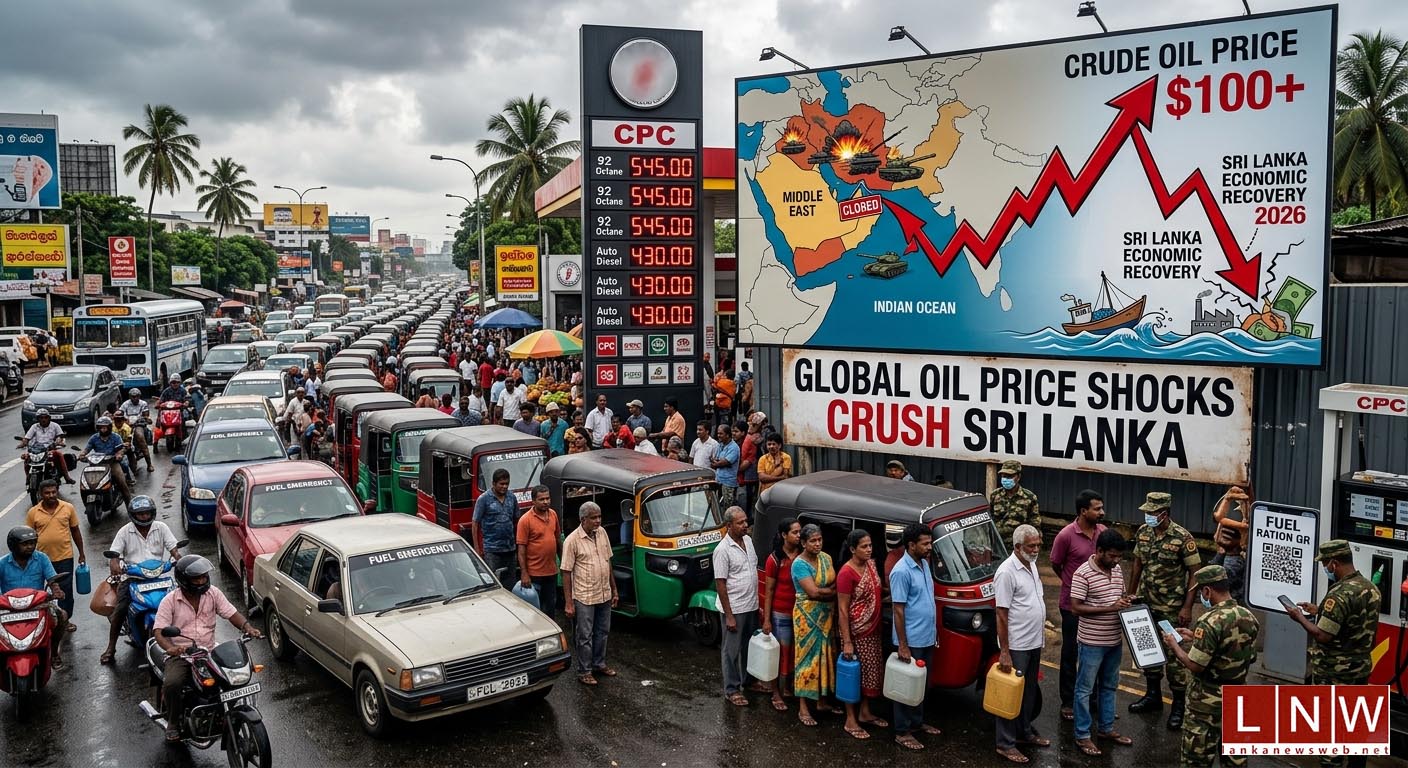
The situation intensified after the closure of the Strait of Hormuz on March 2, 2026, one of the world’s most critical oil transit routes through which nearly one-fifth of global petroleum supplies pass daily. The disruption sent benchmark crude prices above US$100 per barrel for the first time in four years, immediately driving up Sri Lanka’s import costs.
A senior Central Bank official disclosed that CPC alone spent nearly US$1 billion on petroleum imports during the first four months of 2026. By comparison, the corporation’s total fuel import expenditure for the entirety of 2025 stood at approximately US$1.5 billion. When combined with purchases by the country’s other fuel retailers, Sri Lanka’s cumulative first-quarter fuel import costs reached an estimated US$1.28 billion.
The rapid escalation revived painful public memories of the country’s 2022 economic collapse, when severe fuel shortages caused kilometre-long queues, nationwide protests, and rolling power cuts. Fear of a repeat crisis prompted panic buying and hoarding in Colombo and surrounding districts, forcing authorities to temporarily reintroduce a QR-code-based fuel rationing system and impose restrictions on container fuel sales.
In response to mounting pressure, the Ministry of Energy moved to diversify Sri Lanka’s fuel procurement strategy. Officials initiated emergency bilateral agreements with Russia in mid-April to secure cheaper crude shipments outside traditional Middle Eastern supply routes. The government believes these arrangements could partially ease import costs over the coming months.
Despite the ongoing volatility, authorities insist that uninterrupted fuel and electricity supplies will be maintained. Officials project CPC’s monthly oil bill could decline to US$332 million in June and further to US$241 million by July if global prices stabilize. However, analysts warn that Sri Lanka’s recovery remains dangerously tied to unpredictable geopolitical developments beyond its control.