
By: Staff Writer
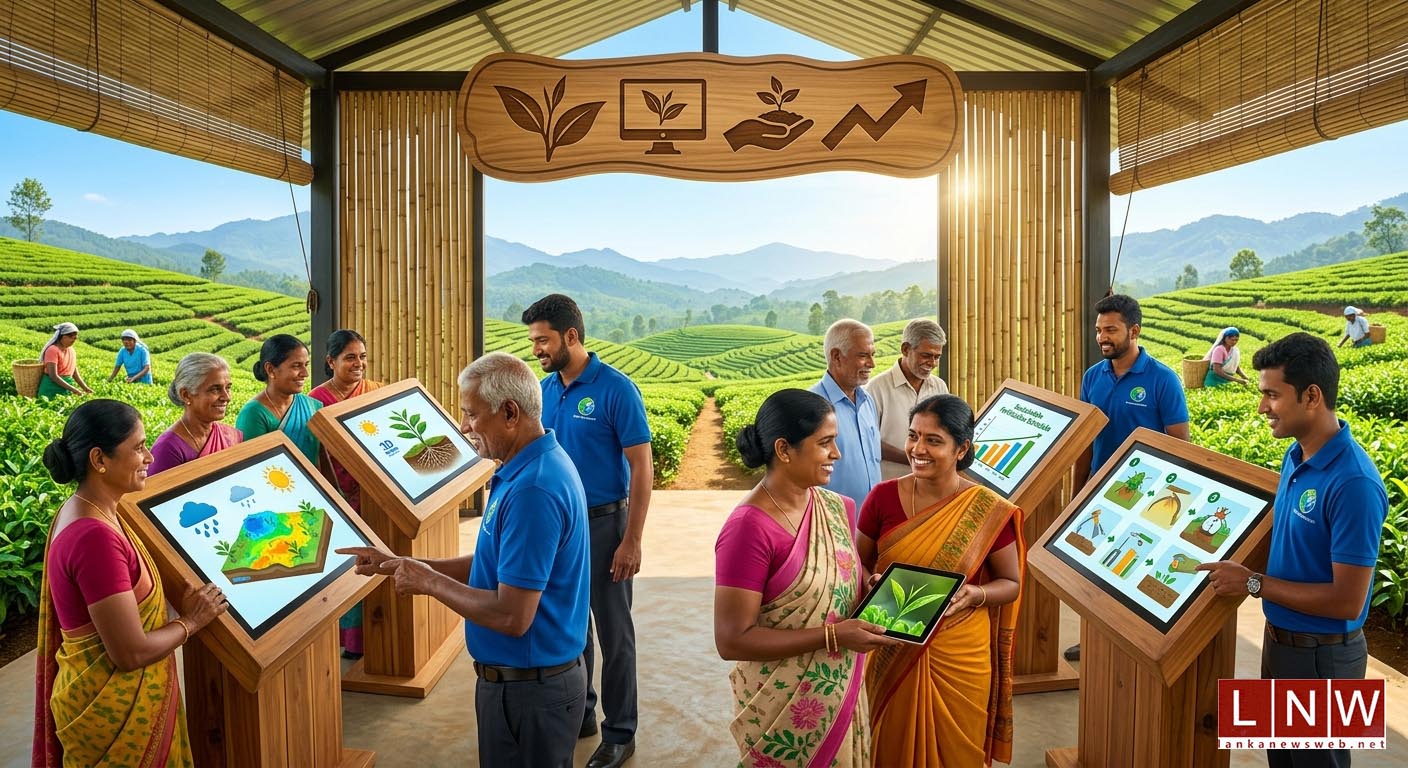
May 25, Colombo (LNW): Sri Lanka’s tea smallholders, who produce the majority of the country’s world-famous Ceylon Tea, are being introduced to a new era of digital agriculture through the establishment of “Regenerative Agriculture Digital Resource Centres” aimed at improving sustainability, farmer education, and productivity across the tea sector.
The initiative, formally handed over to the Tea Smallholdings Development Authority on 20 May, marks one of the most significant recent attempts to modernise Sri Lanka’s tea smallholder industry through technology-driven agricultural extension services and regenerative farming education.
The programme was launched during the 6th Asian Tea Alliance conference at the Ratnasiri Wickramanayake National Training Centre with support from international organisations Solidaridad and the Nucleus Foundation.
The digital centres have been established at Hanthana, the authority’s headquarters, and the Walahanduwa regional office to facilitate knowledge-sharing, technical training, and digital communication between researchers, agricultural officers, and tea farmers.
Tea remains one of Sri Lanka’s largest export industries, generating approximately $1.5 billion annually while supporting nearly 2.4 million livelihoods directly and indirectly. Smallholders account for roughly 70% of national tea production and cultivate nearly 60% of the country’s tea-growing land area.
However, despite their importance to the national economy, many tea smallholders continue to operate under difficult economic conditions. Rising production costs, reduced fertiliser usage, unpredictable weather patterns, labour shortages, and declining yields have placed increasing pressure on growers in recent years.
Industry reports show that Sri Lanka’s tea sector recorded only marginal production growth in 2025, with adverse weather events and climate disruptions further threatening productivity. Analysts have warned that without improved technology adoption and climate-resilient cultivation methods, the long-term sustainability of the industry could face serious risks.
Authorities believe the new digital resource centres can help address these challenges by dramatically improving access to scientific knowledge generated by the Tea Research Institute of Sri Lanka.
Under the initiative, tea growers will gain faster access to information related to regenerative agriculture, soil management, pest control, climate adaptation, fertiliser optimisation, and sustainable cultivation practices through digital learning platforms and social media channels.
Officials say one of the key advantages of the programme will be the reduction of delays traditionally associated with printed extension material distribution. Instead, digital platforms will allow farmers to receive real-time technical advice while also enabling authorities to collect rapid feedback directly from cultivation communities.
The centres are also expected to play an important role in strengthening “Training of Trainers” programmes, enhancing the technical skills of agricultural instructors working closely with smallholder communities.
Global tea markets are increasingly demanding environmentally sustainable and traceable products, particularly in premium export destinations. As a result, regenerative agriculture practices are becoming central to the future competitiveness of tea-exporting countries like Sri Lanka.
Development experts argue that digitalisation and sustainability must now work together if Sri Lanka hopes to maintain its position in the international tea trade while protecting vulnerable rural livelihoods.
Several recent pilot programmes in Sri Lanka have already demonstrated the benefits of modern agricultural interventions. One initiative targeting tea smallholders in southern districts reportedly achieved productivity increases ranging between 15% and 45% within just over a year through improved cultivation support and technical guidance.
The launch event drew participation from senior Government representatives, diplomats, and international development officials including Acting Ambassador of the Netherlands to Sri Lanka Iwan Rutjens, Plantation and Community Infrastructure Ministry Secretary Gunadasa Samarasinghe, and Tea Smallholding Development Authority Chairman Nimal Udugampala.
Representatives from Solidaridad and the Nucleus Foundation, including Shatadru Chattopadhyay, Malory David, and Dave Morris, also attended the ceremony.
Agriculture sector observers say the initiative represents an important test of how digital transformation can help revive Sri Lanka’s tea industry at a time when global sustainability standards, climate concerns, and economic pressures are reshaping agricultural supply chains worldwide.