
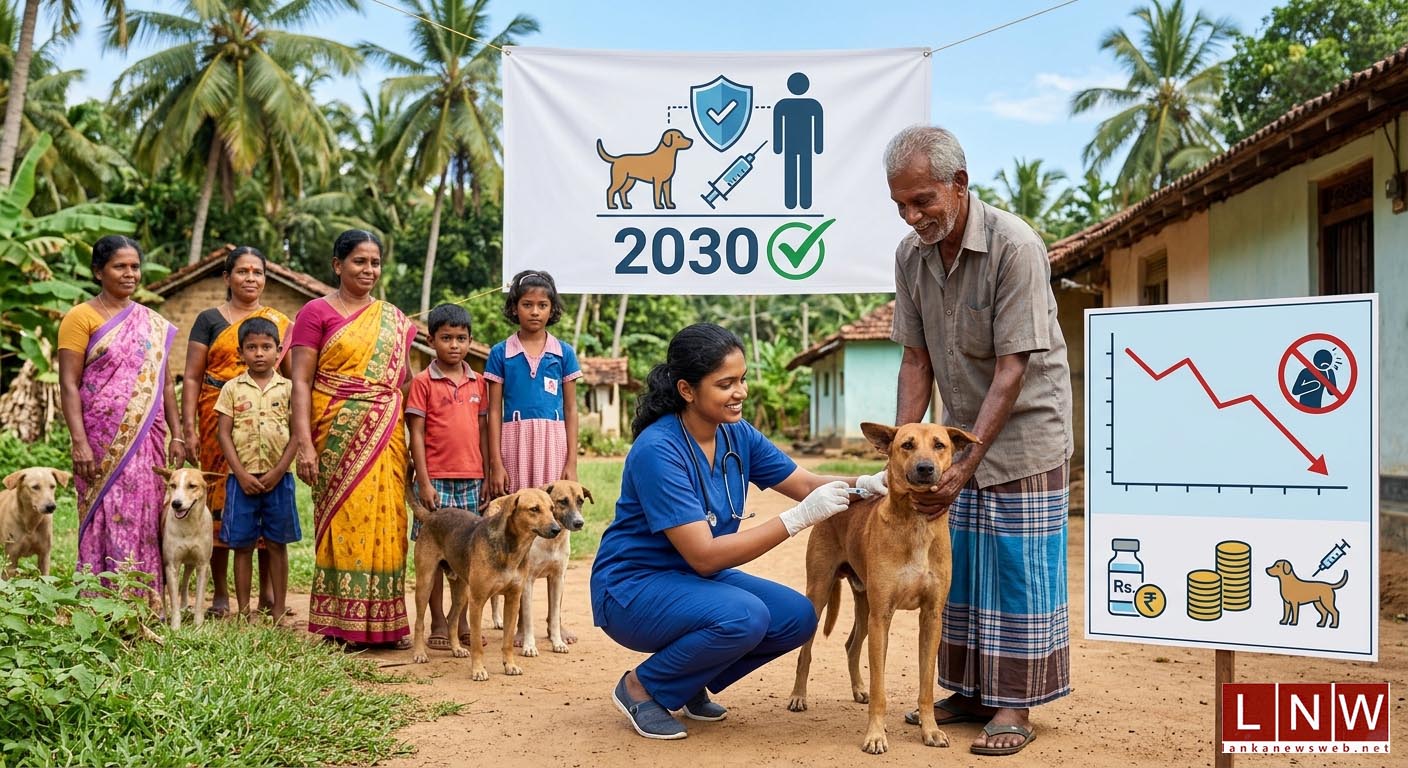
June 02, Colombo (LNW): Sri Lanka is intensifying its campaign to eradicate rabies, with health authorities setting an ambitious goal of eliminating all rabies-related fatalities by the end of the decade.
Officials from the National Rabies Control Programme revealed that the government currently invests more than Rs. 5 billion each year in prevention, treatment and animal vaccination initiatives aimed at curbing the disease across the country.
Speaking at a media briefing in Ratnapura, Director of the Programme, Dr. Niroshan Gamage, highlighted the significant progress achieved over recent decades. He noted that rabies deaths have fallen dramatically compared with levels recorded several decades ago, reflecting the impact of sustained public health interventions and vaccination programmes.
According to official figures, 14 people lost their lives to rabies in 2025, down from 20 fatalities reported the previous year. While the downward trend is encouraging, health authorities remain focused on eliminating the disease entirely. Dr. Gamage disclosed that three rabies-related deaths have already been recorded during the first few months of this year, underscoring the need for continued vigilance.
He explained that government expenditure on rabies management extends across several sectors. Approximately Rs. 800 million is spent annually on treatment and preventive care for people exposed to the virus, while a further Rs. 2.5 billion is allocated towards vaccination campaigns targeting dogs and other animals that can transmit the disease.
Health officials emphasise that preventing rabies at its source remains the most effective long-term strategy. As a result, large-scale animal vaccination programmes continue to form a central pillar of the national response.
Dr. Gamage also noted that Sri Lanka’s dog population is estimated at around 2.7 million. Current assessments suggest there is roughly one dog for every eight residents, although the ratio varies between urban and rural areas.
Dogs remain the primary source of rabies transmission in the country, accounting for an estimated 99 per cent of reported human infections. Authorities believe that expanding vaccination coverage among both owned and stray dogs, alongside greater public awareness, will be critical to achieving the country’s target of zero rabies deaths by 2030.
Public health officials have urged communities to seek immediate medical attention following animal bites and to support local vaccination campaigns, warning that rabies remains almost always fatal once symptoms develop, despite being entirely preventable through timely treatment.