
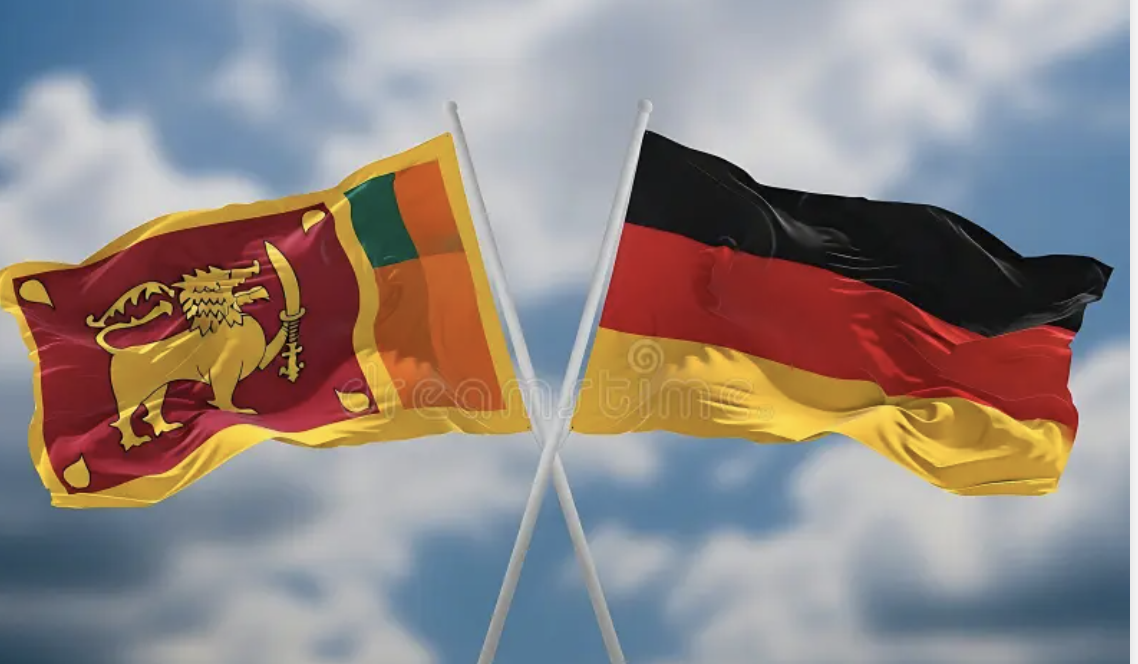
Growing geopolitical tensions and disruptions to international trade routes are driving German companies to seek new investment destinations, and Sri Lanka is increasingly being viewed as a promising candidate. German business leaders attending the Sri Lankan-German Business Forum 2026 signaled strong interest in expanding economic ties, particularly in sectors linked to logistics, renewable energy, maritime services, and sustainable development.
The forum, held in Colombo, served as a platform for examining how both countries can strengthen commercial relations during a period of significant global economic transformation. German delegates repeatedly highlighted the need for resilient and diversified supply chains as businesses adapt to evolving geopolitical realities.
Dr. Nicole Renvert, Managing Director for International Economic Relations at the German Chamber of Commerce and Industry (DIHK), explained that recent global disruptions have prompted German firms to rethink traditional supply chain models. Companies are increasingly prioritising diversification strategies to reduce vulnerabilities and ensure business continuity.
Within this context, Sri Lanka’s strategic position in the Indian Ocean has gained renewed significance. Its location along major maritime routes, combined with a skilled workforce and expanding logistics capabilities, has attracted attention from German investors searching for reliable regional partners.
German officials identified several sectors where collaboration could expand rapidly. Renewable energy projects, green technology solutions, energy-efficiency initiatives, logistics services, and maritime industries were all cited as areas offering substantial opportunities for investment and long-term cooperation.
However, enthusiasm was accompanied by calls for continued reforms. German representatives stressed that transparent procedures, streamlined regulations, and reliable administrative systems are essential for attracting sustained foreign investment. Strengthening vocational education and workforce development was also highlighted as a priority to support future economic partnerships.
Tobias Pierlings, Head of Division for South and Southeast Asia at Germany’s Federal Ministry for Economic Affairs and Energy, described Sri Lanka as a strategically important gateway linking Europe, Africa, and Asia. He noted that current geopolitical developments have increased the importance of dependable trade corridors and diversified transport networks.
Germany and the European Union, he said, are seeking partnerships based on transparency, long-term cooperation, and mutual economic benefit. He also reaffirmed support for Sri Lanka’s ongoing efforts to improve its investment climate and strengthen economic recovery.
Adding to the positive outlook, German Asia-Pacific Business Association Executive Member Almut Rößner said recent political exchanges and growing engagement between private sectors in both countries have generated fresh momentum for bilateral relations. She urged businesses to capitalise on this favourable environment before opportunities shift elsewhere.
Rößner pointed to increasing investor interest in renewable energy, tourism, infrastructure, agriculture, and maritime logistics. She also praised the resilience demonstrated by Sri Lankan businesses despite economic hardships and external challenges in recent years.
With 40 German delegates participating in the forum, the gathering underscored a growing belief that Sri Lanka could become a more significant partner in Germany’s Indo-Pacific strategy—provided reforms continue and investor confidence is maintained.