
By Adolf
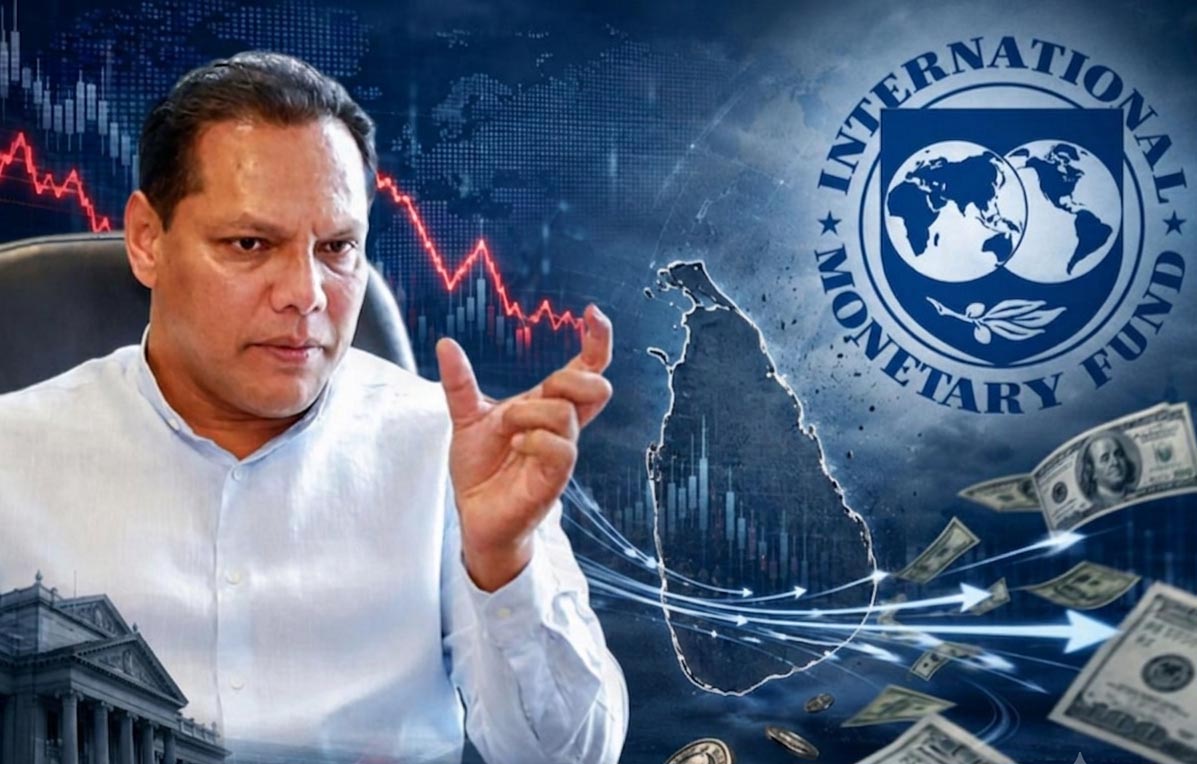
Recent remarks in Parliament and at public briefings have reignited debate over Sri Lanka’s external accounts and the integrity of reported balance of payments figures, with attention drawn to an alleged discrepancy of approximately US$ 808 million. The issue gained visibility following comments by former Minister and Parliamentarian Dayasiri Jayasekara, who urged greater clarity from the Central Bank of Sri Lanka (CBSL) and other monetary authorities.
According to Jayasekara, IMF-related documentation and associated financial data raise questions about whether a significant amount of foreign exchange may have flowed out of the country through formal or informal channels. Speaking at a media briefing in Colombo on June 5, he characterized the alleged movement of funds as a matter requiring urgent explanation, particularly given Sri Lanka’s fragile external position following the 2022 sovereign debt crisis.
He further argued that, in a period marked by tight foreign exchange controls and structural adjustment measures, even relatively smaller leakages would have macroeconomic implications. The reference to an “over US$ 800 million discrepancy” has since circulated in political and media discourse, although a detailed public clarification of the methodology or accounting basis behind this figure has not yet been made fully available.
The International Monetary Fund, in its periodic review reports on Sri Lanka’s Extended Fund Facility programme, has consistently emphasized the importance of improving data transparency, strengthening external sector statistics, and tightening oversight over capital flows. However, IMF documentation typically relies on data provided by national authorities, and differences in interpretation, timing, or classification of transactions can sometimes lead to apparent discrepancies that require technical reconciliation rather than immediate conclusions of wrongdoing.
Bankruptcy
The Central Bank of Sri Lanka, under Governor Dr. Nandalal Weerasinghe, is accused by critics of having declared bankruptcy without parliamentary approval. Furthermore, it is alleged that the Bank raised interest rates to levels particularly damaging to small and medium-sized enterprises (SMEs), credit growth, and employment conditions. Some political figures have attributed these outcomes to what they describe as an “overcorrection” in monetary policy. Additionally, critics argue that delays in responding recently to the foreign exchange crisis in a timely manner have pushed government borrowing costs up by billions of Rupees.
Against this backdrop, allegations or suggestions of large-scale unaccounted capital outflows naturally heighten public sensitivity. Yet economists caution that balance of payments statistics are complex aggregates that include trade flows, services, remittances, external debt servicing, and financial account movements. Apparent gaps may emerge due to lagging data capture, revisions, or classification differences between preliminary and final accounts.
What is essential at this stage is a clear, technical reconciliation of the figures in question. If a discrepancy of the magnitude cited does exist, it would require a detailed breakdown by the Central Bank in consultation with the IMF, including identification of whether the variance arises from private sector flows, public sector obligations, or statistical adjustments.
Public Confidence
At the same time, public confidence in economic governance depends not only on technical accuracy but also on transparent communication. In periods of economic fragility, unexplained figures—particularly those involving foreign exchange—can quickly become politicized, potentially undermining confidence in stabilization efforts.
As Sri Lanka continues its IMF-supported reform path, questions surrounding data integrity, capital flows, and policy impacts are likely to remain central to public debate. The challenge for policymakers, including the Central Bank leadership, will be to ensure that technical explanations are communicated clearly while maintaining institutional credibility in a highly scrutinized economic environment.
Ultimately, resolving the current concerns will require not only political discourse but also rigorous statistical verification and open disclosure of the underlying data. Fortunately President AKDs limited knowledge of English and Economics is helping CBSL to limp on and make lame excuses .