
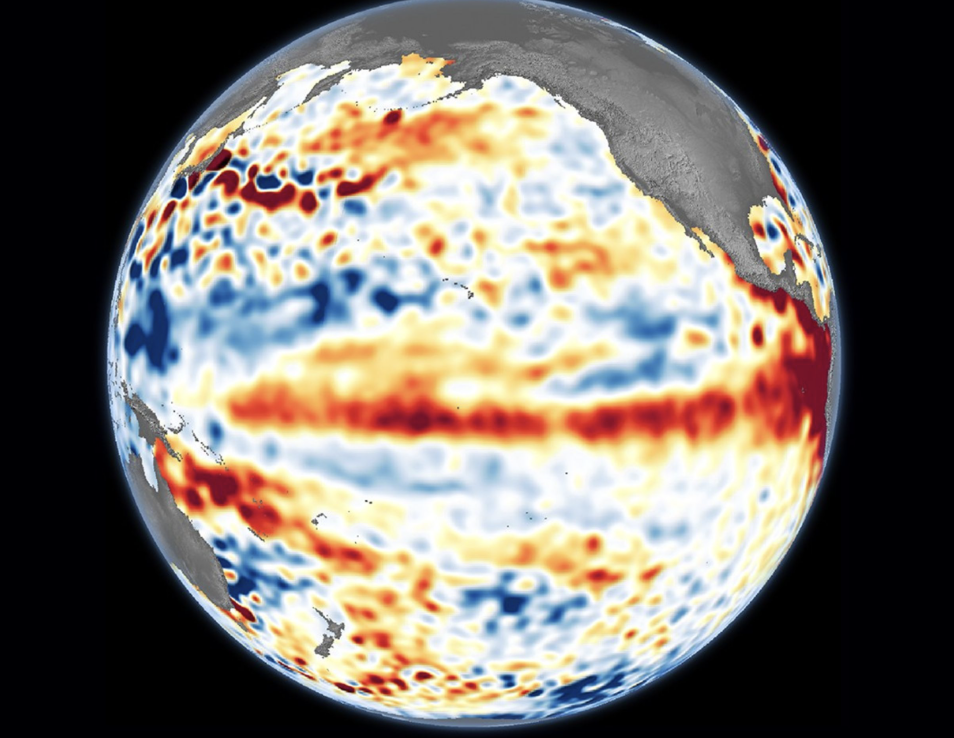
The El Niño climate pattern has officially begun, according to the U.S. National Oceanic and Atmospheric Administration (NOAA), raising concerns over rising global temperatures, extreme weather events, and disruptions to food supplies and economies worldwide.
NOAA confirmed that sea surface temperatures in the tropical Pacific Ocean have exceeded the threshold used to classify an El Niño event, while atmospheric conditions are also showing signs of responding to the warming ocean.
Forecasters say the current El Niño could develop into a “super” El Niño and potentially rank among the strongest recorded since 1950. NOAA’s latest outlook estimates a 63% probability that the event will reach very strong levels, with some climate models suggesting Pacific Ocean temperatures could rise more than 3°C above average by the end of the year.
Scientists warn that the phenomenon is occurring against the backdrop of long-term human-induced climate change, increasing the likelihood of record-breaking global temperatures.
Professor Adam Scaife of the UK Met Office said the current El Niño is “riding on top of a substantial amount of global warming,” adding that affected regions could experience unprecedented temperatures. He noted that 2027 is likely to be particularly hot as El Niño’s warming effects combine with existing climate change trends.
A strong El Niño typically increases global average temperatures by around 0.2°C by releasing heat stored in the Pacific Ocean into the atmosphere.
The climate pattern is expected to influence weather conditions across several regions. Flooding risks are likely to increase in parts of South America, East Africa, Central Asia, and the southern United States, while drought and wildfire threats could intensify in Australia, Indonesia, and parts of northern South America.
El Niño also tends to suppress Atlantic hurricane activity, although it can contribute to reduced rainfall and drought conditions in parts of Central America.
Humanitarian and climate experts have warned that vulnerable communities could face significant impacts, including crop failures, food shortages, and rising food prices.
Japan’s Meteorological Agency has also confirmed that El Niño conditions are present and expects the event to continue through at least the autumn months. Meanwhile, Australia’s Bureau of Meteorology says the Pacific is approaching El Niño conditions and anticipates the event will strengthen later this year.
El Niño typically occurs every two to seven years and generally lasts around a year, although its impacts can continue well beyond that period.