
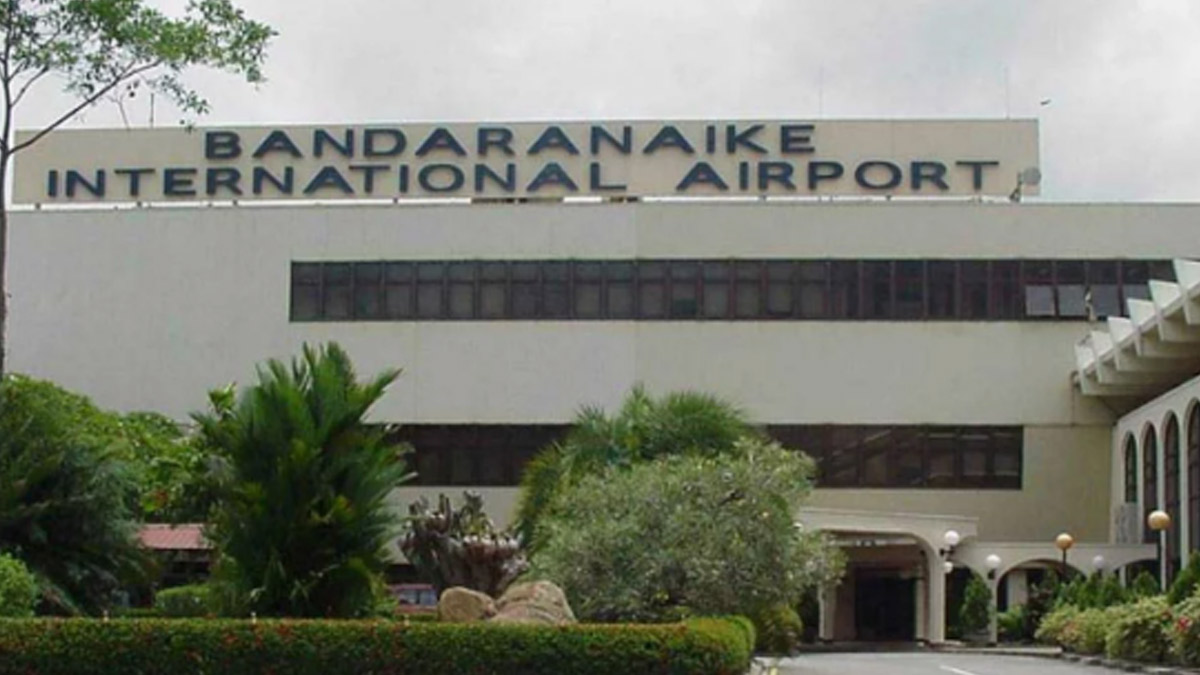
While Sri Lanka’s Bandaranaike International Airport faces growing passenger demand and increasing pressure on its single-runway operations, some aviation experts argue that the real challenge lies not in infrastructure shortages but in operational inefficiencies.
Former Civil Aviation Authority Director General Themiya Abeywickrama believes that BIA’s existing runway is capable of handling significantly more traffic than it currently accommodates. According to him, institutional shortcomings, outdated operational practices, and inadequate supporting infrastructure are limiting the airport’s performance far more than runway capacity itself.
At the centre of the debate is the airport’s approach to air traffic management. Abeywickrama notes that aircraft at BIA are often separated by approximately seven minutes during landing operations, a figure he describes as excessively conservative compared with international standards. Major airports around the world routinely manage aircraft movements at much shorter intervals while maintaining safety requirements.
To support his argument, he points to London’s Gatwick Airport, one of the world’s busiest single-runway airports. Despite operating primarily with a single runway, Gatwick handles hundreds of thousands of aircraft movements annually and can manage dozens of departures and arrivals within a single hour.
The comparison has fueled questions about whether BIA’s capacity limitations are being overstated. Aviation specialists suggest that improvements in air traffic control procedures, staff training, and operational confidence could substantially increase runway utilization without requiring expensive new infrastructure.
Another critical issue identified by experts is the absence of high-speed exit taxiways, commonly known as rapid-exit taxiways. These specialized connectors allow aircraft to leave the runway quickly after landing, reducing occupancy time and enabling the next aircraft to use the runway sooner.
At BIA, aircraft often have to slow dramatically before making sharp turns toward terminal areas. This process keeps aircraft on the active runway longer than necessary, creating congestion and reducing overall operational efficiency.
Abeywickrama argues that investing in rapid-exit taxiways and other targeted improvements would generate immediate benefits while costing only a fraction of what would be required to construct a completely new runway. He also cautions that a second parallel runway would only be effective if adequate separation distances are maintained. A runway built too close to the existing one, he warns, may deliver limited operational advantages despite its enormous expense.
These observations come as the government considers recommendations from an international airport master plan that advises against constructing a second runway before 2055. The proposal instead focuses on modernizing the current runway and improving supporting infrastructure.
The debate highlights a broader question confronting Sri Lanka’s aviation sector: should billions be spent on new construction projects, or should authorities first maximize the efficiency of existing assets? For now, policymakers appear to be favouring operational improvements, but industry experts say the effectiveness of those reforms will ultimately determine whether BIA can meet future demand without a second runway.