
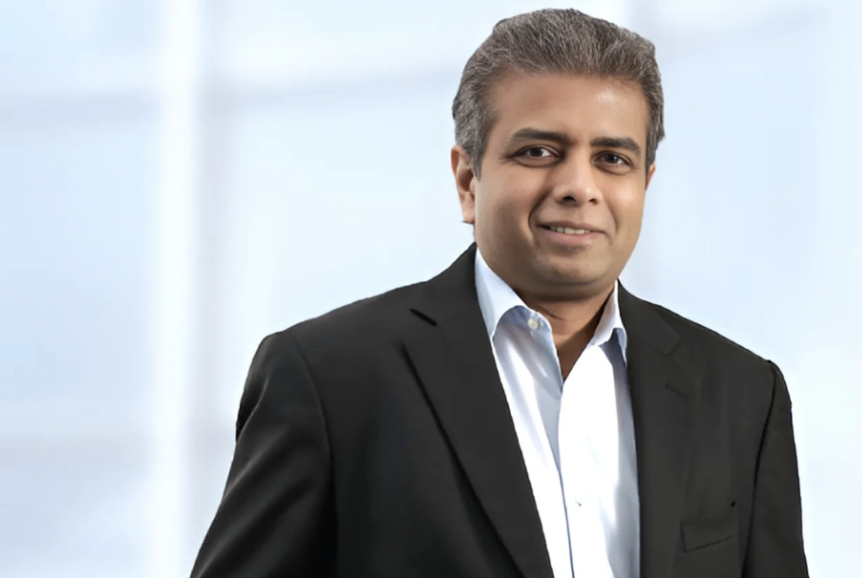
The Government’s decision to appoint Dr. Hans Wijayasuriya as Chairman of the Strategy and Restructuring Committee of SriLankan Airlines has triggered both optimism and debate among aviation, corporate governance and public policy observers.
Widely regarded as one of Sri Lanka’s most successful corporate executives, Dr. Wijayasuriya built his reputation through the telecommunications sector, leading Dialog Axiata’s transformation into the country’s dominant telecom and digital services provider. More recently, he has played a central role in the National People’s Power (NPP) Government’s digital transformation agenda while also serving as a Presidential Adviser.
Supporters of the appointment argue that SriLankan Airlines’ biggest challenge is not aviation expertise but strategic reform. The national carrier has accumulated years of financial losses, operational inefficiencies and governance concerns. In this context, they say, the Government requires a proven transformation specialist rather than a traditional airline executive.
Dr. Wijayasuriya’s experience in restructuring large organizations, introducing technology-driven efficiencies and managing complex stakeholder environments is viewed as a valuable asset. Proponents note that airlines worldwide are increasingly becoming technology-intensive businesses where data analytics, digital customer experiences, automation and operational integration play critical roles.
His supporters also point to his international corporate exposure through the Axiata Group, arguing that SriLankan Airlines needs fresh thinking rather than approaches that have failed repeatedly under aviation insiders.
However, critics question whether telecommunications experience can be directly translated into the highly specialized aviation industry. Airlines operate under complex international regulatory frameworks, fleet management requirements, route economics and safety standards that differ significantly from telecommunications.
Another concern relates to workload and potential overextension. Dr. Wijayasuriya is already heavily involved in the Government’s ambitious digital transformation programme, one of the most extensive public sector reform initiatives undertaken in recent years. As Presidential Adviser, he is expected to contribute to multiple strategic national projects.
Industry observers privately question whether one individual can effectively devote sufficient time to both a demanding national transformation agenda and the restructuring of SriLankan Airlines, itself a full-time challenge.
The issue of age has also entered the discussion. While supporters argue that experience and institutional knowledge are invaluable, critics suggest that the Government should simultaneously cultivate younger leadership capable of driving long-term reforms in state-owned enterprises.
Questions have also emerged regarding governance and concentration of influence. Some analysts argue that assigning multiple strategic responsibilities to a single individual risks creating dependence on a limited pool of decision-makers.
Nevertheless, many acknowledge that SriLankan Airlines requires urgent intervention. Whether Dr. Wijayasuriya’s appointment becomes a turning point may ultimately depend less on his telecommunications background and more on his ability to assemble a strong team of aviation, finance and restructuring specialists.
For now, the appointment represents a high-profile experiment in applying digital-era leadership to one of Sri Lanka’s most challenging state-owned enterprises.