
By Adolf
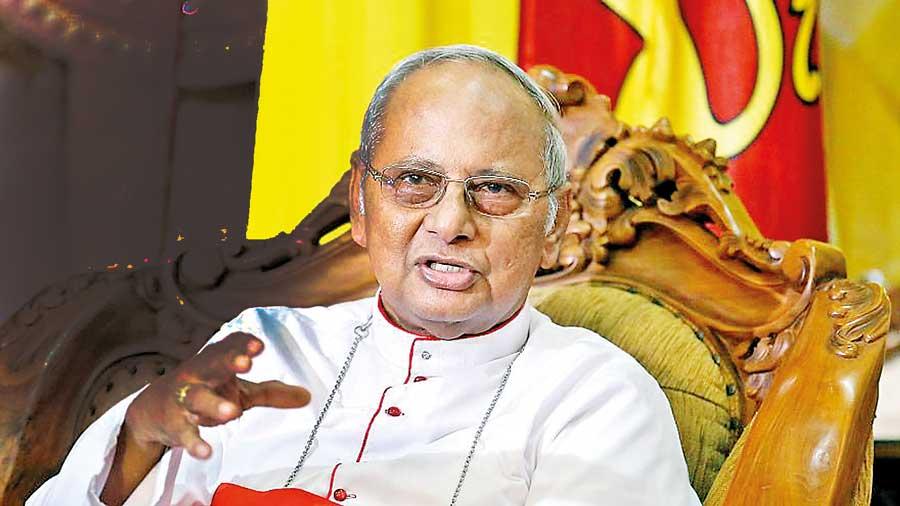
The Cardinal has earned a tarnished reputation through his persistent interference in the Easter Sunday attack investigations across multiple governments. Allegations now surface that he possessed prior knowledge of the attacks—a charge that further damages his standing. His political dabbling, spanning from Mahinda Rajapaksa to Gotabaya Rajapaksa to Maithripala Sirisena and now Anura Kumara Dissanayake, has left a distinctly bitter taste among the public. Alongside his associates like Cyril Gamini, he conducts press conferences making dramatic claims and celebrating arrests with visible jubilation. This behaviour is unbecoming of a religious leader.
A Pattern of Political Interference
His direct involvement in first supporting Gotabaya Rajapaksa and now Anura Kumara Dissanayake stands in total contradiction to what Sri Lankans expect from a spiritual figure. Religious leaders are meant to guide, unify, and offer moral clarity—not engage in partisan politics or grandstand during national tragedies. When he and his associates rejoice at arrests, they treat a national calamity as a theatrical spectacle. The families of victims deserve justice, not political theatre. The Cardinal’s press conferences increasingly resemble political rallies rather than pastoral guidance. Recent public challenges by Ali Sabry PC have brought this issue to the forefront. The Cardinal’s insistence on a second FBI investigation—after the FBI itself declined to pursue one—raises troubling questions. If the world’s premier investigative agency saw no need for further inquiry, why did the Cardinal demand one? Was the objective genuine justice, or was it to target specific individuals for political purposes?
Loss of Moral Authority
A religious leader’s moral authority depends on maintaining distance from partisan politics. The Cardinal has abandoned this fundamental principle. His alliances, statements, and public conduct increasingly reflect political calculation rather than spiritual guidance. The public watches with growing disillusionment as a man who should represent compassion and unity instead fuels division and suspicion. His continuous involvement in political matters has eroded trust in the Catholic Church’s leadership in Sri Lanka.
Time for Renewal
The Cardinal is well past retirement age. His continued tenure only perpetuates the controversy surrounding his office. The Catholic community in Sri Lanka deserves a leader who can restore dignity to the institution—not one who compounds its challenges through political entanglements. It would serve Pope Leo and the global Church well to appoint a fresh face to lead Sri Lanka’s Catholic community. New leadership could rebuild bridges, restore credibility, and refocus the Church on its spiritual mission rather than political posturing.
The Way Forward
The Catholic Church remains a respected institution in Sri Lanka, its moral authority built over generations. That credibility should not be jeopardized by the political ambitions of one individual. The Cardinal’s recent actions have exposed the Church to ridicule and slander—a fallout that could have been avoided through prudence and restraint. What Sri Lanka needs—and what the Catholic community deserves—is a leader who pursues justice without spectacle, fosters unity without division, and offers spiritual guidance without political calculation. The time for renewal is overdue.The Cardinal’s legacy will ultimately be defined not by press conferences or political alliances, but by whether he chooses to step aside gracefully and allow the Church to heal. For the sake of the faithful and the nation, that step cannot come too soon. The Easter Sunday tragedy should unite all Sri Lankans in the shared pursuit of truth and justice. That goal is best served when investigations proceed independently—free from political interference, public posturing, institutional pressure, and the Cardinal’s leveraging of the proposed Papal Visit as a bargaining chip. Justice must rest on evidence, not on personalities.