
By: Adolf
June 25, LNW (Colombo):
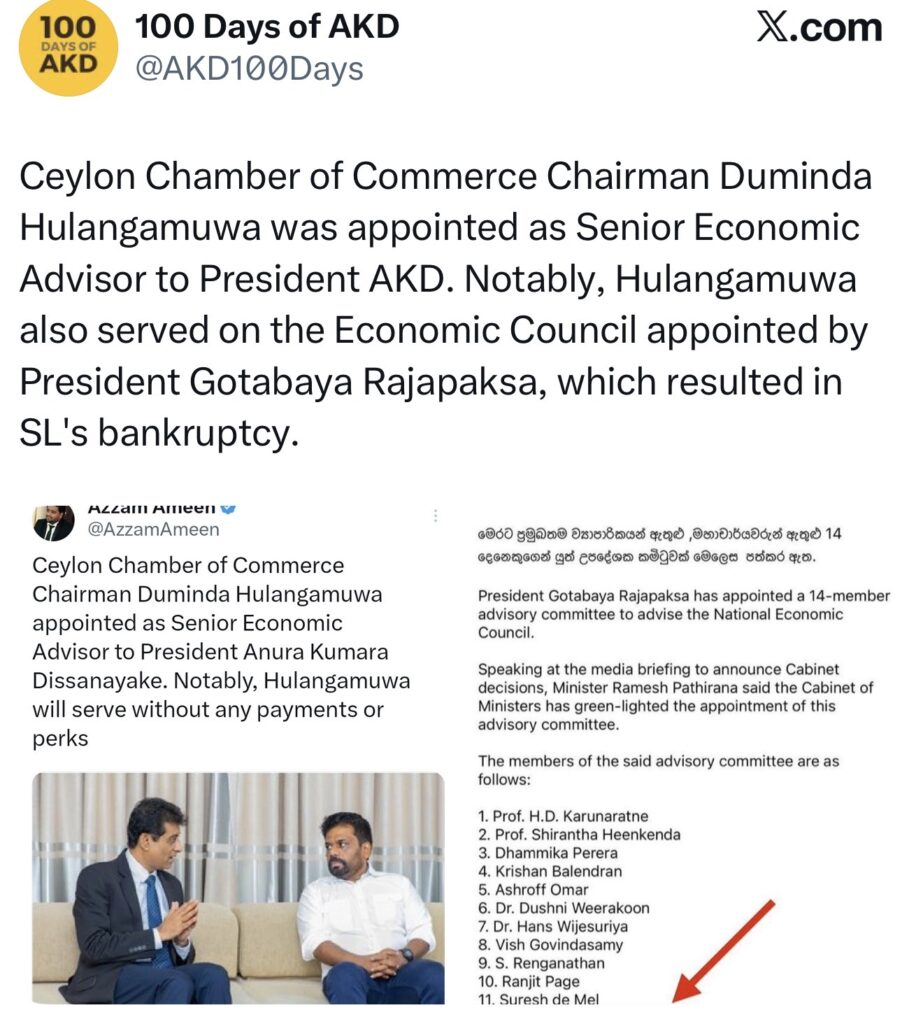
As Sri Lanka navigates the precarious path toward economic recovery, the appointment of key financial overseers has come under intense scrutiny. According to high-level sources within the Ministry of Finance and government , the government is poised to appoint Duminda Hulangamuwa as the next Chairman of the Board of Investment (BOI). The appointment is reportedly scheduled to take effect upon his retirement from Ernst & Young (EY) Chartered Accountants in July. Meanwhile an acting appointment has been made. While on the surface this represents a routine transition of a senior professional into public service, the decision has ignited a firestorm of debate, raising critical questions about competence, accountability, and the political motivations behind the selection.
Failed Professional
The primary concern surrounding Mr. Hulangamuwa’s ascension stems from his recent tenure at Ernst & Young Sri Lanka, a period marked by one of the most significant financial scandals in the country’s recent history—the NDB fraud case. EY acted as the external auditors for NDB during the period in question, and critics argue that the firm failed to identify glaring red flags or internal control weaknesses prior to signing off on the bank’s financial statements. This oversight is alleged to have facilitated the bank’s ability to raise a staggering Rs. 16 billion through sustainable bonds, transactions that later came under a cloud of suspicion. While Mr. Hulangamuwa was the main figure at the firm, the association with such a colossal auditing failure raises uncomfortable questions about his suitability to lead the nation’s primary investment promotion agency, an institution tasked with attracting foreign capital and ensuring regulatory integrity.
Policy Failures
Beyond the audit scandal, Mr. Hulangamuwa’s track record as a policy advisor further fuels the skepticism. During the tenure of the previous administration under President Gotabaya Rajapaksa, he was among the external advisors who championed the introduction of a self-assessment tax system. The policy was intended to streamline revenue collection and reduce bureaucratic bottlenecks. However, the implementation proved disastrous. The government reportedly lost billions in potential revenue due to widespread underreporting and non-compliance, forcing the authorities into a humiliating policy reversal and a return to the older, more rigid tax enforcement mechanisms. This episode paints a picture of an advisor whose theoretical frameworks failed to translate into practical, sustainable fiscal outcomes for a struggling economy.
High Stakes
The decision to appoint Mr. Hulangamuwa is further complicated by the perceived inexperience of the current leadership. President Anura Kumara Dissanayake (AKD) and his administration have openly acknowledged their limited hands-on experience in high-level economic management. In this context, the reliance on a figure like Hulangamuwa appears to be a strategic, albeit risky, gamble to inject private-sector expertise into the state apparatus. The administration is clearly looking to Mr. Hulangamuwa to steer the economy, leveraging his decades of experience in corporate finance and auditing to build investor confidence and restructure the BOI’s operations. Yet, this dependency creates a paradox: if the economic strategy is being shaped by the same individuals who advocated for failed policies in the past, is the nation merely setting itself up for a repeat of previous mistakes? Given the high stakes of Sri Lanka’s current economic recovery—marked by stringent IMF targets and the need for immediate foreign direct investment—the appointment of the BOI Chair cannot be a matter of political patronage or tokenism. The role demands a visionary leader with a clean record, proven foresight, and an unyielding commitment to transparency. As Mr. Hulangamuwa prepares to take the helm, the onus is on the government to ensure that his decisions are subject to rigorous oversight. The “Little Wonder of Asia,” as Sri Lanka was once proudly called, has weathered storms before, but the current crisis requires more than just hope. It demands accountability from the very top. The people must trust that the watchdogs above—be they parliamentary committees, the Auditor General, or civil society—will keep a vigilant eye on the new BOI Chairman, ensuring that his tenure is defined not by past controversies, but by a genuine and successful push for national revival. Hulung according to analysts will have lot of answering to do in the future .
